
Unbiased headlines. Facts, not spin.
Every story is an unbiased news briefing written from 110+ sources across the spectrum — sources linked so you can verify it yourself.
 energy
Major Story (8/10)
July 24, 2026 at 03:10 PM
energy
Major Story (8/10)
July 24, 2026 at 03:10 PM
Spain Declares First-Ever Wildfire National Emergency as France Evacuates 80,000 from Cap Ferret and Gironde Blazes
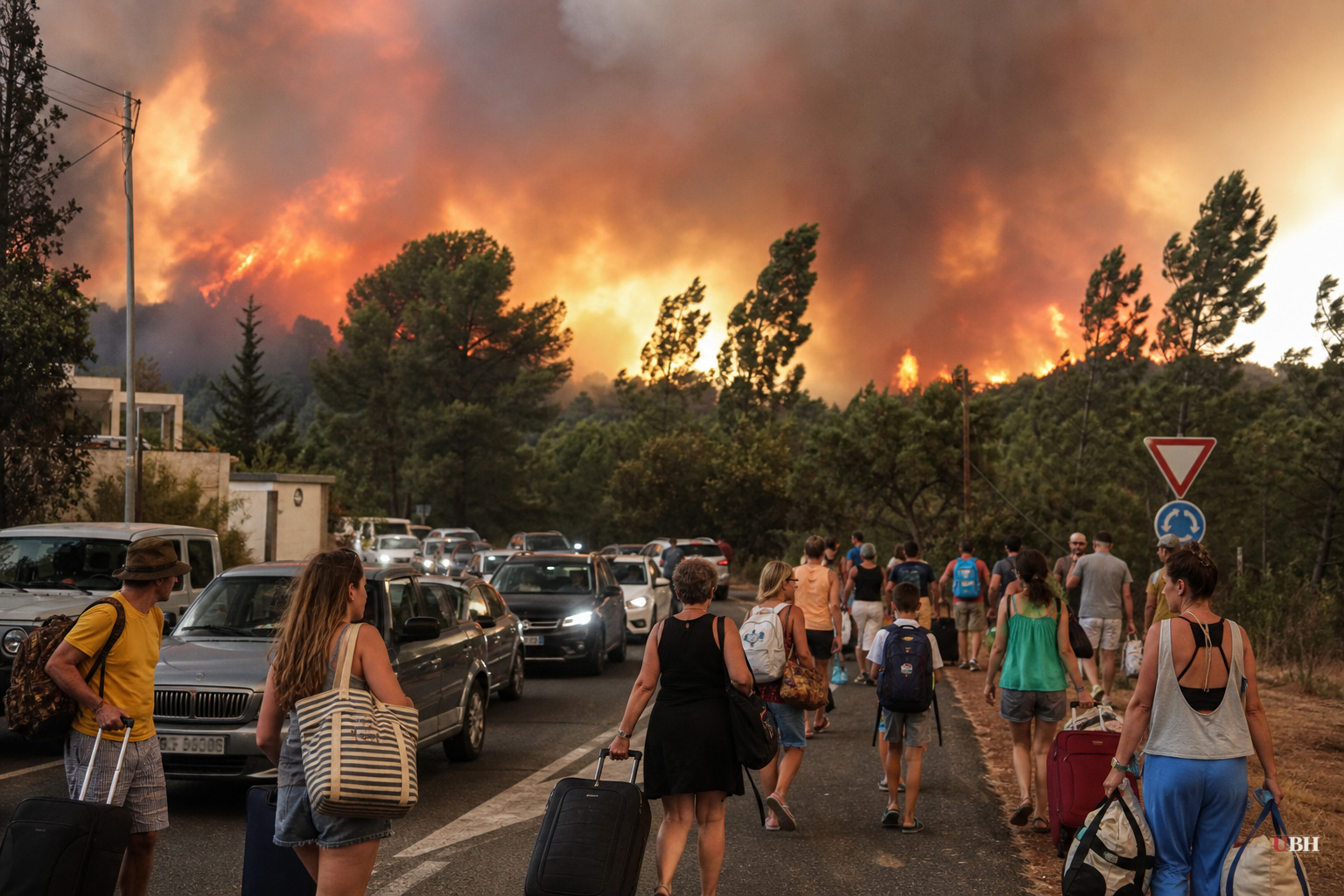
Spain declared its first-ever national emergency over a wildfire on Thursday night, after two blazes west of Madrid merged into one and a third, burning in Avila province, appeared to be joining them. Interior Minister Fernando Grande-Marlaska confirmed the merger and said more than 19,000 people had been ordered out of mountain towns west of the capital.
Madrid's regional leader, Isabel Diaz Ayuso, called it the worst wildfire in the region's history. "It's the perfect storm of very high temperatures and ceaseless winds that aren't letting up," she said, according to Reuters.
More than 2,000 personnel and 10 aircraft have been fighting the Madrid-area fires without stopping the merger, Grande-Marlaska said. In one housing development alone, 43 homes were destroyed, a Madrid official told Reuters. Nicanor Sen, the government's regional representative for Castile and Leon, said the Avila fire was on the verge of joining the other two, or may have already done so.
The national emergency declaration is the same alert level Spain last used during a nationwide power blackout in 2025, and it unlocks federal funding to fight the fires.
Spanish Prime Minister Pedro Sánchez said on X that his government had "deployed every available resource" to fight fires spreading across Avila, Leon, Toledo, Madrid and other regions, and urged residents to follow evacuation orders. Nearly 125,000 hectares have burned in Spain so far this year, according to the European Forest Fire Information System, already close to a third of the 393,000 hectares burned in all of 2025.
France: Cap Ferret emptied by car and boat
Across the border, French authorities ordered the total evacuation of the Cap Ferret peninsula, a wealthy Atlantic coast tourist destination home to vacation villas, by both road and boat. Interior Minister Laurent Nunez told local television the fire, which started near the village of Saumos, is the largest in France this season, having burned through more than 10,000 hectares and destroyed roughly 50 of the 80 homes it damaged.
The Guardian reported the fire had actually grown to more than 12,500 hectares by Friday and that evacuation orders covered the peninsula "village by village" in the face of what officials called an "intense, highly unpredictable" blaze. Roads to Cap Ferret were closed to all but essential traffic.
Evacuee Yoan Urien, 26, described watching the smoke roll in from his home in Biscarrosse before police told his neighborhood to leave. "We could see the clouds becoming darker and darker," he told Reuters. "I was able to find somewhere to take shelter with my pets, but it's quite a shock."
A second major fire near Biscarrosse, farther south, has burned more than 2,500 hectares and forced roughly 25,000 more evacuations, according to Landes prefect Gilles Clavreul, who told The Guardian "the fire front looks very bad" with new fire starts popping up ahead of the main blaze.
Total evacuation figures vary by outlet depending on timing and scope. Reuters put the number at about 63,000 people across the affected French communities on Friday, while The Guardian's broader count, including both the Gironde and Landes fires, topped 80,000. Roughly 800 firefighters and four water-bombing aircraft are working the Gironde blaze alone, per The Guardian; it had not been stabilized as of Friday.
President Emmanuel Macron said on X that the situation remained "extremely tense," particularly in Gironde, and confirmed France had requested help through the EU's civil protection mechanism. Reinforcements headed to France include two Croatian Canadair water bombers, two Portuguese Air Tractor planes, and two Black Hawk helicopters from the Czech Republic and Slovakia.
A record-breaking heat backdrop
The fires are unfolding against extreme heat across the Iberian Peninsula. Spain's meteorological agency, Aemet, recorded 44.7°C in Cieza, in Murcia province, on Thursday. Albacete, Avila and Teruel broke their all-time July temperature records the day before, with highs up to 42°C.
The Mediterranean Sea is also running hot. The Mediterranean Monitoring System reported a marine heatwave affecting 80% of the sea's surface, with some areas running 5°C above the 1991-2020 average earlier in the week.
The European Forest Fire Information System says roughly twice as much land had burned across the EU by July 22 compared with the two-decade average for that date, and France has already broken fire-season records this year, according to The Guardian.
Scientists cited by The Guardian attribute the intensifying pattern to climate change, which is drying out soils and vegetation and fueling more frequent, more extreme fire weather. Europe is warming at roughly twice the global average rate, per the same reporting.
No political figure quoted across Reuters, the NY Post's aggregation of it, or The Guardian challenges the underlying weather data. The question facing both countries is how much worse the numbers get before the current heat wave breaks and whether EU reinforcements arrive fast enough to matter. Firefighters in both countries say the situation was still unstable as of Friday, with the Gironde blaze in particular not yet contained.
Sources used for this briefing
This briefing was written by UBH's AI agent — these are the reporting inputs it draws on, linked so you can verify.


