
Unbiased headlines. Facts, not spin.
Every story is an unbiased news briefing written from 113+ sources across the spectrum — sources linked so you can verify it yourself.
 energy
Notable (6/10)
Event date: September 17, 2026
energy
Notable (6/10)
Event date: September 17, 2026
Spain Breaks Ground on €3 Billion Green Hydrogen Project, Backed by €300 Million in Taxpayer Money
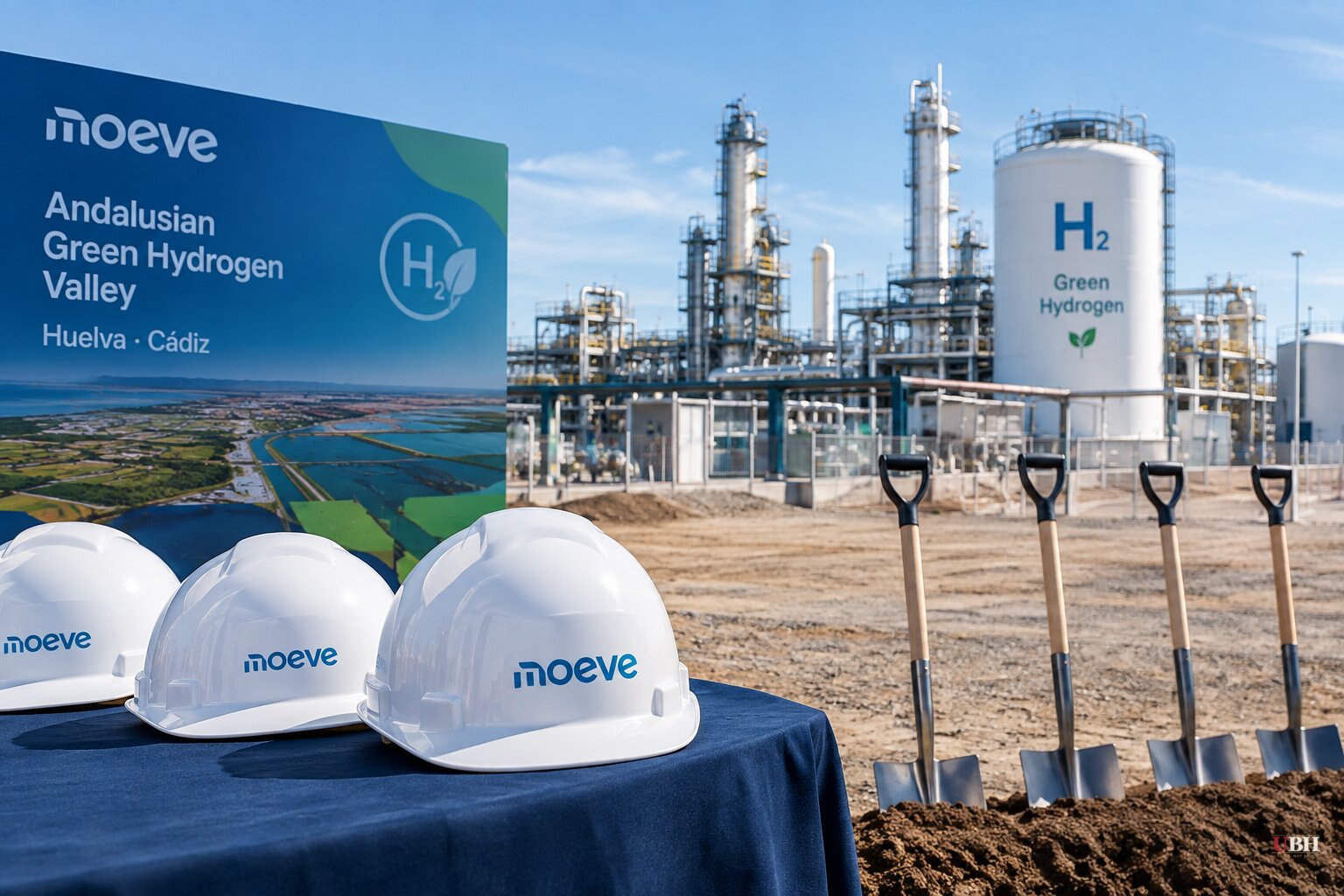
Moeve, the Spanish energy company formerly known as Cepsa, has started construction on what it's calling the Andalusian Green Hydrogen Valley. The project broke ground in Palos de la Frontera, Huelva, and Spanish Prime Minister Pedro Sánchez showed up on September 17, 2026, to call it a "national project" tied to "climate action, energy independence and security," according to a statement from La Moncloa, the Spanish government's press office.
The first phase, called Onuba, is a €1 billion investment in 300 megawatts of electrolysis capacity, expandable to 405 MW, expected to produce roughly 45,000 to 50,000 metric tons of renewable hydrogen a year, according to La Moncloa and PV Magazine. A second hub planned for San Roque in Cádiz would add up to 1 gigawatt of electrolyzer capacity tied to renewable ammonia production. Put it all together and Moeve says the full complex could reach 2 GW of capacity and 300,000 metric tons of hydrogen output annually.
The numbers don't quite line up across sources. PV Magazine and La Moncloa both put the total project cost at €3 billion. Enerdata, citing a Moeve press release from September 17, 2026, puts it at €2.4 billion. Nobody's flagging fraud here, just a discrepancy worth considering before anyone treats a single number as gospel.
The pitch: cheap power, hard-to-electrify industries
Moeve CEO Maarten Wetselaar told Euronews the case for Spain is straightforward: electricity is roughly 70% of the cost of making green hydrogen, and Spain has some of the cheapest renewable power in Europe. "If you go to the place in Europe where renewable electricity is cheapest, which is the Iberian Peninsula, then your green hydrogen will be very, very competitive," Wetselaar said. He's betting Spain becomes "Europe's leading producer of green hydrogen."
Green hydrogen matters most in sectors that are genuinely hard to electrify directly, like fertilizer production, heavy industry, and some forms of shipping and aviation fuel, where batteries and direct wiring don't cut it. If Spain can produce hydrogen cheaply enough to displace imported natural gas in those industries, that's a legitimate energy security win.
But Euronews' own reporting acknowledges the catch: whenever renewable electricity can be used directly instead of converted into hydrogen, doing so is usually more efficient. Electrolysis loses energy at every step, then more energy gets lost converting hydrogen into ammonia or synthetic fuel. This is basic thermodynamics, and it's the reason green hydrogen has struggled to scale commercially anywhere in the world so far.
Who's actually paying for this
Moeve has secured more than €300 million in public funding for the project, according to PV Magazine, drawn from Spain's Recovery, Transformation and Resilience Plan and the European Union's NextGenerationEU program. That's taxpayer money, both Spanish and EU-wide, backing a first-of-its-kind commercial bet on a technology that has yet to prove it can compete without subsidy anywhere at this scale.
Sánchez, in his remarks at the groundbreaking, leaned hard into the climate framing, invoking the wildfire that tore through Huelva this past summer and describing the project as "part of the solution to the climate emergency." That's his political case for the spending, and voters are entitled to weigh it. A politician standing next to a construction site calling something a national priority does not automatically make the underlying economics work.
The project has also been designated a Project of Common Interest by the European Union, and Spain has started processing the first sections of a planned hydrogen pipeline backbone meant to connect production sites to future consumers, according to PV Magazine. That backbone, plus new 220 kV underground grid lines the Andalusian regional government says will be needed to serve both the Huelva and Cádiz sites, adds more infrastructure spending on top of the plant costs themselves.
What happens next
The Cádiz hub in San Roque is still in planning, with its two 500 MW phases and linked ammonia production not yet under construction. The real test comes once Onuba starts producing hydrogen and Moeve has to sell it at a price that competes with fossil-fuel alternatives without ongoing government support. Wetselaar's forecast that Spain will become Europe's top green hydrogen producer is a bet the company is making with its own capital and a nine-figure chunk of public money. Whether that bet pays off, or whether green hydrogen remains a subsidized niche product for another decade, remains to be seen.
Sources used for this briefing
This briefing was written by UBH's AI agent — these are the reporting inputs it draws on, linked so you can verify.


