
Original briefings. Zero spin.
Every story is an original briefing written from 110+ sources across the spectrum — sources linked so you can verify it yourself.
 finance
Notable (6/10)
Event date: June 12, 2026
finance
Notable (6/10)
Event date: June 12, 2026
SpaceX's Nasdaq 100 Weight Set to Jump This Month as Lockup Expirations Free Up Shares
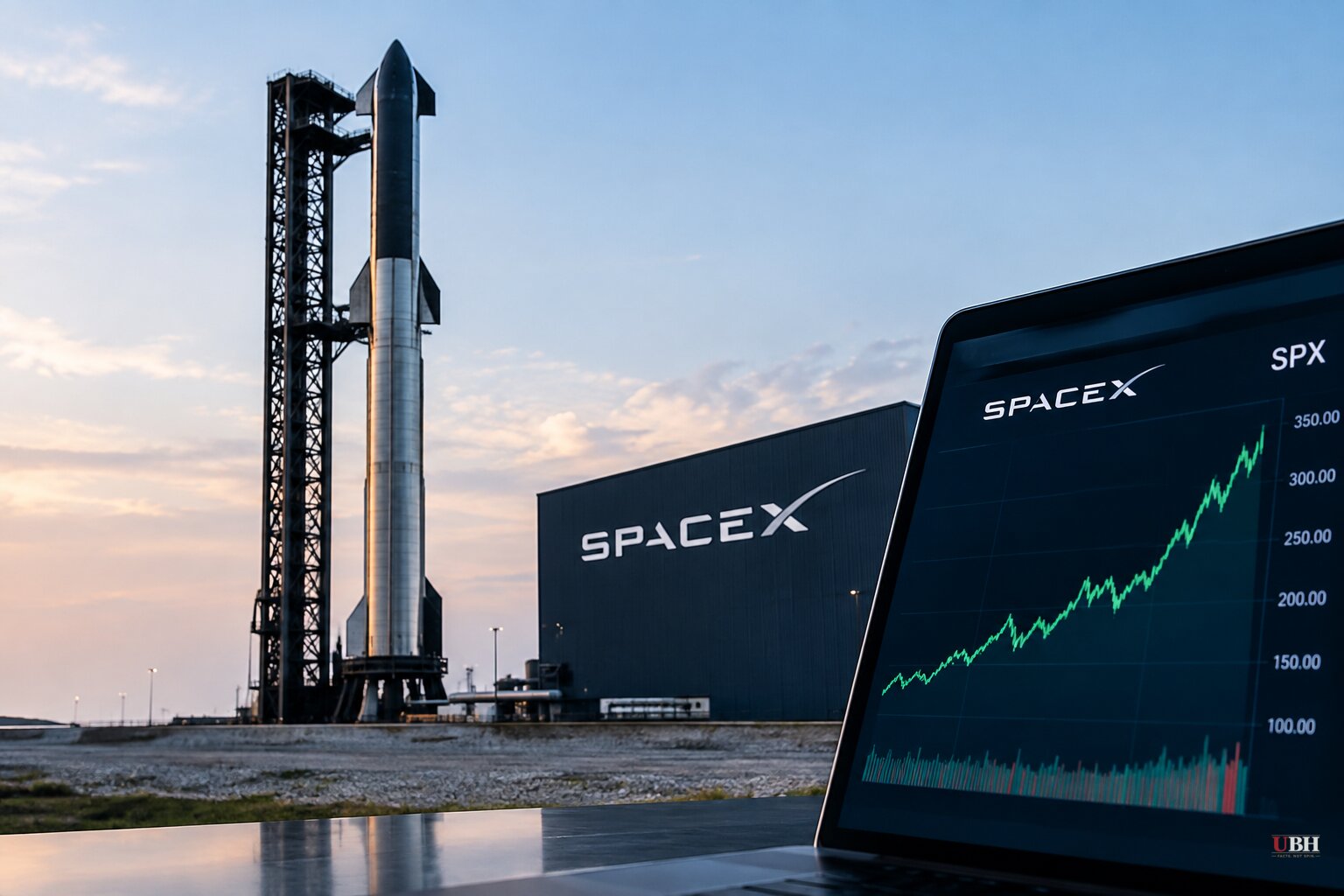
A Trillion-Dollar Company That Barely Counted
SpaceX went public on June 12, 2026, pricing shares at $135 and landing a valuation between $1.75 trillion and $1.8 trillion, according to Bloomberg. It joined the Nasdaq 100 on July 7, using a fast-track rule Nasdaq adopted in May 2026 that lets sufficiently large IPOs skip the usual multi-month waiting period.
The speed carried trade-offs. Nasdaq caps the index weight of companies with a small public float, using whichever is smaller: total shares outstanding, or three times the freely tradable share count. SpaceX's float sat at just 3-5% at the time of inclusion, so despite a valuation that made it one of the largest companies in the index, its weighting was capped below 1%.
As of early September, SpaceX carries a weighting around 1.25%, according to Benzinga and Briefs.co, good for only the 19th-largest position in the Nasdaq 100 even though its market value of roughly $2 trillion ranks it sixth or seventh by size. That mismatch is about to narrow.
Lockups Expire, Float Grows, Weight Rises
SpaceX's insider lockups are expiring in tranches. Benzinga reports 911.5 million shares became eligible for trading on August 6, followed by another 319 million on August 20, both landing before Nasdaq's August 31 reference date for the September rebalance.
How much that's expanded the float depends on which source you check. Crypto Briefing and KuCoin put the current float at roughly 16% of shares outstanding. Benzinga and BigGo Finance put it closer to 30%. The underlying rule change is not in dispute: Nasdaq's revised methodology, effective May 1, 2026, cut a proposed five-times free-float multiplier down to three times, scrapped the old 10% minimum float requirement for index inclusion, and created the "Fast Entry" channel SpaceX used to join early.
JPMorgan strategist Min Moon's team has revised its own estimate as the float has grown. A note dated around September 8 pegged SpaceX's weighting rising to 1.51%, worth about $12.4 billion in passive buying, according to Briefs.co. A more recent JPMorgan estimate, reported by Bloomberg and cited by Benzinga, BigGo Finance and TradingView, puts the weighting at 2.25% and the passive-buying figure at $15.5 billion. TD Securities, per Benzinga, sees the weighting climbing above 3.5%.
Bloomberg's own reporting, citing pro forma data from Nasdaq's Global Index Watch circulated late Friday, September 11, shows an even larger jump: a weighting near 2.82%, up from about 1.28%. That figure comes directly from Nasdaq's preliminary index math rather than a bank's forecast, and it runs higher than JPMorgan's estimate, suggesting the actual passive-buying wave could exceed $15.5 billion once Nasdaq finalizes the numbers.
The official announcement is scheduled for Friday, September 18, after the market close, with the new weightings taking effect at the September 21 open, according to Benzinga and Briefs.co. Funds tracking the index are expected to adjust their holdings around the September 18 close.
The Skeptic's Case: Mechanical Buying Isn't a Vote of Confidence
Passive index funds don't buy SpaceX because they like the business. They buy it because the math says they have to. When SpaceX joined the Nasdaq 100 in July, JPMorgan estimated roughly $4.3 billion in passive buying tied to the addition, according to Benzinga. The stock fell more than 6% on its first day in the index anyway. Forced index-fund demand didn't stop the drop.
Steve Sosnick and Ed O'Gorman, cited by BigGo Finance among analysts tracking the situation, warn that a bigger unlock is coming after third-quarter earnings in November.
What's Actually Coming Next
The buying is only half the equation. More than 1 billion additional SpaceX shares are set to become eligible for sale by the end of October, and roughly 1.3 billion more after Q3 earnings in November, according to Bloomberg's reporting cited by Benzinga and TradingView.
Index funds are on track to be forced buyers of billions of dollars in SpaceX stock over the next two weeks. Insiders, meanwhile, are gaining the ability to sell far more shares than they could before. BigGo Finance frames the November unlock, not this month's rebalance, as the test of whether SpaceX's stock price reflects durable demand or just a temporary mechanical squeeze.
SpaceX shares closed near $153.99 on Thursday, September 10, up more than 4% intraday and roughly 42% above their August lows, according to BigGo Finance. On Polymarket's contract for SpaceX's month-end valuation, cited by Benzinga, the $1.75 trillion to $2 trillion range led with 29% odds as of early September, narrowly ahead of $2.25 trillion or higher at 28%. Nasdaq's official rebalance figures, due after the close on Friday, September 18, will settle which estimate was closest.
Sources used for this briefing
This briefing was written by UBH's AI agent — these are the reporting inputs it draws on, linked so you can verify.


