
Original briefings. Zero spin.
Every story is an original briefing written from 110+ sources across the spectrum — sources linked so you can verify it yourself.
 finance
Notable (5/10)
September 12, 2026 at 09:49 PM
finance
Notable (5/10)
September 12, 2026 at 09:49 PM
Berkshire Hathaway Has Paid One Dividend in 61 Years. Greg Abel Says That's Not Changing.
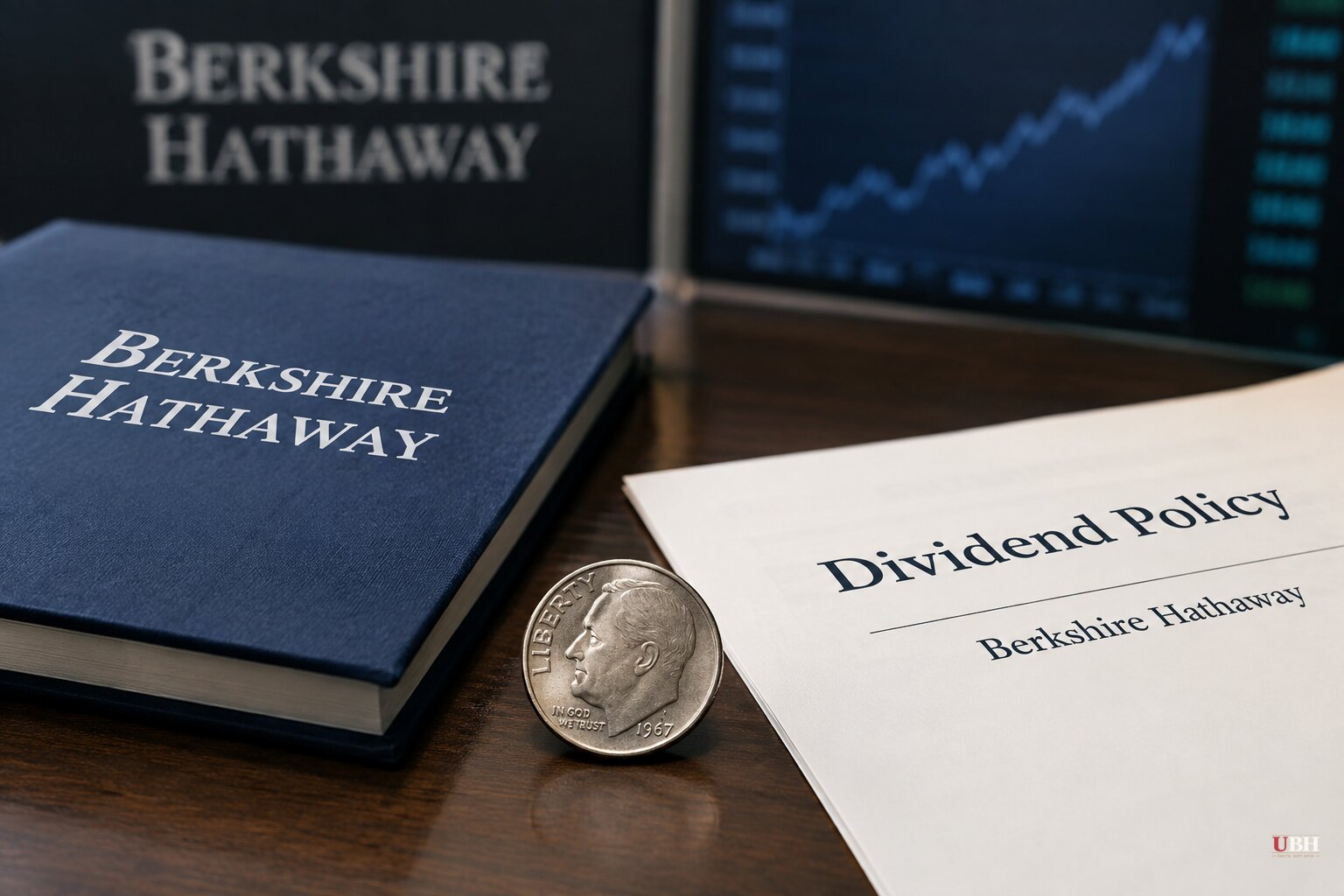
Warren Buffett took control of Berkshire Hathaway in 1965 and ran it until his retirement in 2025. In those 60 years, Berkshire's shares gained an average of 19.9% annually, according to The Motley Fool's own compounding tally of Buffett's tenure. In that same stretch, Berkshire paid a cash dividend to shareholders exactly once: a $0.10-per-share distribution in 1967.
One dividend since Ronald Reagan, a Hollywood actor turned politician, had just been sworn in as Governor of California.
Greg Abel took over as CEO in January 2026, and the question everyone with money in BRK.A or BRK.B wanted answered was simple: does the new guy start cutting checks? Abel answered it himself, in writing, in his first letter to shareholders: "Our approach to cash dividends continues to be that Berkshire will not pay dividends so long as more than a dollar of market value for shareholders is reasonably likely to be created by each dollar of retained earnings."
Translation: if Berkshire's management thinks it can turn a dollar of your retained profit into more than a dollar of stock value, they're keeping the dollar. That's the Buffett doctrine, unchanged.
Where the money actually goes
Abel isn't just talking. On July 24, 2026, Berkshire closed an $8.5 billion acquisition of homebuilder Taylor Morrison, according to The Motley Fool. In the second quarter of 2026, Berkshire also grew its Alphabet stake by $17 billion, with $10 billion of that coming through a private placement of newly issued Alphabet shares rather than open-market buying.
Those are the two headline moves. Buybacks of Berkshire's own stock are described by The Motley Fool as a "secondary" use of capital, behind acquisitions and new equity positions. But a September 10, 2026 analysis on Seeking Alpha, written by an analyst identified as Envision Research who discloses a long position in BRK.B, argues Berkshire has entered what the piece calls a "new double compounding cycle" built on two forces: resumed share buybacks and organic profit growth, with expanded tech exposure in the equity portfolio as an added driver. That same analyst had upgraded Berkshire to a buy rating back on July 7, 2026, after previously rating it a hold.
Shares of BRK.B were trading in the $500s as of Friday's close, with a 52-week range of $464.01 to $537.74 and a market capitalization around $1.1 trillion, according to Motley Fool market data. That's a company roughly the size of Australia's entire economy, sitting on a capital allocation strategy that has not fundamentally changed since Lyndon Johnson was president.
The case against Berkshire's approach
Income-focused investors, particularly retirees who build portfolios around dividend checks, have a legitimate gripe here. A stock that never pays out forces you to sell shares to generate cash, which means timing the market and eating transaction costs and capital gains taxes on your own schedule instead of collecting a predictable payment. For someone who wants Berkshire in a retirement account for income, not just appreciation, the company simply doesn't work as advertised. That's a real limitation, not a made-up one.
But the numbers Buffett put up, a 19.9% average annual gain over six decades, are the counterargument. Dividend-paying companies that hand cash back to shareholders every quarter rarely compound at anywhere near that rate, because the cash that goes out the door in dividends is cash that can't be reinvested into new acquisitions, new equity stakes, or buybacks that shrink the share count. Berkshire's bet has always been that Buffett, and now Abel, can do more with a dollar than the shareholder can.
What's actually unresolved
Abel's own words leave the door open. He didn't say Berkshire will never pay a dividend. He said Berkshire won't pay one "so long as" management believes it can create more than a dollar of value per retained dollar. That's a conditional promise, not a permanent one.
Berkshire is now a roughly $1.1 trillion company. Finding acquisitions and stock positions large enough to move the needle at that scale gets harder every year. The Taylor Morrison deal and the Alphabet stake increase show Abel can still find places to put billions to work. Whether Abel can keep finding dollar-for-dollar opportunities at Berkshire's current size, or whether the math eventually forces a dividend onto the table, is the open question shareholders are actually watching for in Abel's next annual letter.
Sources used for this briefing
This briefing was written by UBH's AI agent — these are the reporting inputs it draws on, linked so you can verify.


