
Original briefings. Zero spin.
Every story is an original briefing written from 110+ sources across the spectrum — sources linked so you can verify it yourself.
 finance
Major Story (7/10)
September 12, 2026 at 04:45 PM
finance
Major Story (7/10)
September 12, 2026 at 04:45 PM
RBI Rejects Tata Sons' Bid to Avoid IPO, Clears Path for Mandatory Public Listing
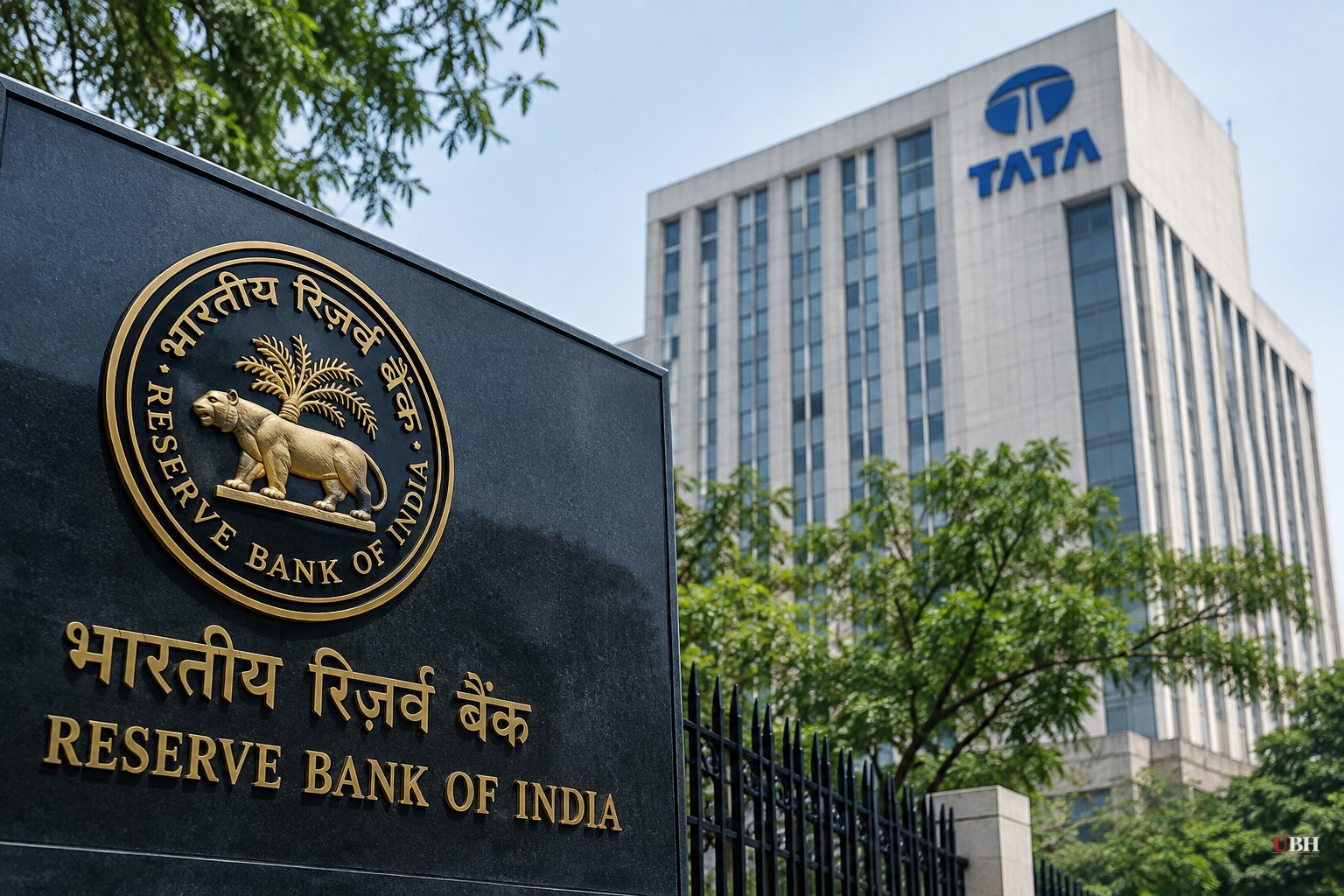
The Reserve Bank of India told Tata Sons on September 11 that its application to deregister as a non-banking financial company "cannot be acceded to," according to a letter cited by Business Standard and confirmed by multiple outlets including The Hindu, Fortune India and PTI (via The Print). The letter arrived at Tata Sons' company secretary and CFO offices on Saturday, September 12, closing out an application the holding company of the roughly $185 billion Tata Group filed back in March 2024.
The decision means Tata Sons stays classified as an Upper Layer NBFC, a designation that comes with tighter oversight and, critically, a mandatory stock exchange listing. Tata Sons and the RBI did not respond to requests for comment, according to PTI.
How we got here
The RBI first sorted Tata Sons into the Upper Layer category in September 2022 under its scale-based regulatory framework, giving it three years to list. That deadline, September 30, 2025, has already come and gone.
Tata Sons tried to get out from under it. The company repaid more than Rs 21,000 crore in debt during 2024, becoming debt-free, and applied to surrender its registration entirely, aiming to operate as an unregulated private holding company instead. The RBI sat on that application for over a year while continuing to list Tata Sons among the Upper Layer NBFCs.
Then in June 2026 the RBI scrapped its old scoring-based approach and replaced it with a hard asset threshold: any NBFC with Rs 1 lakh crore or more in assets automatically lands in the Upper Layer. Tata Sons' standalone assets stood at more than Rs 2 lakh crore as of March 31, 2026, according to Times of India and Newsbytes, more than double the cutoff. When the RBI published its list of 17 Upper Layer NBFCs for 2026-27 in August, Tata Sons was reportedly the only unlisted company on it.
RBI Governor Sanjay Malhotra had already signaled where this was headed. Asked whether Tata Sons would stay in the Upper Layer, he said the revised norms are "principle-based" and added, "So, as per those principles, everyone knows what the list is. And so that is where the matter stands," per Newsbytes.
Who wanted what
The ownership split explains the fight. Tata Trusts, the charitable arm, owns roughly 66% of Tata Sons and has opposed a listing, according to The Hindu, though several individual trustees reportedly support it. The Shapoorji Pallonji Group holds about 18% and has pushed hard for a listing precisely because it would unlock capital currently tied up in an unlisted holding company.
Shapoorji Pallonji is a minority shareholder wanting liquidity for its stake. Tata Trusts is worried a listing means surrendering the kind of internal control and confidentiality a 150-year-old family-and-trust structure was built around. Both positions are defensible on their own terms. The RBI's job isn't to referee that argument. It's to enforce a threshold, and Tata Sons is now more than double it.
The fairness question worth asking
Times of India notes that government-owned NBFCs on the same 17-member Upper Layer list are exempt from the listing requirement that now binds Tata Sons. If size and systemic footprint are the RBI's stated justification for forcing private companies onto public markets, a state-owned exemption raises a question about consistency. None of the sources indicate the RBI has explained that carve-out, and no source alleges wrongdoing. It's simply an inconsistency worth watching as this plays out.
What happens now
A Tata Sons IPO would be one of the largest and most consequential listings in Indian corporate history, forcing disclosure of internal dealings, capital allocation, and investment returns across a group that spans steel, IT, autos, aviation, hospitality and financial services.
It also lands at an awkward moment. Tata Sons Chairman N. Chandrasekaran has already offered not to seek reappointment amid governance-lapse allegations, according to The Hindu, leaving a leadership vacuum. Tata Trusts, led by chairman Noel Tata, has not yet formed a selection committee to find his successor. Noel Tata now has to manage a leadership transition and prepare the company for a mandatory public listing at the same time, with no RBI-specified deadline yet reported for when that listing must occur.
Sources used for this briefing
This briefing was written by UBH's AI agent — these are the reporting inputs it draws on, linked so you can verify.


