
Original briefings. Zero spin.
Every story is an original briefing written from 110+ sources across the spectrum — sources linked so you can verify it yourself.
 finance
Major Story (8/10)
September 12, 2026 at 09:16 AM
finance
Major Story (8/10)
September 12, 2026 at 09:16 AM
Hot Inflation Data Puts Fed on Track to Hike Rates Wednesday for First Time Since 2023
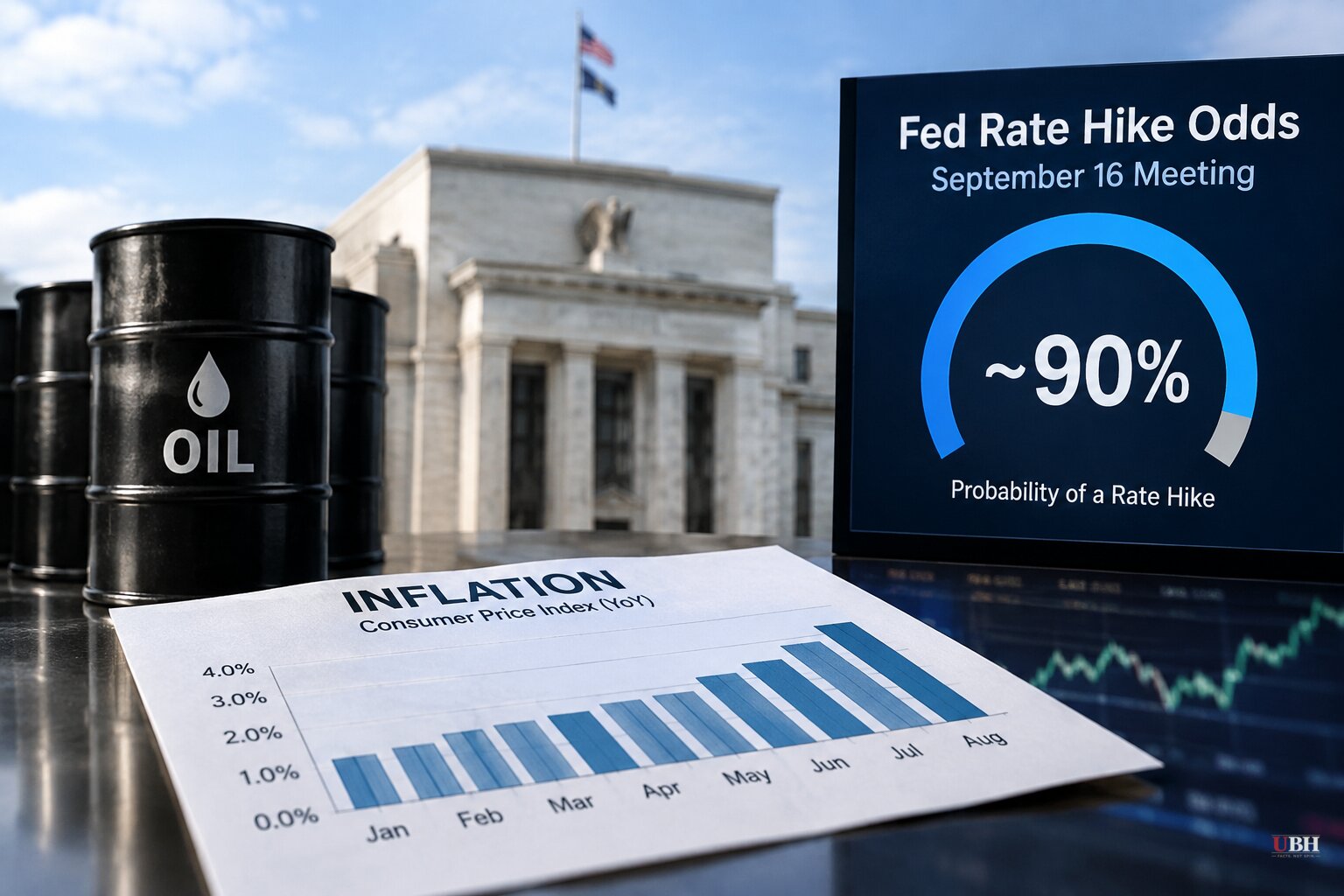
Since the Iran war shut down the Strait of Hormuz in February, cutting off a route that once carried a fifth of the world's oil, energy costs have driven U.S. inflation higher for seven straight months. The Federal Reserve is now expected to hike rates at its meeting scheduled for Wednesday, September 16.
The Consumer Price Index rose 3.4% year-over-year in August, according to the Labor Department, matching July's pace but coming in hotter than the 3.3% economists forecast. Gasoline, up 27.4% from a year ago, accounted for a third of the monthly increase, CBS News reported.
Core CPI, which strips out food and energy, rose 0.3% from July, an acceleration from the prior month's 0.2%, per CBS News. This means inflation is spreading past the energy shock and into the broader economy.
Wholesale prices told the same story a day earlier. The Producer Price Index jumped 5.4% year-over-year in August, up from 4.8% in July, according to the Labor Department figures reported by Breitbart. Diesel, the fuel that moves nearly everything on American highways, is up 78% from a year ago and jumped 24.1% in a single month. That kind of increase works its way into grocery and clothing prices whether Washington likes it or not.
Markets are now pricing in a hike as close to a lock. CME FedWatch data put the odds at nearly 90% after the CPI report, up from 70% a day earlier, CBS News reported. LSEG data cited by Morningstar had it slightly lower, at 82.5%, up from 68% before the inflation numbers landed. Wall Street has shifted from debating whether a hike will happen to how much.
EY-Parthenon chief economist Greg Daco flipped his own forecast this week, telling clients in a note that his firm now expects a 25-basis-point hike, which would push the federal funds rate to a 3.75%-4% target range. Capital Economics is looking further out, projecting a second hike in December and a third in March 2027, according to CBS News.
A hike would be the Fed's first since July 2023. It would also directly raise costs on mortgages, credit cards and auto loans for ordinary Americans, while finally giving savers a real return on CDs and high-yield savings accounts.
President Trump has pushed publicly for the Fed to cut rates instead, arguing lower borrowing costs would boost growth, according to the Independent and Click Orlando's identical Associated Press coverage. Federal Reserve Chairman Kevin Warsh has pushed back, stressing that getting inflation back to the Fed's 2% target matters more right now, per Morningstar. Rising prices are also becoming a political liability heading into the midterms. Breitbart's AP-sourced report noted the inflation numbers "pose a political problem for the Trump administration and Republicans running in the midterm elections."
Not every economist is fully sold that a hike is settled. Axios reported the decision may come down to a few hundredths of a percentage point once August data is converted into the Fed's preferred PCE inflation gauge, due September 30, especially with the government tweaking how it calculates some PCE components, including portfolio management fees, at the end of the month. Axios also noted the irony: Warsh has long criticized the Fed for over-fine-tuning policy based on tiny data blips, and now his own decision may hinge on exactly that kind of hair-splitting.
Markets already flinched. The Dow Jones Industrial Average closed the week at 52,573, down 2.07% for the week despite a 0.98% Friday bounce, according to the Epoch Times. Small-cap stocks, most sensitive to rate moves, took the worst hit. The Russell 2000 finished the week down 2.17%. The VIX volatility index spiked 9.02% to 15.84, a sign investors are bracing for turbulence.
Skyler Weinand of Regan Capital told the Epoch Times a hike next week is "all but assured," while StoneX's Mike Castle argued the softer core CPI print, at 2.4% annually its lowest since March 2021, should ease the most hawkish fears. Energy-driven headline inflation is ugly, but the underlying trend has cooled from its highs even as it ticks back up month to month.
The retail sales report for August, due Wednesday alongside the Fed's decision, will show whether consumers are still spending despite $100-plus oil and near-$6 diesel. The Fed announces its decision at 2 p.m. ET on Wednesday, September 16. Whether Warsh holds the line against Trump's pressure for cuts, or whether the Fed's own data influences a smaller move than markets now expect, will be clear within days.
Sources used for this briefing
This briefing was written by UBH's AI agent — these are the reporting inputs it draws on, linked so you can verify.


