
Original briefings. Zero spin.
Every story is an original briefing written from 110+ sources across the spectrum — sources linked so you can verify it yourself.
 finance
Notable (5/10)
September 13, 2026 at 01:57 AM
finance
Notable (5/10)
September 13, 2026 at 01:57 AM
Thailand's SEC Proposes $151,000 Daily Cap on Stablecoin Transfers, Would Ban Sending to Other People's Wallets
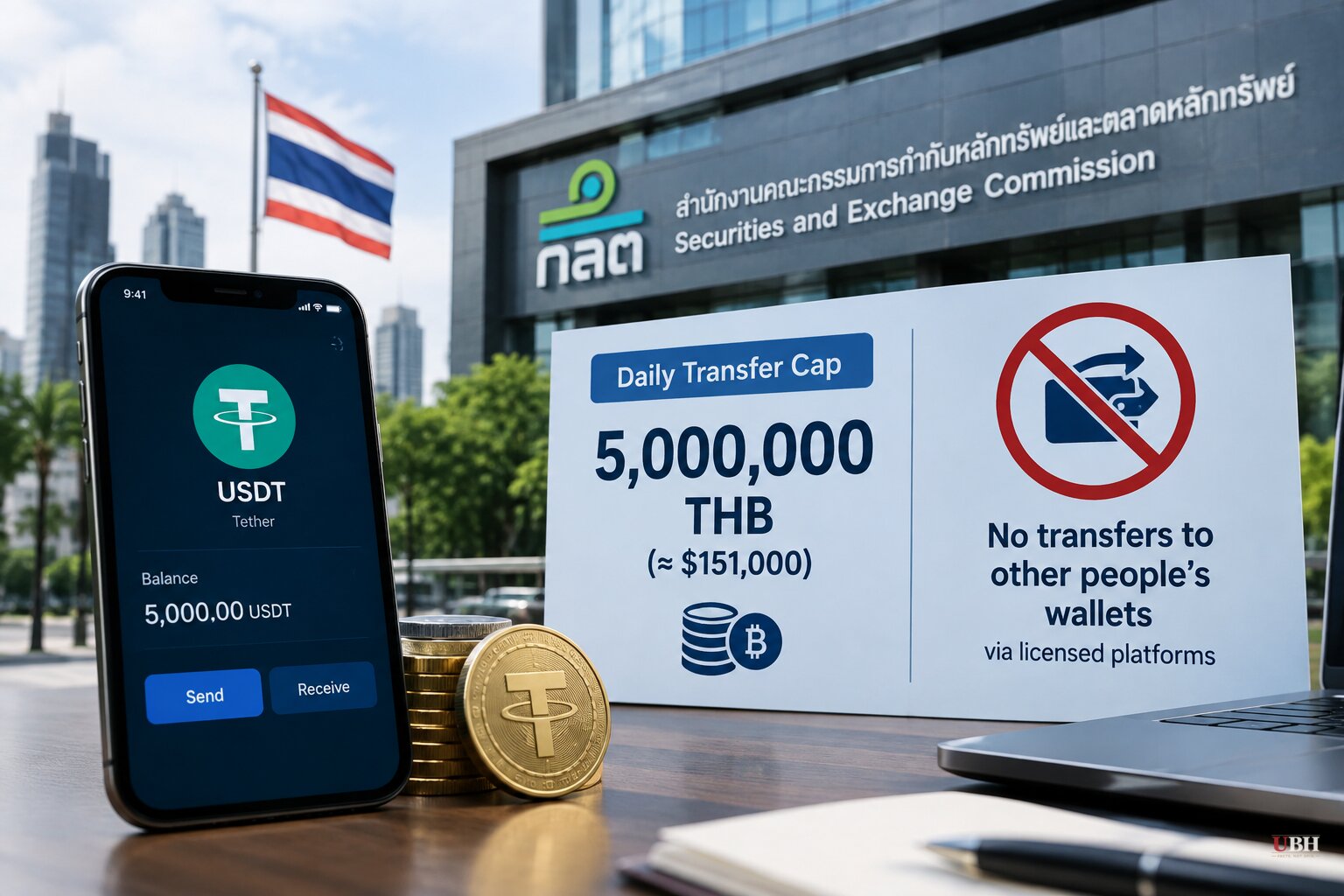
Thailand's Securities and Exchange Commission opened public consultation on September 11, 2026 for a rule that would cap stablecoin transfers at 5 million baht, roughly $151,000, per person per licensed digital asset operator, per day. The SEC Board approved the underlying consultation principles on September 3, according to Crypto Briefing and CryptoSlate.
What The Draft Actually Does
Under the proposal, every stablecoin deposit into a customer account, and every withdrawal out of one, must involve a wallet or bank account verified as belonging to that same customer. Sending stablecoins to someone else's wallet, or receiving them from someone else's account, would be prohibited outright through Thai-licensed operators, according to CryptoSlate and Money and Banking, which cited the SEC's own consultation text.
Transfer amounts would also have to line up with a customer's documented income and financial standing. That's an added layer of financial vetting stacked on top of existing identity checks exchanges already run.
There are carve-outs. Transfers between two Thai-supervised operators that both comply with the country's Travel Rule face no cap at all, per Crypto Briefing and the Thai-language outlet MGR Online. Certain business transfers by Bank of Thailand-authorized entities, and activity by registered market makers and liquidity providers, are also exempted. CryptoSlate flagged that it remains unclear whether that same exemption logic extends cleanly to the same-owner wallet requirement, since the consultation document doesn't spell out every interaction between the two rules.
Why Regulators Say They're Doing This
The Bank of Thailand flagged "abnormal trading volumes" involving Tether's USDT back in July 2026, according to Crypto Briefing, with concerns centered on stablecoins being used to route around normal banking disclosure requirements.
MGR Online's Thai-language coverage frames the crackdown explicitly around organized crime, describing stablecoins as a pipeline that "call centre gangs and transnational money-laundering networks have long used" to move money through Thailand's financial system, alongside plans to overhaul market-maker and liquidity-provider networks the outlet says have "long been suspected" of obscuring the true identities behind large transfers.
Those are serious allegations about criminal networks, not proven cases against named individuals or firms. No indictments or specific enforcement actions are cited in connection with this rulemaking. The SEC's justification, as reported, is about closing a structural gap, not prosecuting a known case.
The Case Against It
The most direct criticism is straightforward: banning third-party wallet transfers doesn't just stop launderers, it stops everyone. Crypto Briefing notes the rule "effectively kills a range of use cases, from peer-to-peer payments routed through exchanges to more complex treasury management setups where funds move between different entities' wallets."
A freelancer getting paid in USDT by a client, a small business settling an invoice with a supplier, or a family member sending stablecoins to relatives, all of that runs through third-party wallets by design. Under the draft, none of it could happen through a licensed Thai platform unless both sides are the same verified customer, or unless it happens entirely off-platform, outside SEC supervision altogether.
The rule targets crime by restricting an entire category of legitimate financial activity, and pushes anyone who wants unrestricted transfers toward unregulated, harder-to-track channels instead. Whether the SEC's approach nets out as safer overall, or just relocates the risk it's trying to police, isn't something the current draft resolves.
Timeline
Public comments on the consultation close September 25, 2026. The SEC has not announced when, or whether in its current form, the rule will take effect. Separately, Thailand's finalized digital-asset Travel Rule, requiring operators to collect and share sender and recipient information, is scheduled to take effect February 27, 2027, according to CryptoSlate and Crypto Briefing. The stablecoin transfer cap is being positioned as groundwork for that broader framework.
Digital asset operators, market makers, and ordinary users have two weeks left to file objections before the SEC decides how much of this draft survives contact with the industry it would regulate.
Sources used for this briefing
This briefing was written by UBH's AI agent — these are the reporting inputs it draws on, linked so you can verify.


