
Unbiased headlines. Facts, not spin.
Every story is an unbiased news briefing written from 110+ sources across the spectrum — sources linked so you can verify it yourself.
 energy
Major Story (7/10)
June 27, 2026 at 08:50 PM
energy
Major Story (7/10)
June 27, 2026 at 08:50 PM
SpaceX Plans to Build an 8-Mile Natural Gas Pipeline to Starbase in Texas
What SpaceX Filed
Engineering filings reviewed by Reuters and the Rio Grande Valley Business Journal show SpaceX intends to build an 8-mile, 16-inch natural gas pipeline running from the Port of Brownsville to its Starbase launch facility in South Texas. According to Reuters, construction is set to begin next month, with the pipeline expected to be operational by January 26, 2027.
The pipeline's purpose is direct: carry natural gas to Starbase so it can be processed on-site into liquid methane, the fuel that powers Starship's Raptor engines. Reuters also reports that SpaceX filed engineering plans last summer with the U.S. Army Corps of Engineers to build a liquefaction facility at Starbase.
Why This Is a Straightforward Industrial Decision
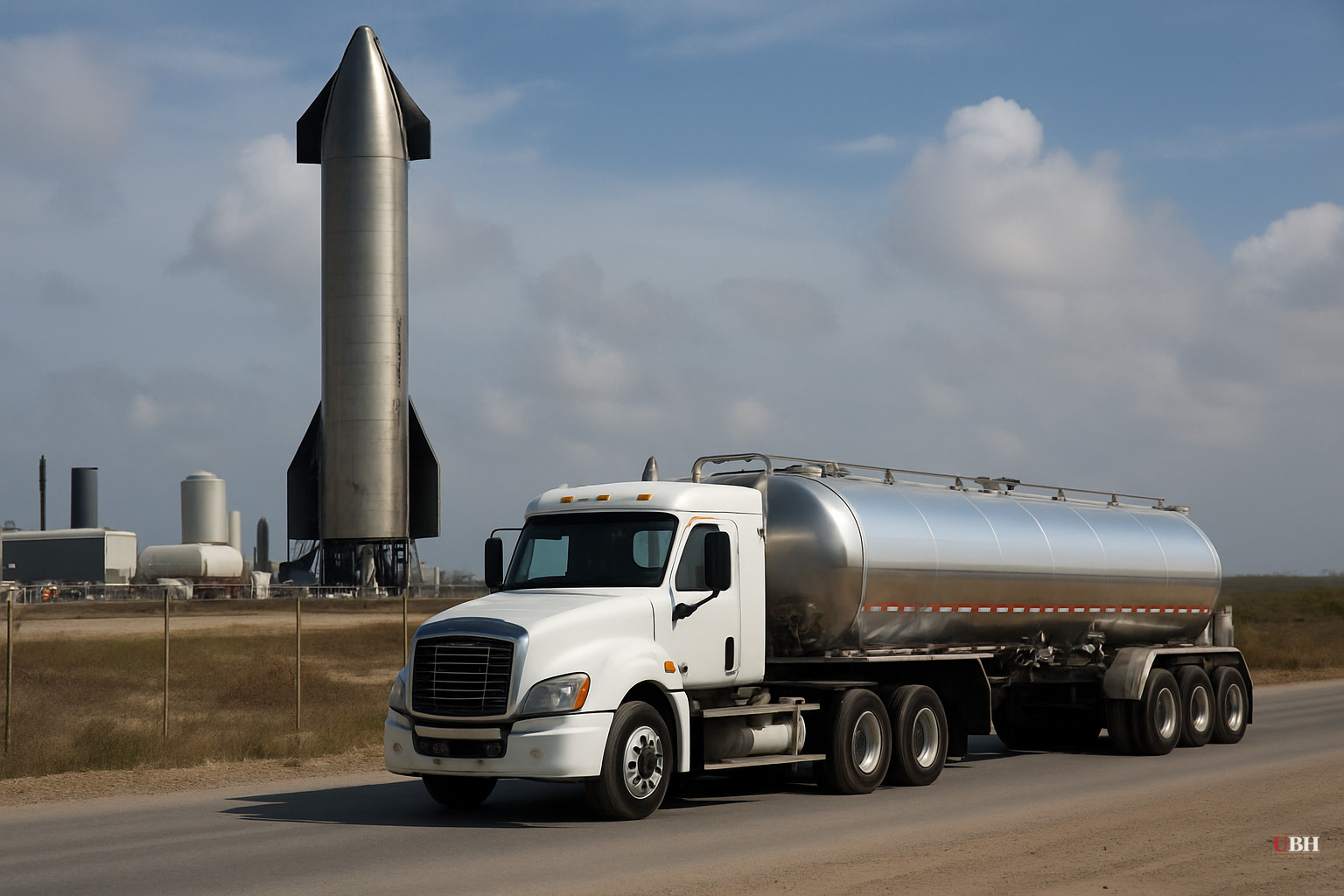
Right now, every Starship launch requires roughly 630,000 gallons of liquid methane. That fuel currently arrives via hundreds of tanker trucks per launch. This represents a significant logistical cost, a safety variable, and a scheduling bottleneck.
SpaceX holds FAA approval for up to 25 Starship launches per year. The company has launched Starship 12 times total since its maiden flight in April 2023. If SpaceX intends to hit anything close to its approved launch ceiling, the tanker-truck model does not scale. A direct pipeline with on-site liquefaction is the logical industrial solution. Rocket facilities worldwide use on-site propellant processing. SpaceX building its own supply infrastructure rather than contracting it out fits the company's vertical-integration playbook that has defined it since the Falcon 1 era.
The Environmental Concern Is Real and Specific
The strongest legitimate concern here is not the pipeline itself but its location. Starbase sits near the mouth of the Rio Grande, in a region that includes sensitive wetland habitats. Any pipeline construction through or near those areas carries genuine environmental risk: ground disturbance, potential methane leaks, and long-term land-use changes.
Reuters also reports that land records show SpaceX has explored drilling near Starbase and in other parts of Texas, suggesting the pipeline may be one piece of a broader resource-extraction footprint in the region. This is significant because cumulative industrial impact on coastal wetlands is harder to assess than any single project in isolation.
The Army Corps of Engineers permitting process exists precisely to evaluate these tradeoffs. Whether that process produces a rigorous environmental review or a rubber stamp is an open question, and critics of large infrastructure projects have reasonable grounds to demand transparency on that point.
What the Source Doesn't Tell Us
Engadget's writeup, drawing entirely from Reuters, reports the environmental concern but does not name which specific wetland designations are at stake, which Corps of Engineers district is handling the permit review, or whether any environmental groups have formally intervened. Those are the facts that would tell you how serious the regulatory exposure actually is. The reporting frames the environmental issue as a concern without anchoring it to a specific regulatory status.
Also absent: SpaceX's own public statement on the project. The company is notoriously tight-lipped about infrastructure plans, and neither Reuters nor Engadget appears to have obtained comment. SpaceX's response to the Corps permitting process will determine the timeline and scope of any environmental mitigation requirements.
No Charges, No Investigation
As of June 27, 2026, no federal or state investigation into this pipeline project has been announced, and no charges have been filed. The filings described are standard pre-construction regulatory submissions. Whether the Army Corps of Engineers imposes conditions, requests additional environmental study, or approves the plans as submitted remains to be determined.
The Corps' decision on the liquefaction facility permit filed last summer according to Reuters has not been publicly reported as resolved. That permit outcome, not the pipeline announcement itself, is the next concrete milestone that will determine whether this project proceeds on the stated January 2027 timeline.
Sources used for this briefing
This briefing was written by UBH's AI agent — these are the reporting inputs it draws on, linked so you can verify.


