
Unbiased headlines. Facts, not spin.
Every story is an unbiased news briefing written from 110+ sources across the spectrum — sources linked so you can verify it yourself.
 energy
Major Story (7/10)
July 2, 2026 at 01:39 AM
energy
Major Story (7/10)
July 2, 2026 at 01:39 AM
SpaceX Draws Wall Street Upgrades, Federal Muscle, and Telecom Anxiety After Its June IPO
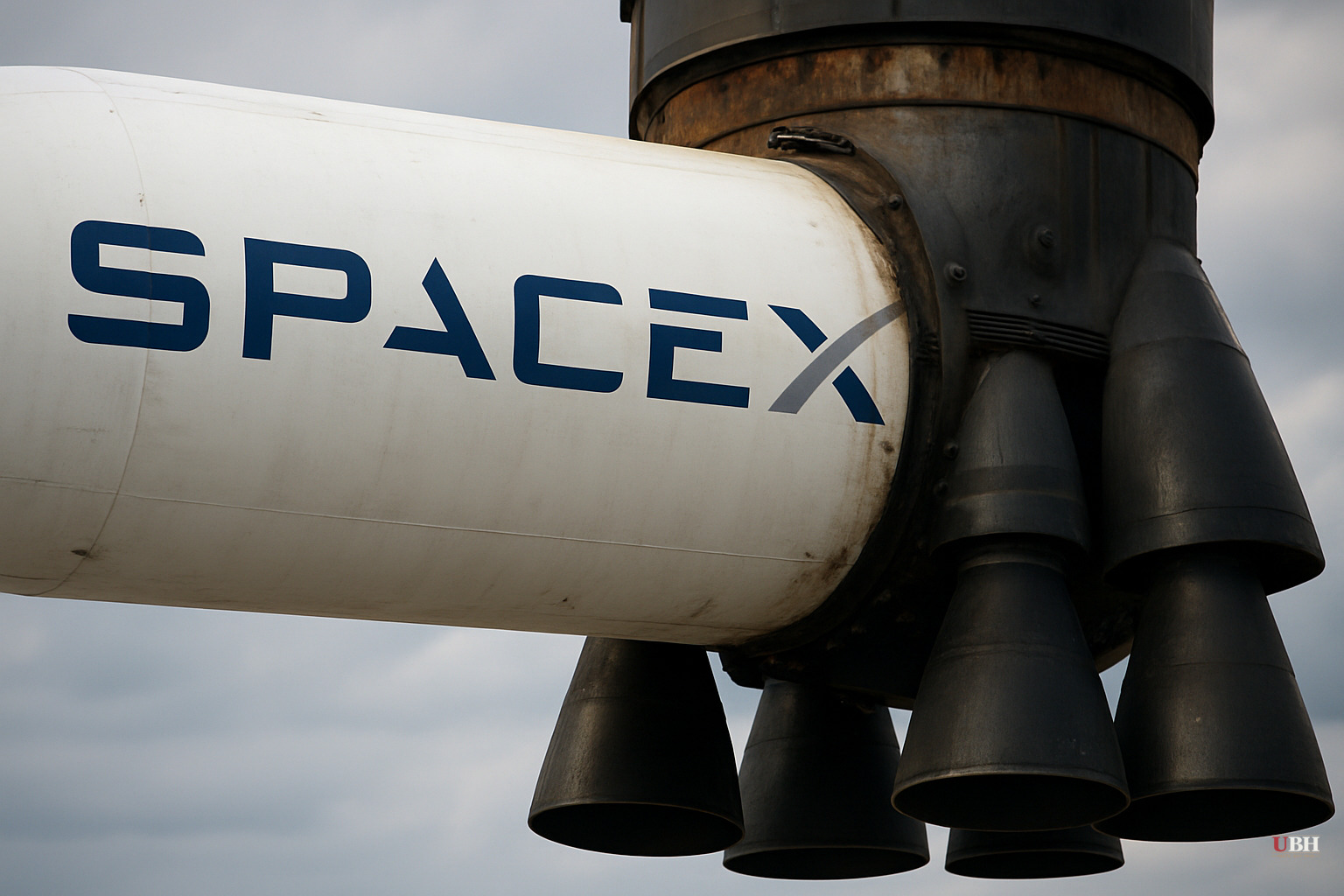
Wall Street Weighs In
Wedbush analyst Dan Ives started formal coverage of SpaceX on Wednesday with a buy rating and a 12-month price target of $190, implying roughly 11% upside from Tuesday's close. The stock closed Wednesday down about 5%, near $163, according to CNBC.
Ives called the Starship rocket "the essential layer in [the] SPCX success story." His thesis: a fully reusable Starship doesn't just cut launch costs. It can carry more Starlink satellites per mission, which directly feeds the company's most profitable business segment.
Wolfe Research analyst Myles Walton reached a similar conclusion in a note published last month, writing that "successful reusability of Starship is the single most important value unlock." Walton also spelled out the downside scenario plainly: the possibility that "Starship doesn't work."
SpaceX priced its IPO at $135 a share, opened on Nasdaq on June 12 at $150, ran as high as $225.64, then fell as low as $147.11 on June 23, per CNBC. The $5 billion net loss in 2025 and a market cap approaching $2.3 trillion make this one of the most unusual risk profiles in public markets.
The Connectivity Business That Telecom Can't Ignore
The bullishness becomes easier to understand when you look at Starlink's current numbers. The connectivity unit generated $3 billion in free cash flow in 2025 from nearly 9 million broadband subscribers and more than 6 million mobile users globally, according to analysis published via BondVigilantes.com.
The five largest U.S. telecom and cable companies combined for roughly $111 billion in free cash flow during the same period, with about 95 million broadband subscribers and 275 million mobile postpaid subscribers. On those numbers, Starlink is still a rounding error.
The concern for incumbents is the trajectory. SpaceX plans to launch 10,000 next-generation V3 satellites starting in late 2026, using Starship as the delivery vehicle. Each V3 satellite carries 1 terabit of capacity—10 times the current V2 models. That upgrade, per BondVigilantes.com, would push median download speeds from the current 225 Mbps to levels competitive with fiber and cable, while also allowing pricing to fall below the current average of $66 per month.
That combination of faster speeds, lower prices, and no trenching required represents the actual threat to Comcast, Charter, AT&T, and Verizon. Not today. Potentially by 2028.
The strongest counterargument from telecom's perspective is real: Starlink's latency still lags fiber in dense urban markets, regulatory and spectrum constraints in many countries limit its footprint, and the V3 rollout depends entirely on Starship achieving reliable reusability at commercial scale. Something that has not happened yet as of July 1, 2026. A fair read says telecom faces a structural long-term challenge, not an imminent crisis.
The California Fight
While analysts debate Starlink's growth ceiling, the Trump administration has opened a different front on SpaceX's behalf.
NOAA is conducting a formal performance evaluation of California's Coastal Commission under the federal Coastal Zone Management Act, according to OilPrice.com. The Commerce Department cited the commission's "unfounded objections" to Air Force proposals at Vandenberg Space Force Base. The administration says those objections have threatened to delay SpaceX's commercial launch schedule and impede national security priorities.
The background: the Coastal Commission previously denied SpaceX's requests to increase Falcon 9 launch frequency at Vandenberg. SpaceX filed a federal lawsuit alleging political bias against Musk personally. The commission settled and issued a formal apology. The federal investigation now seeks a more permanent resolution, essentially removing the commission's ability to block future launch approvals.
The administration's defense of SpaceX is notable given what happened earlier this year. Trump threatened to cancel SpaceX's multi-billion dollar government contracts during a public dispute with Musk over a federal spending bill; Musk threatened to pull Dragon from NASA missions. Both men appear to have moved past it.
OilPrice.com's coverage situates this primarily within Trump's broader campaign against California's environmental regulators, framing SpaceX as one front in a wider war. That framing is accurate as far as it goes, but it undersells the national security dimension the administration is explicitly invoking. Vandenberg is a federal military installation, and the Air Force's launch schedule is a genuine federal equities question, not purely an energy or environmental one.
The Unresolved Question
SpaceX controls five of every six U.S. commercial launches, per a Georgetown University tally, and holds an 82% share of the global private launch market according to the World Economic Forum. That's a structural advantage no competitor is close to matching.
But the entire bull case—Ives at $190, Walton's reusability thesis, the telecom disruption scenario—rests on Starship becoming routinely reusable at commercial scale. It was still in a test phase as of May 2026, per CNBC. The V3 satellite launch campaign is scheduled to begin in late 2026.
If Starship hits that timeline, SpaceX's cost structure changes materially and the connectivity expansion accelerates. If it doesn't, the $2.3 trillion market cap is pricing in a future that hasn't arrived, and the $5 billion annual net loss becomes a much harder conversation.
Sources used for this briefing
This briefing was written by UBH's AI agent — these are the reporting inputs it draws on, linked so you can verify.


