
Unbiased headlines. Facts, not spin.
Every story is an unbiased news briefing written from 110+ sources across the spectrum — sources linked so you can verify it yourself.
 defense
Notable (5/10)
July 3, 2026 at 05:14 AM
defense
Notable (5/10)
July 3, 2026 at 05:14 AM
Space Force Uses Private Satellites to Intercept Targets in Orbit, and Senate Asks Whether the Branch Has Enough Lawyers to Fight That War Legally
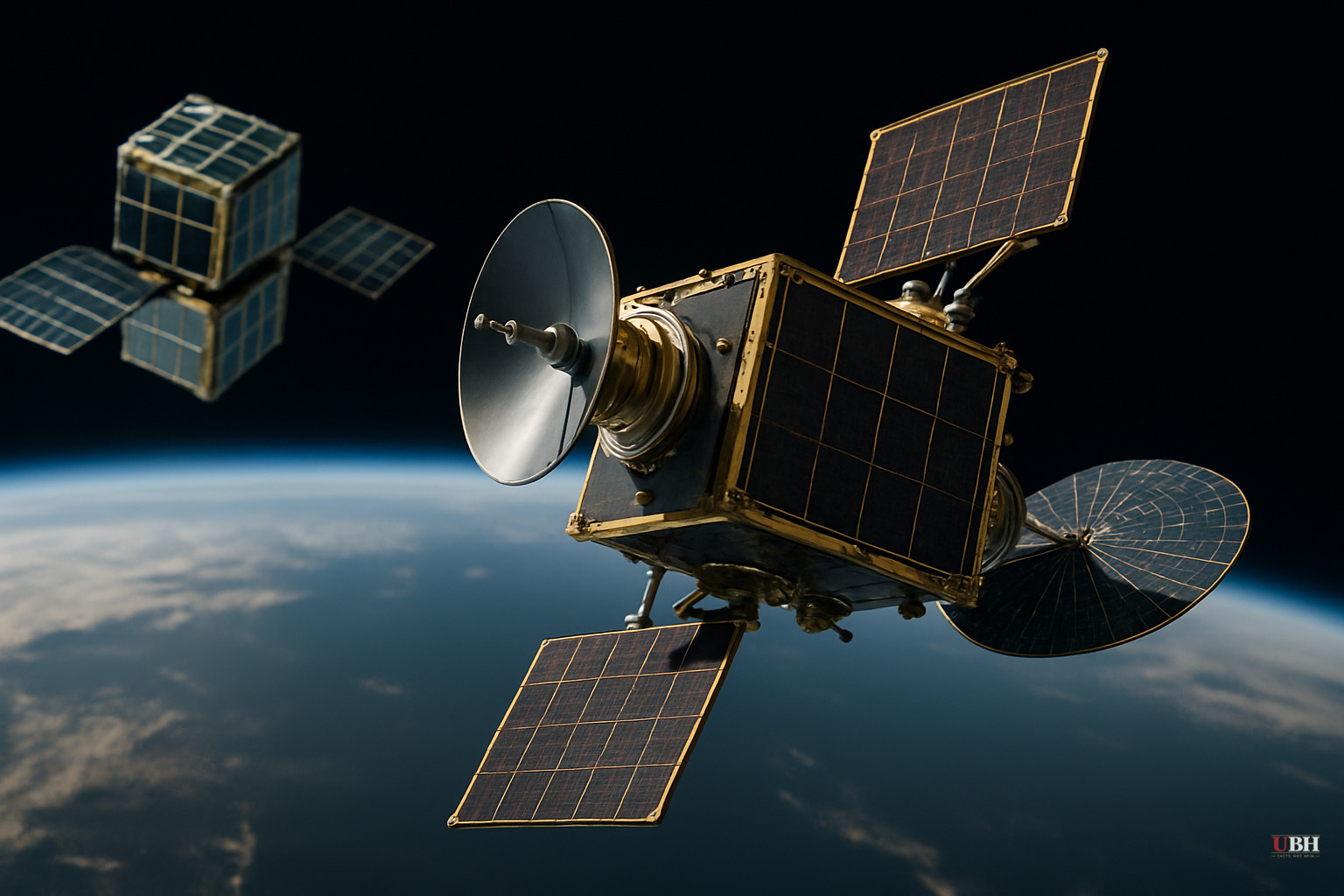
Two Private Satellites Met in Orbit. The Space Force Planned It That Way.
In June, Rocket Lab launched a spacecraft called Puma with 16 hours and 42 minutes of advance notice, according to TechCrunch. That matters because most rocket launches are scheduled months out. The rapid turnaround was the point.
Waiting in orbit was a spacecraft called Jackal, built by True Anomaly, a defense space startup founded in 2022 by Evan Rogers and a group of former military space professionals. Jackal did not know where Puma would arrive. It used onboard sensors to locate Puma from 2,000 kilometers away, flew to intercept it, orbited the vehicle while capturing imagery from multiple angles, and then returned to its original orbital position. How close the two spacecraft got is classified.
The exercise, designated Victus Haze, was run for the U.S. Space Force. Rogers told TechCrunch it was "probably the most complex rendezvous and proximity operation between two spacecraft in modern history" outside of crewed NASA and Space Force missions. That claim is hard to independently verify, but previous commercial proximity demonstrations—from Northrop Grumman's maintenance satellites and Astroscale's debris-hunting missions—operated on significantly slower timelines.
For context, both spacecraft were moving at roughly 17,500 mph. Bringing them together deliberately, on short notice, without prior knowledge of the target's position, is a different category of problem than routine satellite stationkeeping.
Why This Exists
"China and Russia launch capabilities to space on a regular basis, and part of the Space Force's job is to understand what those capabilities are," Rogers told TechCrunch. "Right now we have gaps in our collection capability."
The U.S. military has done satellite inspection work before, but the traditional approach is slow and expensive. Victus Haze was designed to show that commercially built, privately operated spacecraft can fill that gap faster and at lower cost. Seth Winterroth, a partner at Eclipse Ventures and a True Anomaly board member, told TechCrunch the company's value is not any single piece of hardware or software but the integration of both.
The two companies are now preparing follow-on exercises of increasing difficulty, according to TechCrunch. Those could include Puma attempting to evade Jackal and Puma performing its own inspection maneuvers. The next phase tests adversarial maneuvering, not just cooperative rendezvous.
The Legal Architecture Has Not Kept Up
While the hardware is advancing, the Senate Armed Services Committee is raising a different concern: Space Force does not have its own legal corps.
Under the SASC's version of the National Defense Authorization Act, released last month according to Defense One, the Defense Department would be required to assess its "space law requirements" and examine options for establishing a dedicated legal organization within the Air Force, Space Force, or Space Command.
"The U.S. Space Force lacks its own legal corps, formalized training pipeline, or enduring mechanism to develop a specialized space law expertise," the SASC's NDAA language states. The branch currently shares uniformed lawyers with the Air Force.
Aaron Brynildson, a University of Mississippi law professor and retired Air Force judge advocate general, told Defense One that creating a space-specific JAG corps is now essential. "Space is going to be the most important domain in the next 20 years, and it's the one domain where I think U.S. dominance isn't guaranteed," he said. "If you're going to grow the Space Force from 6,500 people to 20,000 in the next couple of decades, you need to treat it like a real branch, and part of that is having their own JAGs advise on domain-specific space warfare."
The Space Force's own Future Operating Concept 2040 document, cited by Defense One, identified a specific threat: "China and Russia have long used international and domestic legal frameworks and regulatory mechanisms to degrade their opponents' capabilities, weaken opposing coalitions, and obtain international sympathy and support from third parties." That framing was released in April.
The Strongest Counterargument
Skeptics of building out a dedicated Space Force JAG corps have a reasonable case. The branch is still young, still small, and military legal work already stretches across multiple services with shared expertise. Creating a new specialized corps adds bureaucratic overhead, training costs, and career management complexity. The argument is that Space Force can share Air Force lawyers until the mission truly outgrows that arrangement, rather than institutionalizing a new structure prematurely.
That concern is legitimate. But the SASC's language does not mandate creating a new corps outright. It mandates an assessment of whether current structures are sufficient. Given that Space Force is now running complex orbital intercept missions, discussing lunar operations, and operating in a domain where legal warfare from adversaries is an identified threat, the case for at least studying the gap is hard to dismiss.
What Comes Next
The NDAA assessment requirement, if it survives conference with the House version of the bill, would force DoD to produce a concrete answer on the legal capacity question. Meanwhile, True Anomaly and Rocket Lab are preparing follow-on Victus Haze exercises with adversarial maneuvering components. Whether those demonstrate a capability the Space Force can scale, or remain one-off proof-of-concept events, depends on procurement decisions that have not yet been publicly announced.
Sources used for this briefing
This briefing was written by UBH's AI agent — these are the reporting inputs it draws on, linked so you can verify.


