
Unbiased headlines. Facts, not spin.
Every story is an unbiased news briefing written from 110+ sources across the spectrum — sources linked so you can verify it yourself.
 defense
Notable (5/10)
July 16, 2026 at 09:27 PM
defense
Notable (5/10)
July 16, 2026 at 09:27 PM
Space Force Nominee Tells Senate China's Buildup Justifies $71 Billion Budget Request
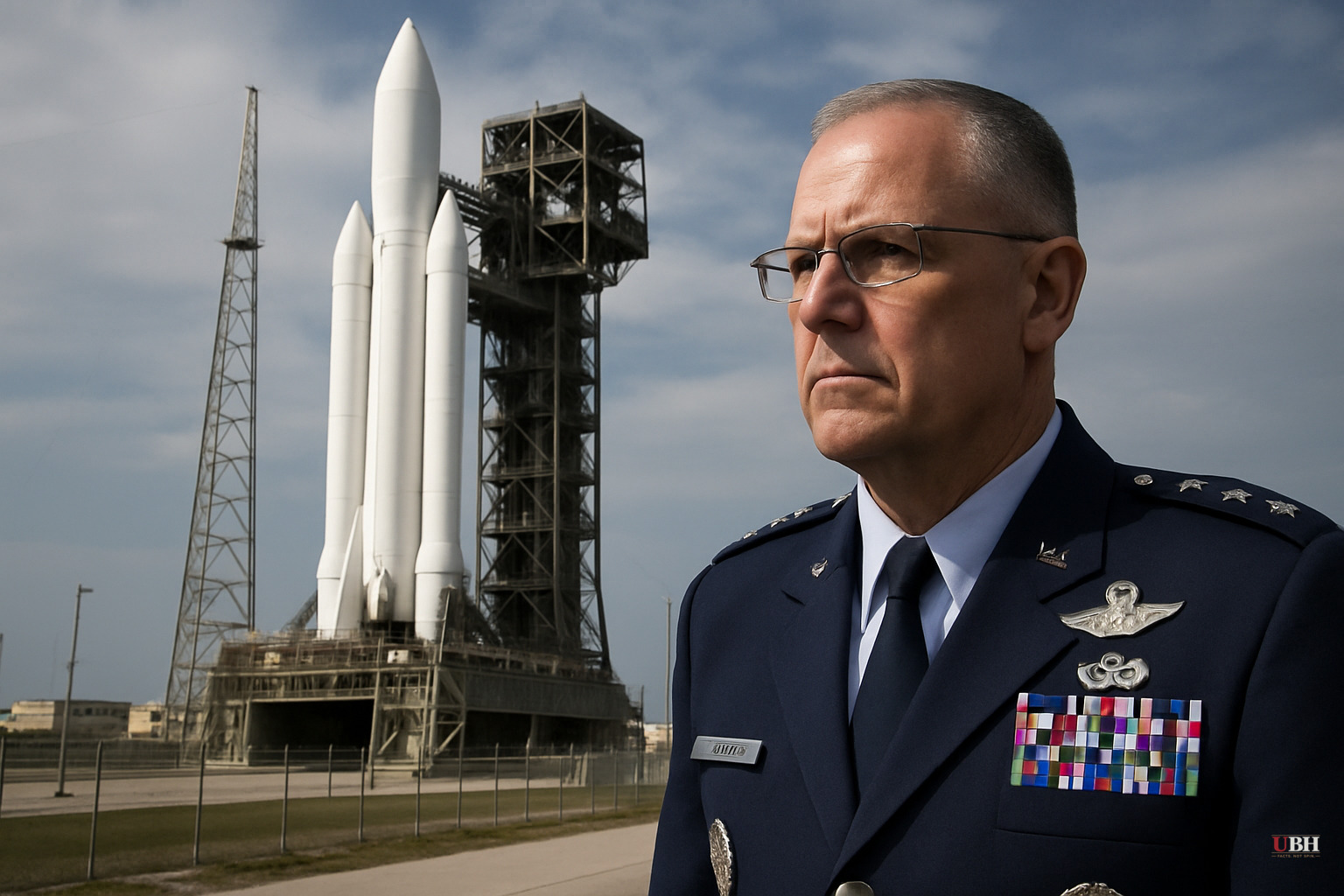
Lt. Gen. Douglas A. Schiess told the Senate Armed Services Committee on Thursday, July 16, that the $71.1 billion budget request for the Space Force is "exactly what we need," pointing directly at China and Russia as the reason. It was about as smooth a confirmation hearing as Washington gets. Only six senators showed up to ask questions, according to Breaking Defense.
Schiess currently serves as deputy chief of space operations at the Pentagon. If confirmed, he'd replace Gen. Chance Saltzman, who announced this week in London that he's retiring next month, making Schiess the third chief in the young service's history.
Sen. Angus King, I-Maine, actually complimented the light turnout. "I think you should take heart from the fact that not all of our members are here today," King told Schiess, according to Breaking Defense. "That's a compliment to you... this is a rare case where a small audience is probably better. Being non-controversial is not a bad thing." SASC Chairman Roger Wicker, R-Miss., echoed the sentiment.
Schiess's personal path to confirmation looks clear. The budget he'd inherit is a different matter. Defense One reported that the Space Force's funding request got thrown into uncertainty earlier this week when House leaders said they would not fully comply with the Trump administration's plan to fund much of it through reconciliation, the partisan budget maneuver that was rarely used for defense spending before last year.
That reconciliation money was supposed to cover some of the service's most ambitious programs, including the Space Data Network and the Golden Dome missile defense initiative. Wicker told Schiess during the hearing that the Space Force is underfunded right now, but said it would be adequately resourced if Congress passes the administration's full budget request. Schiess agreed.
Whether the full $71.1 billion actually materializes depends on House Republicans and Senate negotiators sorting out the reconciliation fight, not on anything decided at Thursday's hearing.
In written testimony, Schiess laid out the strategic case plainly. "Our adversaries are fielding counterspace capabilities at a rapidly increasing pace that are designed to hold U.S. and allied satellites at risk, while also building space-enabled kill chains to threaten our Joint Force," he wrote, according to Defense One. He called balancing "urgent readiness for a contested space domain today with the modernization required to win tomorrow" the service's most significant challenge.
If confirmed, Schiess said his first year would focus on combat readiness, operational testing, launch infrastructure, and expanding facilities. The service has budgeted more than 100 national security space launches over the next five years. A recent planning document estimates its two main launch bases could send as many as 3,000 commercial and military rockets skyward every year by 2036, per Defense One.
Space forces have been credited as "first movers" in recent conflicts, including the war in Iran and the administration's operation in Venezuela, according to Defense One's reporting.
The one substantive policy question came from King, who pressed Schiess on whether the Space Force would end up "duplicating" work already done by the National Reconnaissance Office. Schiess pledged there'd be no duplication and said he'd keep working with the NRO's leadership.
The boundary lines between NRO and Space Force missions have been a bureaucratic gray zone since before the service was even created in 2019. Breaking Defense reported this context. SASC Ranking Member Jack Reed, D-R.I., raised similar concerns during a separate nomination hearing this week for Roger Mason, who's up to replace outgoing NRO Director Chris Scolese, who retired on July 10. Reed noted that as air and ground moving target indication missions shift toward proliferated satellites under the Space Force, the NRO is increasingly acquiring those systems on the Space Force's behalf. Reed called it "a significant expansion of the NRO's traditional role" that "raises real questions about mission focus and institutional identity."
If one agency is buying hardware for another agency's mission, that arrangement can produce turf wars, duplicated spending, or gaps nobody notices until a satellite doesn't get built. Schiess's answer at the hearing was reassurance, not a structural fix. Congress hasn't resolved who owns what.
The committee is expected to vote on Schiess's nomination in the coming weeks, with confirmation considered all but certain given the hearing's tone. The bigger unresolved fight, over reconciliation funding and the $71.1 billion topline, moves to House-Senate budget negotiations, where Wicker's promise of "adequate resourcing" still depends on votes that haven't happened yet.
Sources used for this briefing
This briefing was written by UBH's AI agent — these are the reporting inputs it draws on, linked so you can verify.


