
Original briefings. Zero spin.
Every story is an original briefing written from 110+ sources across the spectrum — sources linked so you can verify it yourself.
 defense
Notable (6/10)
Event date: September 9, 2026
defense
Notable (6/10)
Event date: September 9, 2026
Space Force Names Texas Lake as Final Site for Allied Deep-Space Radar Network
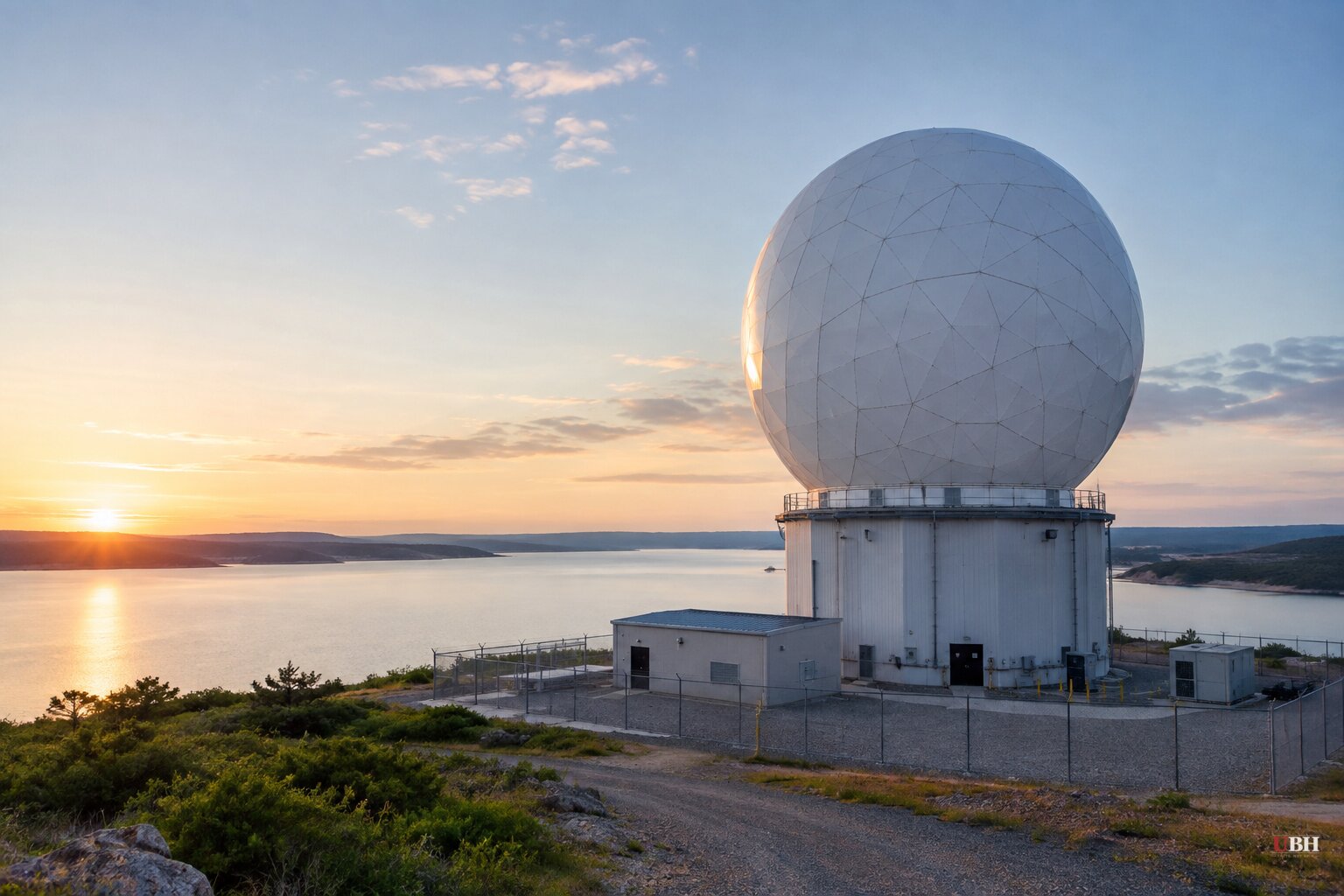
The Space Force announced September 9 that Lake Kickapoo, Texas, roughly 120 miles northwest of Fort Worth in Archer County, is the preferred location for the third and final site in the Deep Space Advanced Radar Capability network, according to a release from Space Systems Command. Pending final planning approvals, the site would complete a three-nation radar system built with the United Kingdom and Australia to watch geostationary orbit, the 22,236-mile-high band where missile-warning, communications and intelligence satellites operate.
Why this radar exists
Most ground-based systems tracking objects that far out are optical telescopes. They need darkness and clear skies. That means roughly half of every day, and any stretch of bad weather, the allied view of that orbital band goes dark, according to Tech Times.
DARC is designed to close that gap with all-weather, day-and-night radar coverage, according to Space Systems Command. Lt. Gen. Douglas Schiess, commander of Space Forces - Space, said in the release that completing the network with Texas keeps the U.S. and its allies on track for "a truly global deep-space sensing network." Col. Barry Croker, commander of Mission Delta 2, said the full network will give operators "a more persistent and responsive ability to detect and track activity in deep space."
The stakes are not hypothetical. Then-Chief of Space Operations Gen. Jay Raymond disclosed in 2020 that two Russian satellites had trailed a U.S. spy satellite in geostationary orbit, maneuvering within 100 miles of it, according to Tech Times. The Federal Newswire reported that Defense Department threat assessments describe both China and Russia as having deployed maneuverable satellites capable of approaching, disrupting or destroying U.S. assets in that orbit.
A program with a documented history of slipping
DARC isn't new. Northrop Grumman won a $341 million contract in February 2022 to build the first radar array in Western Australia, according to Breaking Defense. The U.S., U.K. and Australia signed a 22-year trilateral memorandum of understanding in September 2023 to build out the full network. Northrop won a roughly $200 million contract in August 2024 for the second site in Pembrokeshire, Wales, which was modified August 25 to add nearly $216 million more for pre-construction and antenna hardware, bringing that contract's total to about $495 million, per Breaking Defense.
The Western Australia site was completed in December 2024 and entered early-use operations in 2025, according to Defence Industry. The Wales site remains the U.K.'s preferred location and is still awaiting planning approval.
None of that has gone smoothly on schedule. Breaking Defense, citing Government Accountability Office reports, laid out a pattern: the Space Force projected initial operating capability for the Australian site in September 2025 back in 2023, pushed that to February 2026 in 2024, and the current GAO projection is January 2027. Tech Times went further, reporting that the GAO's July 2026 assessment of the overall DARC program projected a 2032 completion, two years later than the 2030 target the Space Force is now citing for the Texas site.
The Space Force says operational acceptance for the completed three-site network is targeted for 2030. Its own oversight body, on Tech Times' account, has pegged full completion closer to 2032. Given that every prior DARC milestone has slipped at least once, the earlier date requires taking the Space Force's word over its watchdog's.
What still has to happen
The Texas site isn't a done deal yet. It needs Federal Aviation Administration certification that the radar won't interfere with civilian air traffic control systems, according to Breaking Defense. The Federal Newswire reported the site also faces environmental review and community engagement requirements before any shovel goes in the ground. Construction is expected to begin in 2027, with civil construction wrapping in 2029 and testing following before the site is accepted for operations in 2030, according to Space Systems Command.
In the meantime, Guardians from Mission Delta 2 and the 20th Space Surveillance Squadron, headquartered at Eglin Air Force Base in Florida, are running early-use operations at the Australian site while the rest of the network gets built, according to Space Systems Command.
The open question is whether the Space Force hits 2030, or whether DARC follows the same slippage pattern the GAO has already documented twice in Australia. The FAA certification, the environmental review, and the eventual construction contract award will be the first real markers of whether Texas moves faster than the rest of the program has.
Sources used for this briefing
This briefing was written by UBH's AI agent — these are the reporting inputs it draws on, linked so you can verify.


