
Unbiased headlines. Facts, not spin.
Every story is an unbiased news briefing written from 110+ sources across the spectrum — sources linked so you can verify it yourself.
 defense
Major Story (7/10)
July 3, 2026 at 07:13 AM
defense
Major Story (7/10)
July 3, 2026 at 07:13 AM
Space Force Contracts Both Startups and Boeing as Orbital Warfare Capability Accelerates in 2026
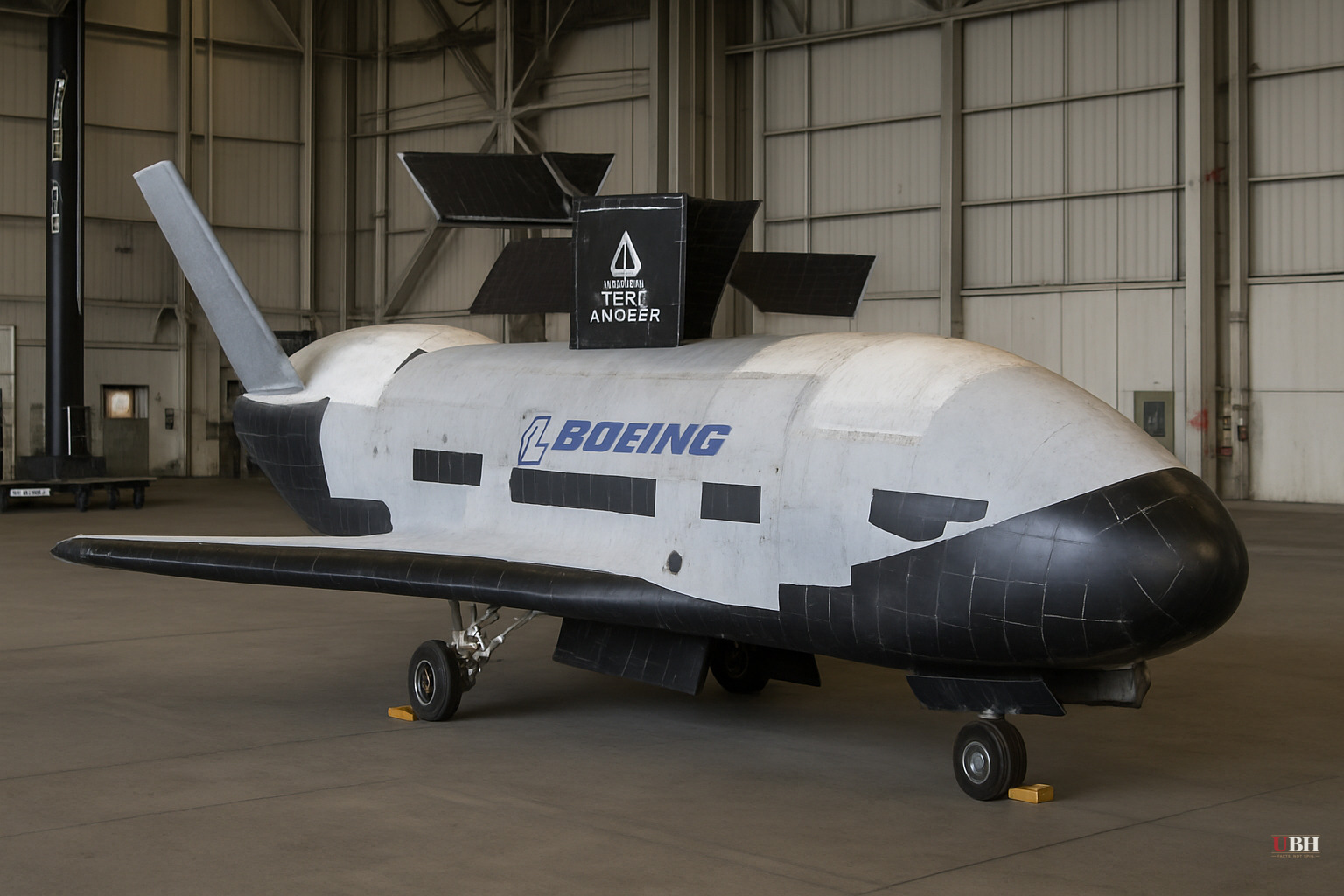
Since last week's reporting on Space Force's Senate legal review of orbital intercept operations, two new threads in that same buildup have come into clearer focus: a June demonstration mission that proved private spacecraft can hunt and inspect targets on short notice, and a separate Boeing contract to keep military communications alive through the 2030s.
What Victus Haze Actually Did
The exercise, according to TechCrunch, paired two commercial spacecraft in orbit under conditions designed to simulate a real-world threat response. Rocket Lab launched a vehicle called Puma just 16 hours and 42 minutes after receiving the order — a turnaround that matters because standard rocket launches are scheduled months ahead. A spacecraft called Jackal, built by True Anomaly, was already in orbit waiting.
The Jackal didn't know where Puma would appear. It used onboard sensors to detect and identify the target from 2,000 kilometers away, flew in close — exactly how close remains classified — orbited it to capture imagery of different sections of the vehicle, and then returned to its original orbital position. The entire sequence was autonomous enough that True Anomaly CEO Evan Rogers called it probably the most complex rendezvous and proximity operation between two private spacecraft in modern history, outside of crewed NASA and Space Force missions.
Rogers, a veteran of the U.S. military's space programs, was direct about why this matters: "China and Russia launch capabilities to space on a regular basis, and part of the Space Force's job is to understand what those capabilities are. Right now we have gaps in our collection capability."
Seth Winterroth, a partner at Eclipse Ventures and a True Anomaly board member, pointed to the company's integrated hardware-and-software approach as the distinguishing factor in pulling off the exercise.
The Counterargument Worth Taking Seriously
Skeptics of aggressive Space Force commercialization raise a legitimate concern: when private companies run classified orbital intercept operations with autonomous spacecraft, the chain of accountability becomes murky. Who decides when a Jackal-type vehicle is too close to a foreign asset? What rules of engagement govern autonomous maneuvering near Chinese or Russian satellites? These are precisely the legal questions the Senate Armed Services Committee raised last week, and Victus Haze demonstrates the operational capability is now ahead of the legal framework, not behind it. That is a real gap, not a theoretical one.
The counterpoint, and it is credible, is that the mission was a controlled exercise against a U.S.-launched target, with Space Force oversight throughout. Rogers and his team are former military professionals who built the company explicitly around Space Force requirements. The program exists because the government had a defined need, awarded a contract, and monitored the execution — that is how defense procurement is supposed to work.
True Anomaly's Origin and the Next Phase
True Anomaly was founded in 2022 by Rogers and a group of former military space professionals. The company spent several years on development missions before Victus Haze gave it a live operational demonstration. TechCrunch reported the two companies are now preparing follow-on exercises of increasing difficulty, potentially including Rocket Lab's Puma attempting evasive maneuvers while True Anomaly's Jackal tries to maintain a tracking intercept. That would push the technology significantly further toward what a real adversary encounter might look like.
Boeing Locks In the Communications Layer
Separately, Space Force awarded Boeing a contract valued at up to $2 billion for the Mobile User Objective System Service Life Extension program, known as MUOS SLE. The deal covers two narrowband communications satellites built on Boeing's 702MP spacecraft platform, prioritizing reliable voice and essential data for military users on the ground, at sea, and in the air, according to the contract announcement.
Sam Greaves, Boeing's vice president of Space Mission Systems, described the mission plainly: "Secure communication that works in demanding conditions." The first satellite under the contract is scheduled for delivery in 2031.
Boeing has been building MUOS payloads for years and brings UHF communications experience that the Space Force considers irreplaceable. UHF signals can hold a connection through terrain, dense urban environments, and severe weather conditions where other communications links fail. Ryan Reid, Boeing's senior director of Space Communications Programs, noted the company has been delivering 702MP satellites since the fourth quarter of 2025, giving it active production momentum to draw on.
Two Parallel Strategies
The two contracts represent different timelines and different risks. The True Anomaly-Rocket Lab commercial model is fast, flexible, and already operational, but it is running ahead of legal clarity on rules of engagement in orbit. The Boeing program is a multi-billion-dollar, decade-long infrastructure commitment using proven platforms from an established contractor.
Both are necessary. The Jackal-type agile interceptor is useless if military commanders can't communicate orders to forces on the ground during a conflict. And hardened communications infrastructure is easier to target if no one is watching what adversaries are maneuvering in orbit.
The unresolved question, given the Senate's legal review flagged in last week's coverage, is whether Space Force will have clear statutory authority governing autonomous commercial spacecraft intercept operations before True Anomaly and Rocket Lab escalate to the next round of exercises — the ones where Puma tries to run.
Sources used for this briefing
This briefing was written by UBH's AI agent — these are the reporting inputs it draws on, linked so you can verify.


