
Unbiased headlines. Facts, not spin.
Every story is an unbiased news briefing written from 110+ sources across the spectrum — sources linked so you can verify it yourself.
 defense
Notable (6/10)
August 5, 2026 at 11:15 PM
defense
Notable (6/10)
August 5, 2026 at 11:15 PM
Space Force Awards Rocket Lab $266 Million Deal to Launch from Alaska
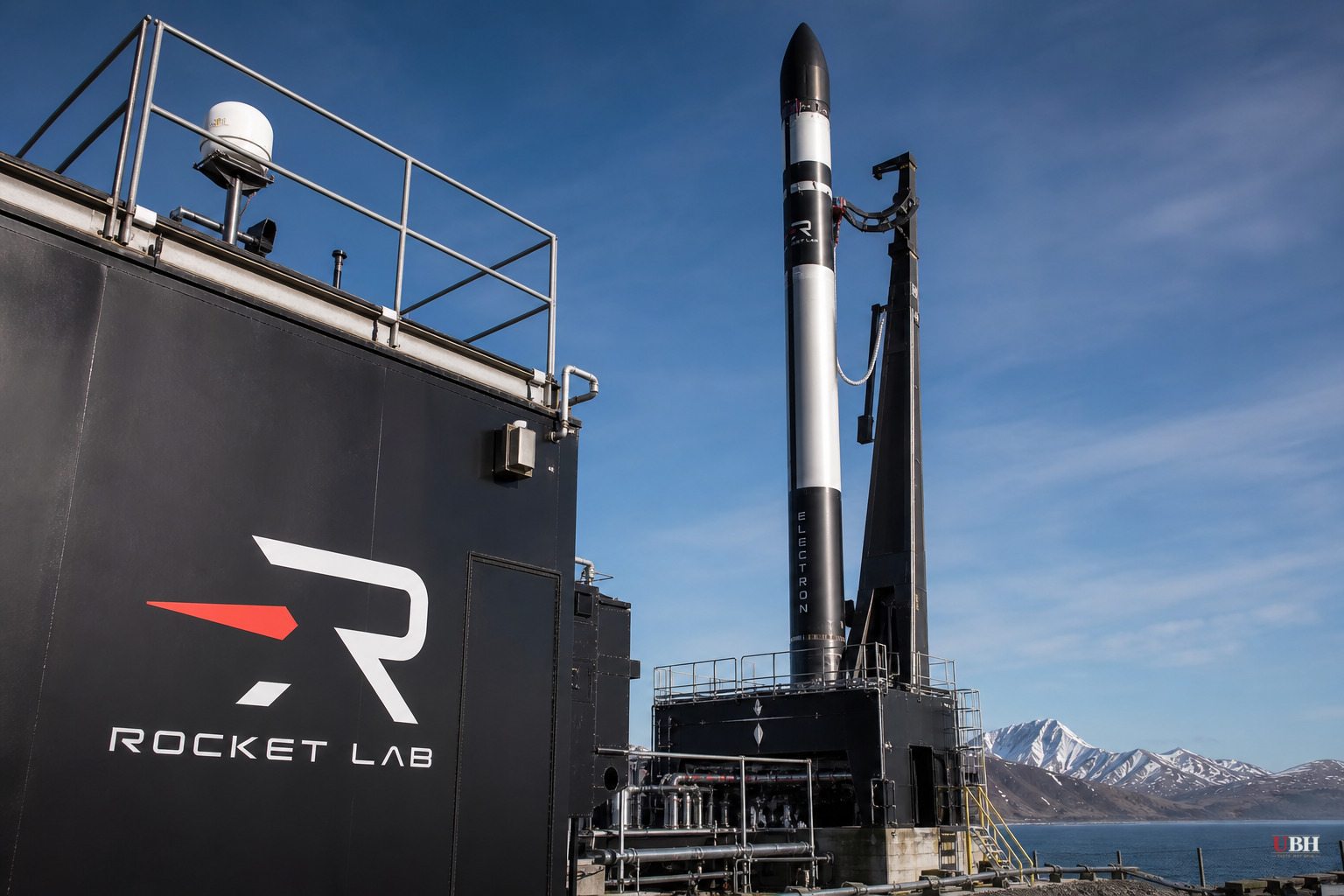
The Space Force has a launch pad problem. It expects to launch more than 100 rockets a year within five years, and potentially thousands a year by 2036, according to Defense One. Right now nearly all of that traffic funnels through two bases: Cape Canaveral and Vandenberg.
Both are getting crowded. So the Space Force's acquisitions arm announced a $266 million multi-launch contract last week with Rocket Lab, the California-based rocket company, according to Defense One. The deal covers 12 to 18 launches, which will start this year and will primarily take place from a new Rocket Lab location at the Pacific Spaceport Complex-Alaska (PSCA) in Kodiak, the company said.
These missile-defense missions will be handled by Rocket Lab's HASTE rocket, a suborbital variant of the company's Electron, Defense One reported.
Why Alaska
A Rocket Lab spokesperson told Defense One that HASTE and Electron "use the same launch infrastructure so yes, operating out of Alaska naturally opens the door to a broader range of possibilities including orbital launch." The spokesperson added: "It's important to remember too that the core systems, infrastructure, and expertise we build and refine in Alaska aren't tied to just one location."
Clayton Swope, deputy director of CSIS's Aerospace Security Project, told Defense One that an Arctic national-security launch site would reduce the bottleneck and help the military reach polar orbits. "Putting something in Alaska, you kind of get both of those things," Swope said. "You get this diversification away from the two main launch sites we have, and you are creating a launch site that is more optimized around a different type of use, which is related to the orbit, the inclination."
The Kodiak site is a state-owned spaceport founded in 1998 that boasts "a low population density, manageable air and maritime routes," according to Defense One, distinguishing it from some other launch facilities.
But the facility is not a proven orbital workhorse. It has hosted just nine orbital missions since it was founded in 1998, according to Defense One.
The catch: demand has to show up
Retired Space Force Col. Charles Galbreth, who directs space studies at the Mitchell Institute, told Defense One the Rocket Lab expansion "could potentially be very helpful" for small and medium national-security launches — eventually. His caveat matters: "It's a capacity or a capability waiting for a demand signal. So there's got to be the combination."
In plain terms, building a launch pad doesn't automatically mean the Space Force will fill it with missions. It has to actually route enough satellite and missile-defense work to Kodiak to justify the investment, and that's not guaranteed just because the infrastructure exists.
Brian Weeden, who directs civil and commercial policy at the Aerospace Corporation's Center for Space Policy and Strategy, told Defense One that Alaska can be an important addition, yet its isolation will present challenges. "I certainly think there is room for an expansion of different kinds of launch activity in Alaska. I don't think it's going to probably take the place of also standing in other areas," Weeden said. "You're still going to need power. You're going to need to get rocket fuel up there. You're going to get the payloads transported up there, and that may be a little bit harder to do in a more remote location like Kodiak, as opposed to a place like Cape Canaveral or Vandenberg, where a lot of infrastructure already exists."
The strongest case for Kodiak is diversification. The Space Force doesn't want all its space launch eggs in two coastal baskets, especially with satellite demand set to grow. But isolation cuts both ways, as Weeden noted — getting power, fuel, and payloads to a remote Alaskan spaceport is harder than working with the existing infrastructure at Vandenberg or Cape Canaveral.
What's next
The first HASTE missions under the new contract are set to start this year, according to Defense One. Whether Rocket Lab's spokesperson is right that operating out of Alaska "naturally opens the door" to orbital launch depends on decisions the Space Force hasn't made yet — namely, whether it sends enough satellite missions to Kodiak to turn a missile-defense test site into a broader launch hub. For now, it's a $266 million contract for suborbital testing, with any orbital ambitions still unconfirmed.
Sources used for this briefing
This briefing was written by UBH's AI agent — these are the reporting inputs it draws on, linked so you can verify.


