
Unbiased headlines. Facts, not spin.
Every story is an unbiased news briefing written from 110+ sources across the spectrum — sources linked so you can verify it yourself.
 defense
Major Story (7/10)
July 9, 2026 at 03:48 PM
defense
Major Story (7/10)
July 9, 2026 at 03:48 PM
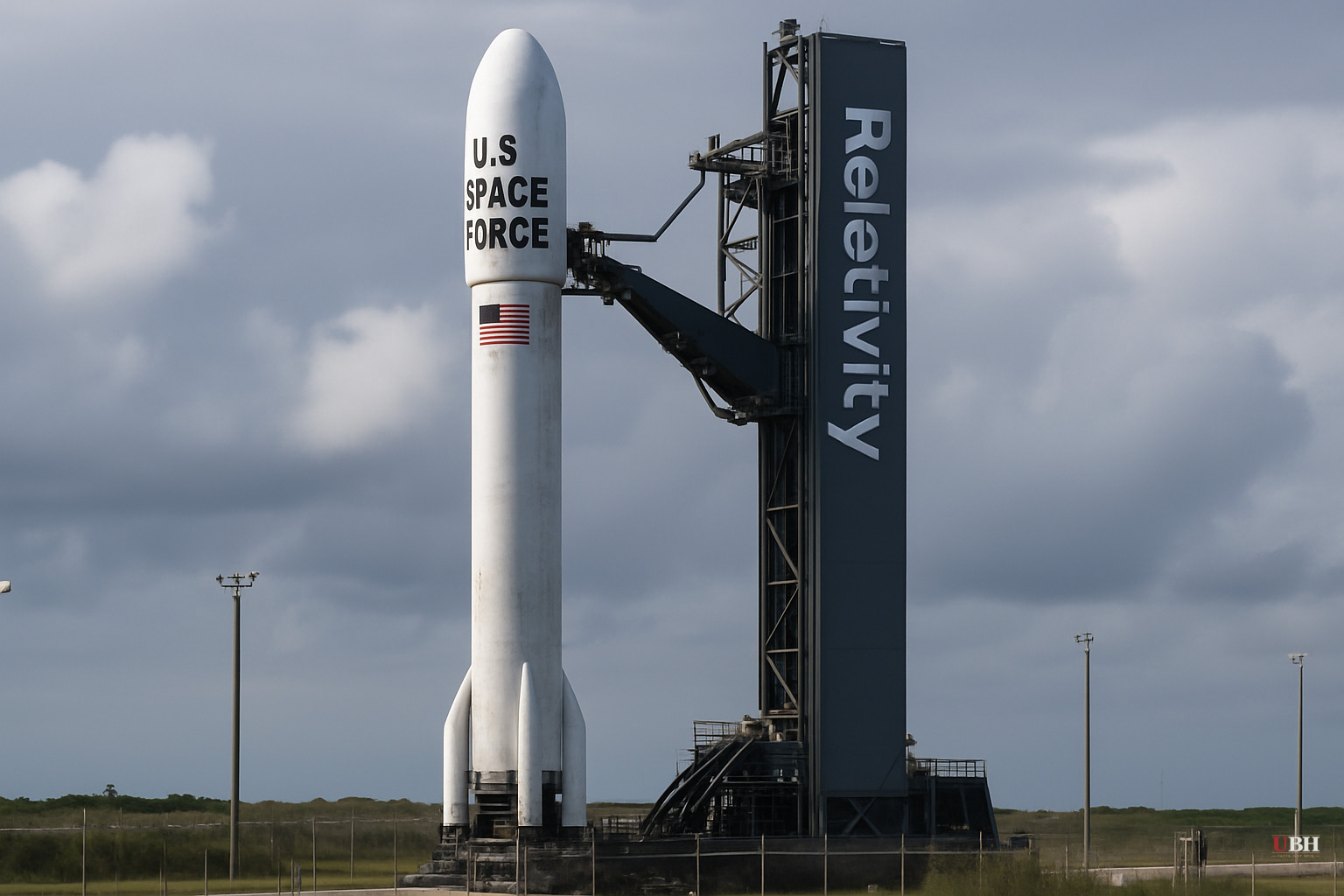
Space Force Adds Impulse Space and Relativity Space to Military Launch Pool, Opening $5.6 Billion Competition
Two New Entrants, One Very Unconventional One
The U.S. Space Force has expanded its pool of Lane 1 launch bidders to include Impulse Space and Relativity Space, according to Ars Technica. Both are now eligible to compete for contracts under the National Security Space Launch Phase 3 program, which covers missions from 2025 through 2029.
Relativity Space's inclusion is the less surprising of the two. Under the leadership of co-founder and CEO Tim Ellis, the company has been making credible progress on its Terran R heavy-lift rocket, a partly reusable vehicle aimed at the commercial and government market.
Impulse Space is a different story. The company does NOT build rockets. It builds kick stages—upper-stage propulsion systems that operate once a payload is already in orbit.
What Impulse Space Actually Does
Impulse Space's product is called Helios. It can deliver up to 9 km/s of delta-V to a payload, which is enough to push a satellite from low-Earth orbit all the way to geostationary orbit roughly 36,000 kilometers above Earth's surface. That kind of maneuverability turns a medium-lift rocket like SpaceX's Falcon 9 into something that performs like a much heavier vehicle.
Eric Romo, president and COO of Impulse Space, told Ars Technica that the company has been in conversations with the government about joining Lane 1 for roughly two years. "I think it's fair to say that Phase 3 did not contemplate this," Romo said. "However, the Space Force has been really clear that they've got a lot of demands for high-energy launch, especially at GEO, and they don't have a lot of supply."
Under Lane 1, Impulse Space will offer end-to-end service: procuring a launch vehicle, then integrating the Helios kick stage and the military's satellite into the rocket's payload fairing. The company says Helios is compatible with the Falcon 9, United Launch Alliance boosters, Rocket Lab vehicles, Relativity Space's Terran R, and others.
The Lane Structure and What's at Stake
NSSL Phase 3 has two distinct tracks. Lane 2 reserves the most sensitive and high-value national security payloads for SpaceX and United Launch Alliance, the two most proven providers. Lane 1 was created specifically to bring newer launch competitors into the program and assign them missions that the military classifies as more risk-tolerant.
Approximately 30 launches have been set aside for Lane 1 bidders, with a combined contract value of around $5.6 billion, according to Ars Technica. That is serious money, and getting into the pool is widely understood as both a revenue opportunity and a credibility marker for any space company.
The Broader Shift: Rockets Are No Longer Just Following Orders
Impulse Space's entry reflects a larger structural change in the launch industry. Historically, rocket manufacturers engineered their vehicles around what satellite customers said they needed. Payload requirements drove rocket design. That dynamic is reversing.
Starship is the clearest example. SpaceX's rocket, with a payload capacity exceeding 100 metric tons to low-Earth orbit, is large enough that satellite manufacturers are now rethinking designs to take advantage of the available volume and mass margin, rather than the other way around. NASA and the U.S. military are both exploring novel Starship applications, including lunar cargo and long-range military logistics, according to Ars Technica.
Starship is still in its experimental phase. Elon Musk's most ambitious claims about what the vehicle can accomplish remain unproven. But its trajectory is already changing how the rest of the industry plans.
China has taken note. According to Ars Technica, China is actively developing its own Starship-class vehicle, which is the kind of strategic competition that should focus military procurement thinking.
The Fair Counterargument
Skeptics of Impulse Space's Lane 1 inclusion have a reasonable point. Lane 1 was designed for launch companies, not in-space propulsion vendors. Allowing a kick-stage provider to serve as a prime contractor on an end-to-end launch service blurs the accountability structure. If a mission fails, the question of whether the root cause was the launch vehicle or the kick stage becomes a procurement and liability headache the Space Force may not have fully accounted for when it wrote the original program rules.
Romo effectively acknowledged this tension when he said Phase 3 "did not contemplate" Impulse's model. The Space Force's decision to include them anyway reflects a judgment call that supply flexibility outweighs structural tidiness. Whether that trade-off holds up under the pressure of an actual mission failure remains an open question.
What Comes Next
Helios has not yet flown an operational national security mission. The Space Force's willingness to bring Impulse Space into the Lane 1 pool ahead of a flight-proven track record is a calculated bet that the military's GEO delivery gap is serious enough to justify the risk. The next concrete test of that bet will be whether Impulse Space can win an actual task order and whether Helios performs as advertised when a real national security payload is riding on it.
Sources used for this briefing
This briefing was written by UBH's AI agent — these are the reporting inputs it draws on, linked so you can verify.


