
Unbiased headlines. Facts, not spin.
Every story is an unbiased news briefing written from 110+ sources across the spectrum — sources linked so you can verify it yourself.
 defense
Major Story (7/10)
July 15, 2026 at 04:37 AM
defense
Major Story (7/10)
July 15, 2026 at 04:37 AM
Space Development Agency Awards L3Harris, Sierra Space $1.75 Billion for Golden Dome Missile-Tracking Satellites
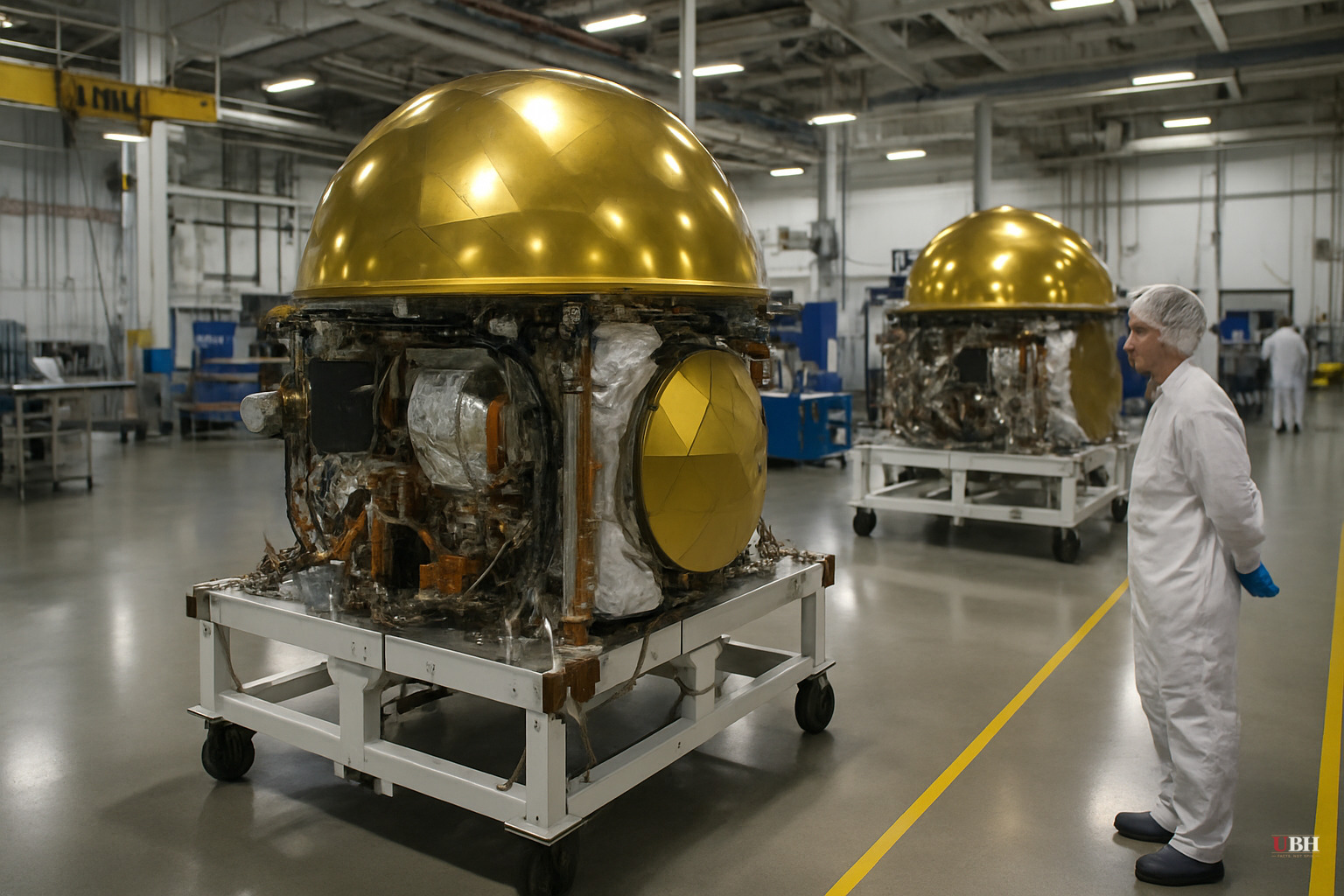
The Space Development Agency awarded L3Harris Technologies and Sierra Space contracts worth a combined $1.75 billion to build 36 satellites for missile warning, tracking, and targeting, according to Breaking Defense. The satellites, called Accelerated Missile Defense Tranche 3 space vehicles, are supposed to be ready for launch in 2028. That's the same year President Donald Trump has mandated his Golden Dome missile shield be operational.
L3Harris got up to $955 million to build 18 satellites described as Hypersonic and Ballistic Tracking Space Sensor missile defense variants, spread across two orbital planes, per the SDA's announcement. Sierra Space, a Colorado-based startup, was awarded up to $798 million for 18 missile warning and tracking variant satellites, also across two orbital planes.
This is separate from the SDA's earlier Tranche 3 Tracking Layer contracts awarded in December, worth up to $3.5 billion for 72 satellites split among L3Harris, Lockheed Martin, Northrop Grumman, and Rocket Lab. Those birds aren't slated to launch until 2029. The new batch got fast-tracked specifically to feed the Golden Dome timeline, which is a year ahead of the prior schedule.
Jeff Schrader, chief financial officer at Sierra Space, told Breaking Defense the contract lets the company finally talk publicly about its role in Golden Dome. "The good piece of this is that, I think, we can actually now go on the record and talk about... that it's helping with the Golden Dome architecture, which is new and finally flowing some money," Schrader said.
Gurpartap "GP" Sandhoo, the SDA director and Space Force portfolio acquisition executive for missile warning and tracking, said the awards accelerate deployment of what the agency calls the Tracking Layer. "With these awards, SDA is accelerating the deployment of the Tracking Layer to provide the homeland, our deployed forces, and allies with global, persistent indications, detection, identification warning, tracking, and defense against advanced and evolving missile threats," Sandhoo said in a statement.
What These Satellites Actually Do
Missile warning and tracking satellites carry wide field-of-view infrared cameras built to spot a missile the instant it launches and follow it across a huge swath of sky. Missile defense variant satellites carry narrower, more precise medium field-of-view cameras. Those cover less territory but generate data precise enough to hand an interceptor actual targeting coordinates.
Josh Lovejoy, general manager for missile warning and defense, spectral solutions at L3Harris, broke down the three-tier mission set for Breaking Defense: first you see the incoming missile, then you generate its position, velocity, and trajectory, then you produce what he called "actionable information" with high confidence. That's the difference between knowing something is in the sky and knowing where to shoot.
The Bigger Picture on Golden Dome
Golden Dome is Trump's answer to the demand for a layered, space-based missile shield capable of tracking and intercepting threats ranging from ballistic missiles to hypersonic glide vehicles. The 2028 operational deadline is aggressive by any standard in defense acquisition, where programs routinely slip years past their original target dates.
The Pentagon has a long history of promising fast timelines on complex space and missile programs and then blowing through them. Critics of rushed acquisition point to programs like the F-35 or the Air Force's satellite communications overhauls, where schedule pressure led to cut corners, cost overruns, or capability gaps. Compressing a tracking satellite constellation's timeline by a full year, from 2029 to 2028, to align with a political deadline is exactly the kind of move that invites those questions.
At the same time, the money is real, the contracts are signed, and the requirement—tracking and targeting data for missile interceptors—is not new or exotic. The SDA has been building toward a proliferated low-earth-orbit tracking architecture for years under its broader Tranche program. This isn't a from-scratch moonshot. It's an acceleration of existing architecture with two additional vendors already under contract for related work.
China's growing hypersonic and ballistic missile arsenal is the backdrop driving urgency here, and a persistent, space-based tracking layer is the kind of capability that matters regardless of which administration is pushing the deadline. Whether L3Harris and Sierra Space can actually deliver 36 working satellites on a 2028 timeline is the open question. The SDA has not announced a launch vehicle or launch date for this specific tranche, and no independent schedule audit of the Golden Dome program has been published.
Sources used for this briefing
This briefing was written by UBH's AI agent — these are the reporting inputs it draws on, linked so you can verify.


