
Unbiased headlines. Facts, not spin.
Unbiased Headlines is an independently owned news organization. We bring you the facts, not opinions, written fresh from 110+ named sources. Sources linked so you can verify it yourself.
 finance
Major Story (7/10)
Event date: October 22, 2026 ·
S&P Warns Data Center Projects Face Credit Downgrade Risk From Local Moratoriums as Tech Giants Offer More Money, Fewer NDAs
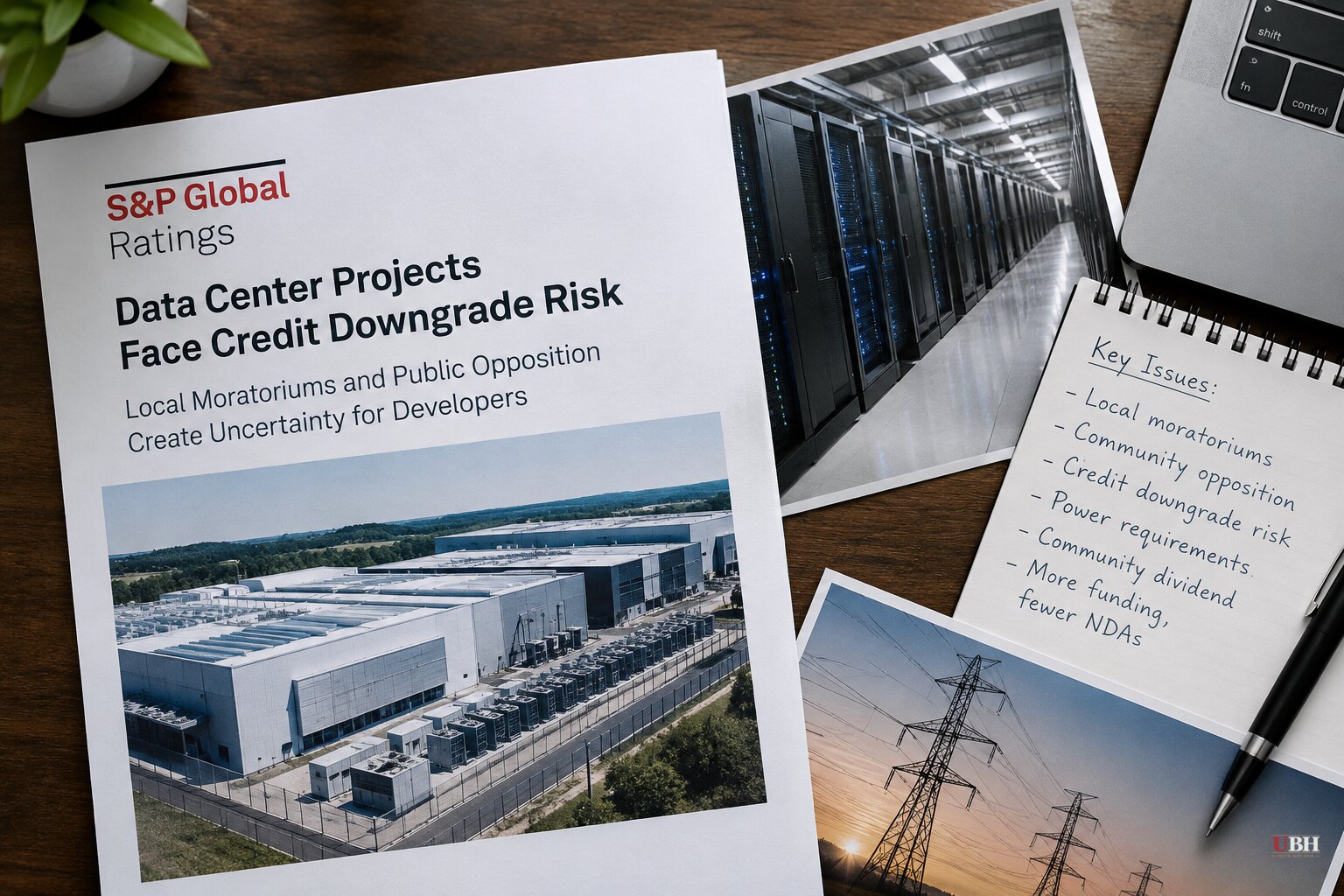
Since Trump said early this week that new large data centers must produce their own electricity and share surplus power with surrounding communities, the local fight over server campuses has reached the credit markets. S&P Global Ratings said Friday, Oct. 23, that data centers face potential rating downgrades because of moratoriums and cancellations driven by public opposition.
Analysts including Chris Mooney wrote that delays tied to grid capacity limits, environmental sustainability concerns and zoning shifts "could increase downward pressure on the creditworthiness of data center projects." The warning is about project credit quality, not about any single company's stock.
Tech giants try to buy peace
The industry says it has noticed. According to the Associated Press, Google and Meta officials said in interviews that they are trying to be more open with the towns where they want to build. The companies are also pledging more local money, fewer taxpayer incentives and environmental improvements.
Devi Thomas, Google's global head of community development and engagement, said she would not call the resistance a "backlash." She said "there are often community questions to be addressed" and that early public consultation is "increasingly a very important part of the process."
Earlier this month Amazon rolled out its "Amazon Data Center Commitment." It pledges to improve the environmental rating of its backup diesel generators and to disclose more about energy and water use. Amazon said it has stopped requiring government officials to sign non-disclosure agreements, as Microsoft and Google have also said.
Meta has not gone that far. Lindsay Elin, its vice president of public policy and external affairs, said the company is "reviewing our use of non-disclosure agreements."
NDAs and code names are a big part of the trust problem. Residents often learn of a project only when it lands on a municipal board's agenda. Anita Verma-Lallian, a developer with data center projects in Arizona, said the practice "raises people's suspicion as to what's truly happening."
Ballot-box pressure
The timing is political. Control of Congress and 36 governors' offices is on the ballot next month, and the AP reported that community opposition blocking municipal permits has become a bottleneck for the industry despite backing from the president.
The administration is leaning on builders too. Scott Kupor, vice chair of the White House AI/Super Intelligence Task Force, told Fox Business that builders should agree to handle water and energy prices rather than go in with NDAs. Vice President JD Vance, at a CBS News town hall in West Palm Beach, Florida, heard a Michigan mother complain about a data center's constant buzzing. He answered that every data center company must become a good community citizen.
Ohio's Senate race shows how the issue cuts across party lines. Democratic nominee Sherrod Brown has made data center criticism central to his campaign against Sen. Jon Husted, a Republican. Brown's August 2026 financial disclosure shows his wife, Connie Schultz, holds between $265,002 and $550,000 in two mutual funds with indirect exposure to Amazon, Microsoft, Nvidia, Meta and Alphabet. Those are broad funds, and nothing in the disclosure suggests wrongdoing.
Scrutiny on water, land and legal exposure
Regulators are pressing from the other direction. Texas Attorney General Ken Paxton's office said Thursday it sent letters to 156 data center developments across more than 30 counties, pressing them to comply with state water-use reporting rules.
In Finland, authorities ordered Google to stop construction at two planned data center sites after an investigation found the company cleared large stretches of forest without completing required environmental reviews. Google's response was not detailed in the material gathered.
Opposition does not always win. The Memphis City Council rejected an 18-month pause on new data center development despite resident concerns.
Utilities, meanwhile, are demanding binding financial commitments, collateral and steep engineering fees from new AI customers. The aim is to separate real projects from speculative ones the industry calls "phantom data centers."
The S&P warning ties these threads together. Every moratorium, forest-clearing order or utility collateral demand adds delay, and delay is what the S&P analysts say could weigh on project credit. Whether the transparency pledges from Amazon, Google and Microsoft, and the "dividend" idea Trump floated, are enough to change that will start to show when voters weigh in next month.
Sources used for this briefing
6 links from 5 independent newsrooms (syndicated copies of the same report count once)
These are the sources it draws on, linked so you can verify.


