
Unbiased headlines. Facts, not spin.
Unbiased Headlines is an independently owned news organization. We bring you the facts, not opinions, written fresh from 110+ named sources. Sources linked so you can verify it yourself.
 finance
Notable (6/10)
Chinese national Zheng Zhao extradited from Netherlands, charged with laundering money from $36.9M crypto scam, prosecutors allege
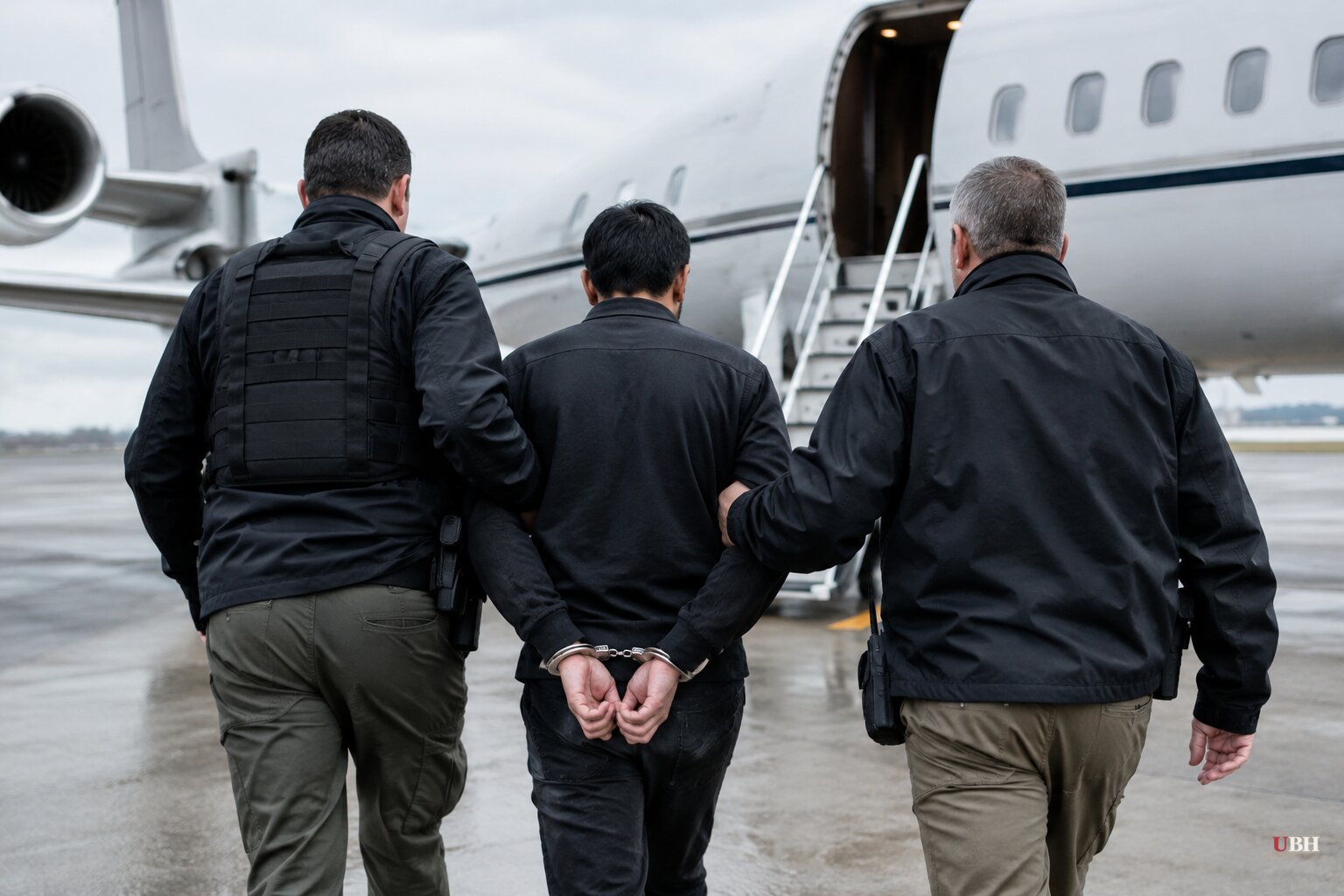
A 44-year-old Chinese national accused of helping launder the proceeds of a Cambodia-based crypto fraud ring is now in U.S. custody. Zheng Zhao was extradited from the Netherlands and made his first appearance in federal court in Los Angeles on Friday, Oct. 23, according to the Justice Department.
He faces one count of conspiracy to commit money laundering. The maximum penalty is 20 years in federal prison. A judge ordered him detained, and his next court date is Nov. 30, 2026.
Zhao is presumed innocent. The Justice Department stressed that a criminal charge is not proof of guilt.
What prosecutors allege
According to court documents, the network ran out of a scam center in Cambodia. Operators contacted Americans through social media, phone calls, text messages and dating platforms.
They built relationships first. Then they pushed investments.
Victims were steered to websites built to look like legitimate cryptocurrency trading platforms. The sites showed account balances and trading profits that prosecutors say were fabricated. When victims tried to withdraw money, prosecutors allege, they were blocked and often pressed to deposit more.
Investigators have identified at least 174 U.S. victims. The Justice Department puts the total taken at more than $36.9 million.
How the money moved
The laundering route is the core of Zhao's case. Prosecutors say victim funds went into U.S. bank accounts controlled by the network, then were transferred into a single account at Deltec Bank in the Bahamas.
From there, the allegation is that Zhao and his co-conspirators had the money exchanged into Tether's USDT, a dollar-pegged stablecoin. The tokens were then sent to digital wallets controlled by entities in Cambodia and passed on to the people running scam centers there and in surrounding regions.
Prosecutors say the mix of U.S. shell companies, an overseas bank account and crypto wallets was meant to hide where the money came from and make recovery harder.
Zhao was first charged in August 2025. Getting him to a U.S. courtroom took about 14 months.
Eight guilty pleas so far
Zhao is not the first defendant in the case. Eight co-conspirators have pleaded guilty, according to the Justice Department.
Two have been sentenced so far. Jingliang Su received 46 months in prison. Shengsheng He received 51 months. The sentences are well short of the 20-year statutory maximum Zhao faces.
The case is being handled through the Justice Department's Cyber-Enabled Scam Initiative, with the U.S. Attorney's Office for the Central District of California and the Criminal Division involved.
The wider Cambodia picture
The case sits inside a larger push against Southeast Asian scam operations, which U.S. officials and researchers have tied to human trafficking and forced labor. Many compounds in Cambodia and northern Burma are staffed in part by people who were trafficked and held against their will.
Separate action has targeted the Prince Group, a Cambodian conglomerate. The charging documents against Zhao, as described, do not connect him to that company. Cambodian courts have authorized a freeze of nearly $1 billion in Prince Group assets, including more than $300 million in cash, according to Chhay Sinarith, head of the secretariat of Cambodia's Commission for Combating Technology-enabled Scams. He said judges will decide whether the state keeps the property.
The group's founder, Chen Zhi, was arrested and sent to China in January. Cambodia has warrants out for 32 people tied to the group and is seeking Interpol Red Notices for 29 suspects believed to have fled.
In the U.S., the Justice Department seized roughly 127,271 Bitcoin in October 2025 and called it the largest forfeiture in its history. The coins were worth about $15 billion at the time and about $9 billion by March 2026. The forfeiture has not been finalized. The International Consortium of Investigative Journalists has reported that the department rejected claims filed by lawyers for hundreds of alleged scam victims. Those lawyers argue the seized funds should go to the people who were defrauded.
Beijing's role is disputed
China's state broadcaster CCTV aired a documentary on Oct. 5 to 7, co-produced with the Ministry of Public Security, on cracking down on telecom fraud in northern Burma. State media said the "four major families" behind compounds there have been "completely eradicated." China also executed 11 people in January over scam bases in Burma.
Others dispute that picture. She Zhijiang, founder of the Yatai New City compound in Myawaddy, Burma, said in prison interviews after his 2022 arrest in Thailand that Chinese Ministry of State Security personnel recruited him as an intelligence operative in the Philippines in late 2016. A 2025 report by the U.S. Congressional-Executive Commission on China has also examined the issue. These are his claims and those of the report's authors. Beijing has not conceded them.
Nothing in the Zhao charges alleges a role for any government.
What comes next
Zhao returns to court Nov. 30. He has not entered a public defense in the materials released so far, and his lawyer has not been identified. With eight co-defendants already pleading guilty, prosecutors have a track record in this case. The court will have to decide whether prosecutors can prove Zhao's specific role in moving the $36.9 million.
Sources used for this briefing
7 links from 7 independent newsrooms (syndicated copies of the same report count once)
These are the sources it draws on, linked so you can verify.


