
Unbiased headlines. Facts, not spin.
Unbiased Headlines is an independently owned news organization. We bring you the facts, not opinions, written fresh from 110+ named sources. Sources linked so you can verify it yourself.
 finance
Notable (6/10)
Event date: October 19, 2026 ·
San Diego Plans to Exit California Muni Bond Authority as SEC Questions JPA Oversight
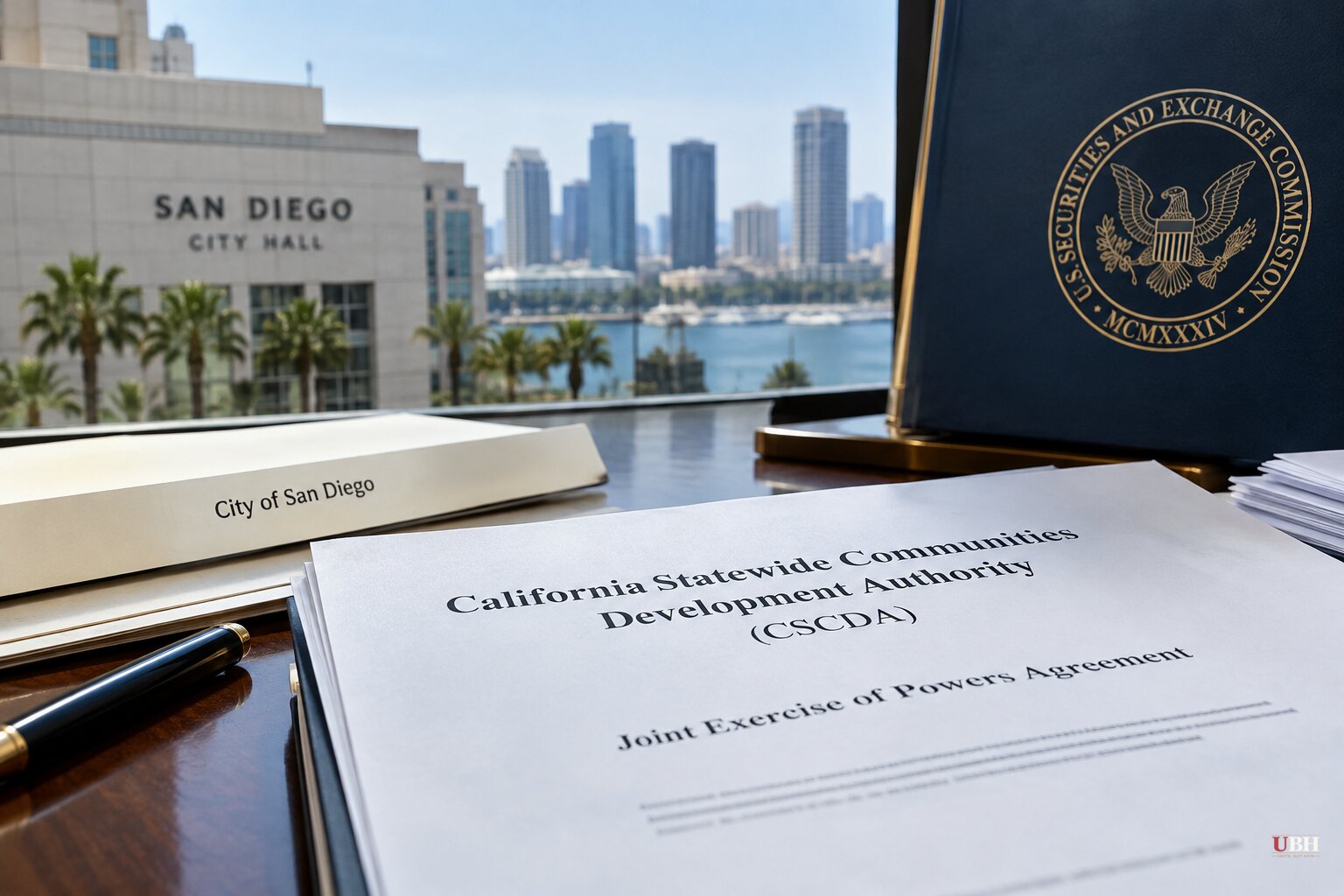
The city of San Diego said it plans to leave the California Statewide Communities Development Authority, a joint powers authority that helps issue and manage billions of dollars in municipal bonds. The move follows concerns from federal regulators about how the organization is overseen, according to Bloomberg's reporting.
CSCDA handles bonds for local governments, nonprofits and projects such as housing developments. It is one of several California joint powers authorities, or JPAs, now drawing scrutiny.
What the SEC said
On Oct. 15, Dave Sanchez, director of the SEC's Office of Municipal Securities, laid out the agency's concerns at the Bond Buyer's California Public Finance Conference in San Francisco. He said a closer look at JPA deals, including essential housing deals, has turned up "myriad" potential securities law concerns "touching nearly every deal participant."
Sanchez spoke in his official capacity and noted his views do not necessarily reflect those of the Commission or its commissioners.
A JPA is a public entity created when two or more public agencies, such as cities, counties or special districts, agree to exercise powers they share. One of those powers is issuing debt. California JPAs operate under the Joint Exercise of Powers Act.
Why would a federal agency care about a state and local structure? Sanchez answered it himself. The SEC enforces federal antifraud rules and the issuer protection rules that govern what financial professionals owe state and local governments.
He said his remarks focused on bond-issuing JPAs that are "largely privately run," along with certain related housing entities.
The default numbers
Sanchez said these JPAs issue a lot of bonds, and their default rates exceed those of more typical local governments and state-level conduit issuers.
He offered two examples without naming the authorities in the text of his remarks. One JPA financed 14 essential housing projects with $2.5 billion in bond financing. Half of those projects have since defaulted, dipped into reserves to make payments or reported some other impairment.
Another JPA has a default rate of 1%. That sounds small until you compare it with the overall municipal market. Sanchez said it is more than 30 times the overall default rate for municipal bonds.
The SEC first flagged the comparatively high default rates. Its focus has since widened. "We are now very focused on the governance, transparency and accountability deficiencies that may be the building blocks of additional defaults and potential securities law violations that can harm investors and deliver fewer public benefits to taxpayers," Sanchez said.
He described potential concerns. He did not announce findings of violations or enforcement actions.
Sanchez also devoted part of the speech to energy prepay bonds, which he called an emerging topic. In those deals, he said, municipal entities are not getting the information they need from certain regulated entities.
Cities heading for the exits
San Diego is not the first local government to walk away from a JPA over these questions. In April 2025, the Larkspur City Council voted to end the city's membership in the California Community Housing Agency, known as CalCHA.
Larkspur Mayor Stephanie Andre welcomed Sanchez's speech. She said she and Councilmember Scot Candell led the city's investigation into "Serenity at Larkspur," and that Sanchez cited its results.
"I encourage the SEC, its Office of Municipal Securities, its Division of Enforcement and other governmental authorities to investigate the highly unusual fees, governance structures and disclosure practices of these JPAs and their related entities to ensure that there is no wrongdoing," Andre said.
She also urged regulators to keep updating their rules "to protect our local communities, taxpayers and bond investors."
Note what she asked for: an investigation to determine whether there is wrongdoing. Neither she nor Sanchez has alleged proven misconduct by a named authority.
What comes next
The central issue is who answers when a privately run entity issues debt under a city's name. Member cities lend their public standing to these authorities. Taxpayers and bondholders are exposed if housing projects financed through them go bad.
San Diego has said it plans to withdraw but has not been reported to have completed the exit. The open questions are whether other California cities follow San Diego and Larkspur out, and whether Sanchez's "potential concerns" become Division of Enforcement action.
Sources used for this briefing
4 links from 4 independent newsrooms (syndicated copies of the same report count once)
These are the sources it draws on, linked so you can verify.


