
Unbiased headlines. Facts, not spin.
Every story is an unbiased news briefing written from 110+ sources across the spectrum — sources linked so you can verify it yourself.
 energy
Notable (6/10)
June 30, 2026 at 07:39 AM
energy
Notable (6/10)
June 30, 2026 at 07:39 AM
Southeast Asia's Solar Boom Is Real, and So Is Its New Dependence on China
The Crisis That Changed the Math
When the United States and Israel launched a joint military campaign against Iran on February 28, 2026, roughly one-fifth of global oil and gas trade was flowing through the Strait of Hormuz every day. About 80 percent of that oil and 90 percent of that natural gas was headed to Asian markets, according to OilPrice.com.
The strait closed. Asia felt it fast.
The Philippines declared a national energy emergency in March. Governments across the region imposed energy rationing, work-from-home mandates, and four-day work weeks. Meralco, the Philippines' top power distributor, raised electricity prices 10 percent after the conflict began. A median Filipino household now spends roughly 12 percent of monthly income on electricity at 200 kilowatt-hours of consumption per month, according to reporting by OilPrice.com and ZeroHedge.
A ceasefire has since taken hold, but fossil fuel prices are expected to remain elevated. Sam Reynolds of the Institute for Energy Economics and Financial Analysis told reporters that high prices mean "we will see a push towards more ambitious clean energy deployment."
The Numbers Behind the Solar Rush
The Philippines' response was direct: install rooftop solar and cut the grid bill. Philippine solar spending topped $407 million between March 1 and May 31, per China customs data compiled by Reuters. That made it the world's largest buyer of solar panels by country over that period, with the Netherlands sitting above it only because it is a transshipment hub that re-exports most of what it imports.
Weekly solar installations in the Philippines jumped from roughly 29.5 to 68.6, a 170 percent increase, according to a briefing note from New Energy Nexus, a nonprofit that supports clean energy entrepreneurs. Manila-based installer Philergy German Solar received more than two-and-a-half times its normal customer inquiries in the first five months of 2026, according to ZeroHedge. Rooftop solar in the Philippines has nearly doubled over the past 12 months, per a separate analysis by Ember, a clean energy think tank.
Pakistan, another economy hit hard by the LNG supply halt, ranks second in solar spending over the same period. Ember found that 27 gigawatts of distributed solar were deployed in Pakistan in just two years. That equals every coal, gas, and oil plant the country had ever built.
Indonesia, Cambodia, Malaysia, and Thailand are scaling rooftop solar at similar speed.
The Strategic Case, Stated Plainly
David Frykman, General Partner at Stockholm-based venture capital group Norrsken, wrote in a Fortune op-ed earlier this year: "Wind and solar cannot be embargoed, blockaded, or shut off by a foreign power. Every terawatt-hour of domestic renewable generation is a terawatt-hour that no adversary can weaponize."
Fatih Birol, Executive Director of the International Energy Agency, has backed the same logic from the data side, noting that solar is now the cheapest source of electricity in many regions and that Middle East turmoil reinforces its value for security. The IEA released a report warning that Southeast Asia's energy import bill could rise to $245 billion by 2035, tripling from $80 billion in 2024, if deeper reforms are not made.
"Diversification of energy sources and supply routes is now a central priority," Birol said.
The Problem Nobody Is Advertising
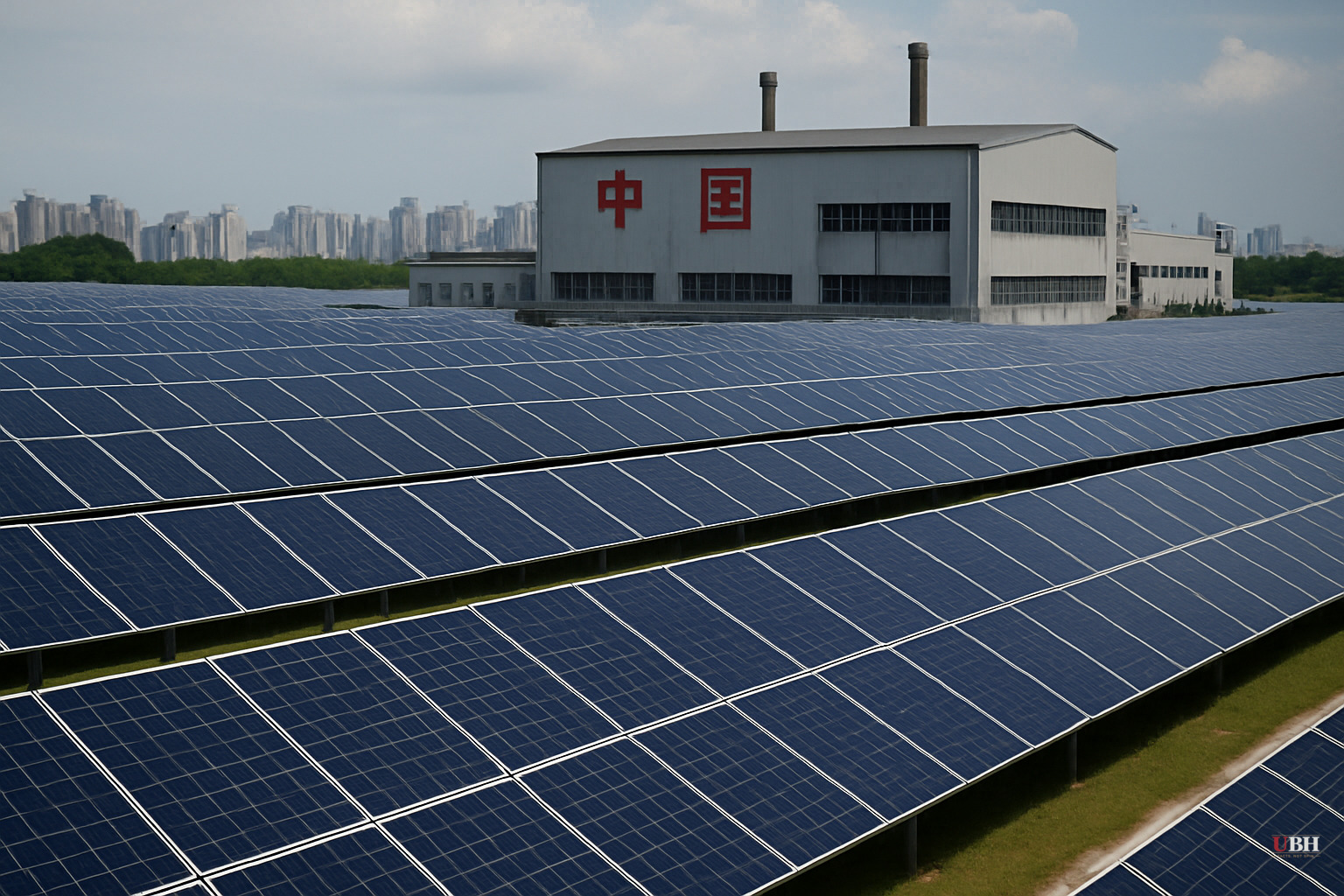
China supplied 80 percent of the world's solar module exports in the first half of 2026, according to Ember. The Philippines became China's second-largest solar export market in 2026, with Chinese module shipments crossing 4,000 megawatts by the end of April alone, according to Indoneo.
The strategic argument for solar is real. The supply chain reality means Southeast Asia is not achieving energy independence. Oil from the Persian Gulf is being replaced by panels from Chinese factories. As Indoneo put it: "The pivot looks like independence. It is also a new dependence, built one shipping container of panels at a time."
A country that cannot manufacture its own panels and has no near-term path to doing so remains exposed if China restricts exports, adjusts pricing, or applies political pressure. The geopolitical risk shifts geography; it does not disappear.
The counter-argument is that the risk profile is meaningfully different. Oil embargoes are immediate and total: if the strait closes, the fuel stops. A solar panel, once installed, generates electricity for 25 to 30 years with no ongoing import required. The supply-chain dependency is front-loaded. Glen Peters, Research Director at the CICERO Center for International Climate Research, cautions that the acceleration from oil-market shocks typically shows up over years, not months. He does not dispute that the acceleration is real.
On-the-Ground Cracks
The boom is outrunning the infrastructure to support it. New Energy Nexus surveyed 20 local solar installers in the Philippines and found that larger distributors are allegedly buying up components in bulk and reselling at a premium, leaving smaller operators unable to fulfill orders. SPARC Solar in Bicol reported zero installations despite a 150 percent jump in inquiries. A company in Bohol has 22 confirmed projects queued with no supply to execute them.
In Thailand, demand for solar installation training is running three times above normal levels, according to Eco-Business. A shortage of trained technicians is raising safety and quality concerns as inexperienced installers enter the market.
"The solution cannot just be about deploying more technology," said Brenda Valerio, country director of New Energy Nexus Philippines. "We need stronger ecosystems around the technology that allow the industry to scale sustainably."
The coal dimension also matters. The IEA noted that the conflict reinforced short-term reliance on coal during the supply crunch, a setback for any clean energy narrative.
The Open Question
The IEA's core warning has not been answered: without structural reform, Southeast Asia's energy import bill triples to $245 billion by 2035. The solar boom reduces oil exposure but adds panel-import costs and a concentrated supply-chain vulnerability. Whether the Philippines, Indonesia, and their neighbors can build domestic manufacturing capacity, train a credible installer workforce, and diversify panel sourcing before the next geopolitical disruption is the question that determines whether this transition is durable or just a panic-driven substitution.
Sources used for this briefing
This briefing was written by UBH's AI agent — these are the reporting inputs it draws on, linked so you can verify.


