
Unbiased headlines. Facts, not spin.
Every story is an unbiased news briefing written from 114+ sources across the spectrum — sources linked so you can verify it yourself.
 economy
Major Story (8/10)
August 19, 2026 at 12:07 AM
economy
Major Story (8/10)
August 19, 2026 at 12:07 AM
South Korea's Central Bank Says AI Wiped Out 268,000 Youth Jobs in Four Years
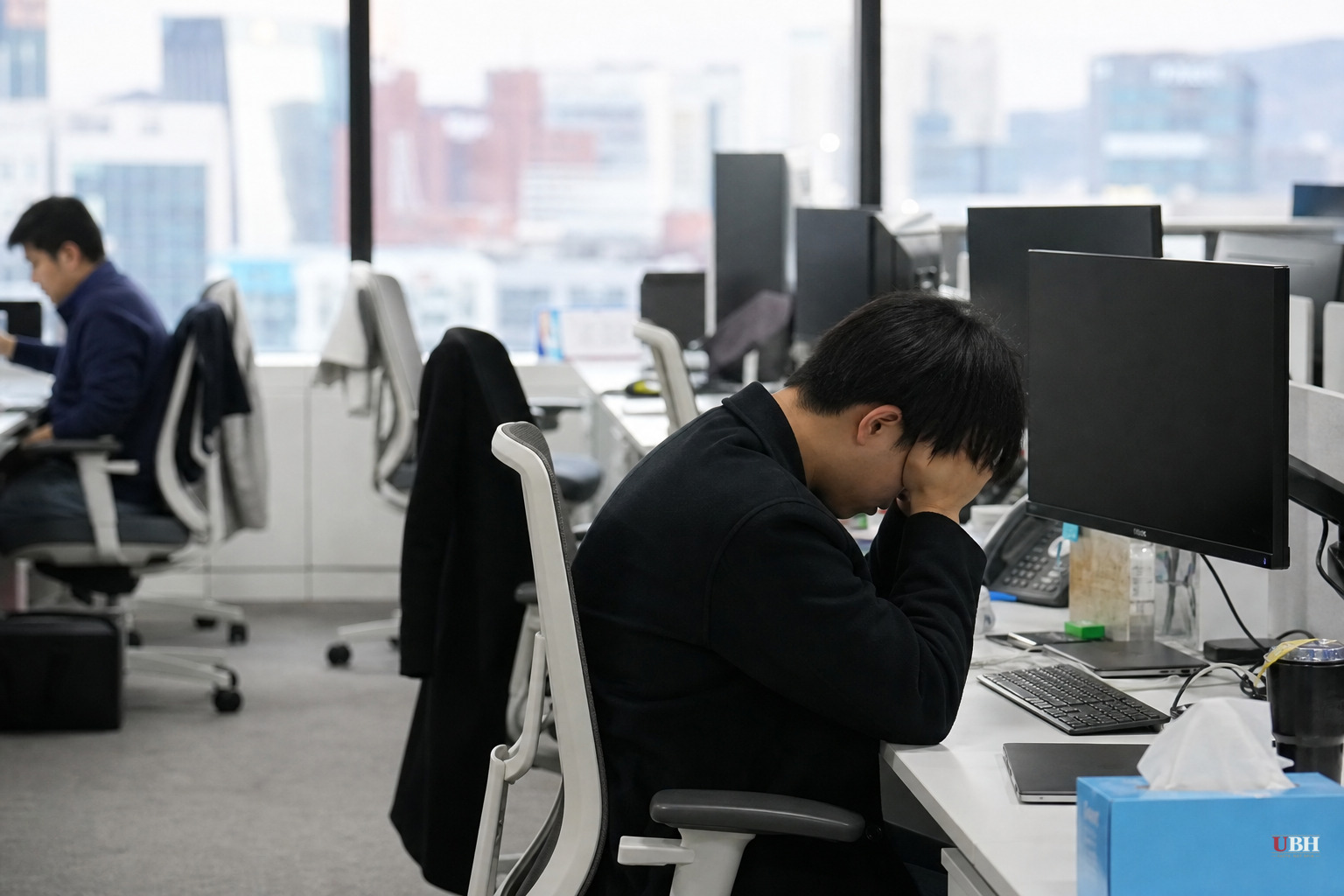
South Korea's central bank just put hard numbers on something young job seekers have been feeling for years: AI is eating entry-level work first.
The Bank of Korea released an issue note Tuesday, August 18, titled "Is AI to Blame for the Youth Employment Squeeze? The Changing Career Ladder and Policy Responses." The findings are stark. Between June 2022 and June 2026, the number of jobs held by South Koreans aged 15 to 29 fell by 285,000. Of that decline, 268,000 jobs, or 94 percent, disappeared in industries with high AI exposure, according to the BOK.
Compare that to workers in their 50s. Their employment grew by 230,000 over the identical four-year window, according to the same report. And 173,000 of those gains, or 75.2 percent, came from the exact same AI-exposed industries that were shedding young workers.
This is a generational trade-off happening in real time.
Where the jobs vanished
The damage wasn't spread evenly. Information services took the biggest hit, down 31.4 percent for young workers over the period, according to the BOK. Publishing, which includes software and web design work, fell 27.4 percent. Computer programming and systems integration dropped 16.6 percent. Professional services declined 11.6 percent.
Oh Sam-il, head of the BOK's Labor Market Research Team, explained why senior workers are surviving this shift while junior ones aren't. "Senior-level work often involves specialized tasks that require an understanding of an organization's characteristics and context, which makes it harder for AI to replace," Oh said, according to the Korea JoongAng Daily.
Entry-level work is the opposite. It's routine, it's documented in manuals, and it's exactly what large language models are good at automating. "AI primarily performs tasks that are laid out in manuals, which means it can replace younger workers," Oh said.
Automation versus augmentation matters
The BOK found the damage depended heavily on how companies actually deployed AI. Industries that used AI to automate tasks and replace human labor saw sharp youth employment declines. Industries that used AI to support workers, for drafting, verification, and similar tasks, saw a much smaller hit, according to Xinhua's report on the findings.
The technology isn't destiny. The choice a company makes about whether AI replaces workers or assists them is what determines whether young people keep their foothold in that industry.
The credential gap is widening, not closing
The BOK also tracked unemployment by education level as a rough stand-in for AI exposure, and the results cut against a comfortable assumption that a four-year degree still protects you. Before ChatGPT's late-2022 launch, from January 2019 through October 2022, unemployment ran 8.2 percent for four-year college graduates and 8 percent for those with an associate's degree or less, according to the Korea Times. After 2022, the college-grad rate fell to 7 percent, but the lower-credential rate fell further, to 5.4 percent. The gap nearly doubled.
Young workers are also cycling out of AI-exposed jobs faster than before. The average monthly outflow of young workers from high-AI-exposure industries rose about 32 percent, from 3,700 a month between January 2016 and December 2019 to 4,900 a month between July 2022 and June 2026, according to the BOK's data as reported by the Korea JoongAng Daily.
The BOK's own caveat
Credit where it's due: the central bank didn't oversell its own finding. The report explicitly warned against attributing the youth employment decline solely to AI. Oh Sam-il told the Korea Times that South Korea's ongoing population decline likely contributed significantly to the shift, and that AI is accelerating a trend already in motion rather than single-handedly causing it. "We cannot say that AI is entirely behind the reduction in youth employment," Oh said. "Instead, AI is accelerating the trend of the diminishing career ladder for young people."
That's a fair caveat, and one worth taking seriously. Demographic decline, a longstanding preference among Korean firms for experienced hires, and remote-work shifts were all already reshaping this labor market before ChatGPT existed. Anyone treating this report as proof AI alone torched 268,000 jobs is overreading a correlation the bank itself flagged as complicated.
Still, the correlation is hard to wave away. A 94 percent concentration of job losses in AI-exposed sectors, paired with rising employment for older workers in those same sectors, is a specific and measurable pattern, not a vague anxiety.
Not just a Korea problem
The Wall Street Journal, reported on by Breitbart, found a similar dynamic playing out in the United States. Among the 15 largest U.S. tech firms, the share of entry-level hires relative to total new hires fell 50 percent since 2019, according to venture capital firm SignalFire. Only 7 percent of new hires at those firms were recent graduates in 2024, down from 11 percent in 2022. Handshake reported a 15 percent drop in entry-level postings alongside a 30 percent jump in applications per job.
Matt Sigelman, president of the Burning Glass Institute, called it a "tectonic shift" in how employers hire.
What the BOK is recommending
The central bank's policy prescription is notable. It's telling South Korea's government to stop subsidizing hiring and start funding career-development support instead, according to BigGo Finance's summary of the report. That's an acknowledgment that the old playbook, cash incentives to get companies to hire young workers, doesn't address a structural change in what entry-level work even looks like anymore.
Whether Seoul acts on that recommendation, and whether other governments facing the same AI-driven entry-level squeeze follow suit, remains an open question. The BOK's report is a diagnosis. It isn't a fix.
Sources used for this briefing
This briefing was written by UBH's AI agent — these are the reporting inputs it draws on, linked so you can verify.


