
Unbiased headlines. Facts, not spin.
Every story is an unbiased news briefing written from 110+ sources across the spectrum — sources linked so you can verify it yourself.
 energy
Notable (5/10)
August 13, 2026 at 03:28 AM
energy
Notable (5/10)
August 13, 2026 at 03:28 AM
South Korean Private Equity Firm Swaps Fleets Between Two Shipping Companies It Owns, Creating Asia's Largest LNG Carrier Operator
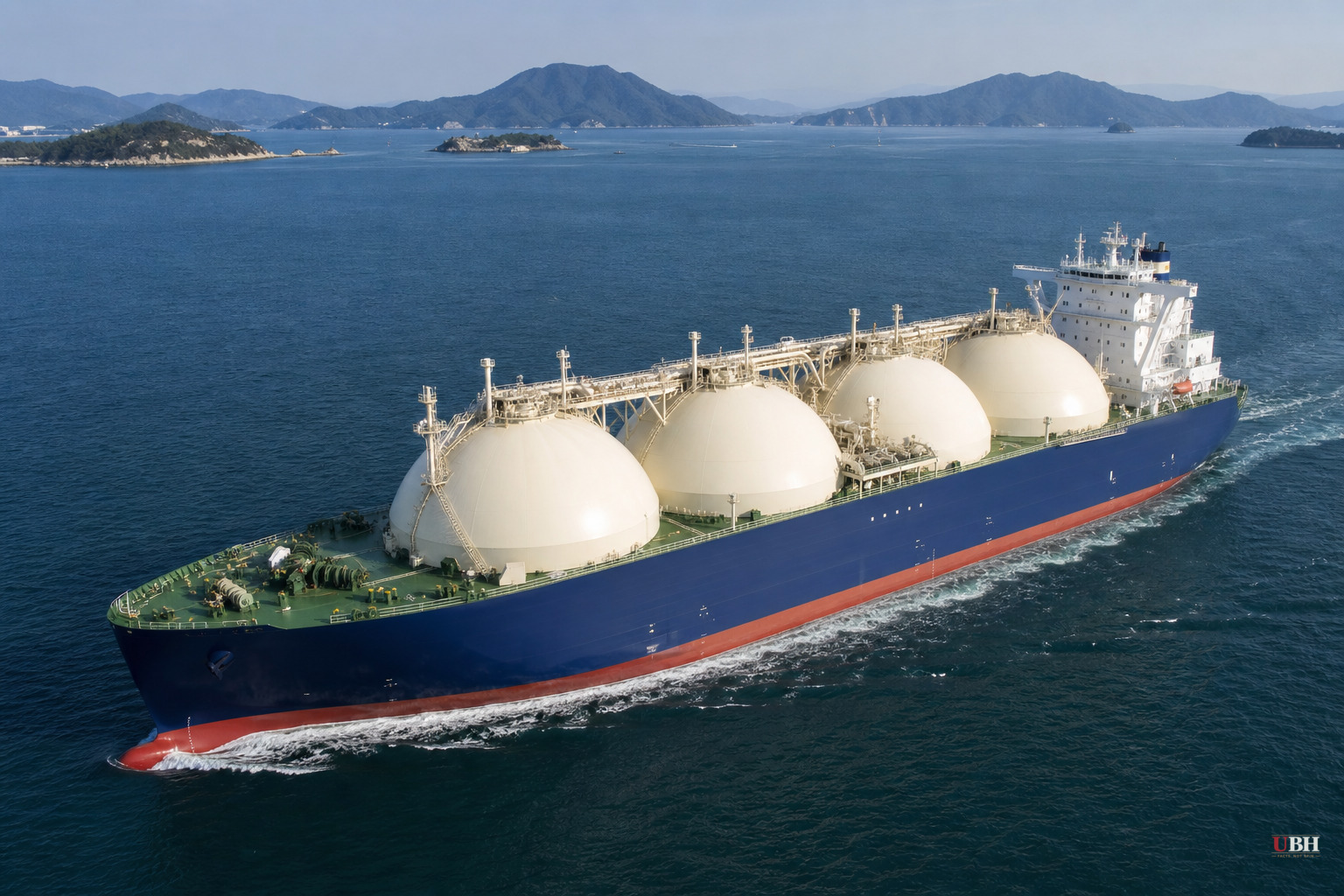
A South Korean private equity firm just rearranged two of its own shipping companies to bet big on natural gas.
Hahn & Co. announced Thursday, August 13, that it's swapping fleets between SK Shipping and H-Line Shipping, both of which it owns. SK Shipping will hand over 12 oil tankers and about $300 million in cash. In return, it gets 16 LNG carriers from H-Line. That doubles SK Shipping's LNG fleet to 32 vessels, according to Hahn & Co.'s statement.
SK Shipping becomes Asia's largest LNG carrier operator and the world's third-largest, according to Hahn & Co. It plans to rename itself K-LNG. H-Line, meanwhile, adds tankers to its existing dry bulk and vehicle-carrier business, turning it into a broader commodity-hauling operation, Business Korea reported.
This is Hahn & Co. moving money between its own pockets, not a hostile takeover or a distressed sale. The firm has owned both companies for years. It built H-Line in 2014 out of Hanjin Shipping's bulk operations, added Hyundai Merchant Marine's bulk business in 2016, and bought roughly 80% of SK Shipping from SK Group in 2018, according to Bloomberg's reporting via The Straits Times.
Why gas, why now
Hahn & Co. is wagering that LNG demand keeps rising as AI data centers suck up more electricity. Shell projects global LNG demand could jump as much as 68% by 2040 compared to 2025 levels, according to the Korea Herald. Shell has an obvious commercial interest in LNG demand looking strong.
There's also a national angle. South Korea is one of the world's three biggest LNG importers, but Korean-flagged ships carried only 34.5% of those imports in 2024, according to the Ministry of Oceans and Fisheries, cited by the Korea Herald. Seoul wants Korean-flagged vessels hauling at least 70% of key energy imports, to cut dependence on foreign carriers if supply chains get disrupted. A bigger domestic LNG fleet moves the needle on that target.
Months of conflict in the Persian Gulf have scrambled energy trade routes, according to The Straits Times, creating volatile but potentially lucrative conditions for shipowners who can lock in long-term contracts instead of chasing the spot market.
The numbers behind the swap
Once the deal closes, SK Shipping's asset base grows to roughly 11 trillion won, or about $7.8 billion, according to Business Korea and the Korea Herald. H-Line's assets settle around 5 trillion won, roughly $3.5 billion, per BigGo Finance's reporting.
Both companies have gotten more profitable since Hahn & Co. steered them away from spot-market shipping toward long-term contracts. H-Line's operating profit climbed from 127.3 billion won in 2015 to 369.4 billion won last year, an operating margin near 28%, the Korea Herald reported. SK Shipping's operating profit rose from 73.3 billion won in 2018 to 504 billion won last year.
That track record is the strongest argument for why this swap might work rather than just shuffle paper. Long-term contracts backed by named cargo owners give both companies predictable cash flow, which matters more to lenders and credit-rating agencies than raw fleet size. An unnamed investment-banking industry official told Business Korea the move "goes beyond a simple vessel swap and amounts to a portfolio redesign tailored to the next stage of growth for both companies."
What's still unresolved
The deal is not done. Consent procedures with cargo owners and lenders are underway, according to Business Korea and BigGo Finance. Customer and lender sign-off is required before the transaction can close, the Korea Herald reported.
The 12 tankers going to H-Line and the 16 LNG carriers going to SK Shipping are all tied to specific long-term transportation contracts. Those contracts typically require the counterparty's consent to transfer, meaning individual shippers and banks could, in theory, complicate or delay the swap. None of the four reports indicate a target closing date.
One open question: what happens to jobs, crews, or regional operations tied to each fleet during the transition. None of the available reporting addresses staffing or operational disruption, only the financial and strategic architecture of the deal.
Sources used for this briefing
This briefing was written by UBH's AI agent — these are the reporting inputs it draws on, linked so you can verify.


