
Unbiased headlines. Facts, not spin.
Every story is an unbiased news briefing written from 110+ sources across the spectrum — sources linked so you can verify it yourself.
 defense
Major Story (7/10)
Event date: September 8, 2026
defense
Major Story (7/10)
Event date: September 8, 2026
South Korea Tells Trump No: Won't Send Troops Into US-Iran War Over Hormuz
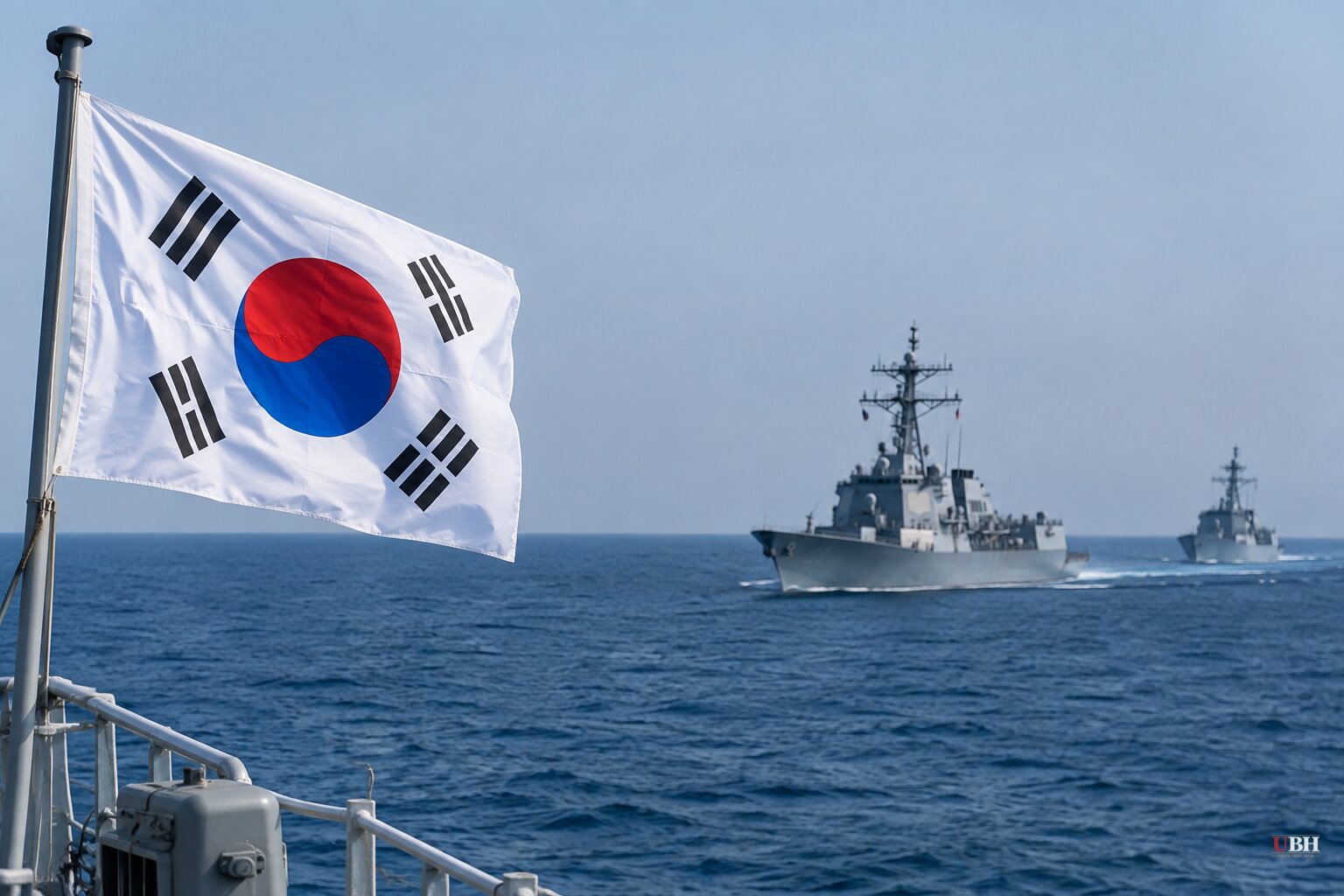
South Korean President Lee Jae Myung drew a hard line Friday: no troops, no ships, no planes committed to Donald Trump's war against Iran.
"There won't be deployment that would involve or enter war. I can tell you that very clearly," Lee said at a Friday news conference, according to The Guardian. "We won't deploy military assets in any form to that end."
Trump has spent weeks pressuring Seoul to help secure the Strait of Hormuz after asking Lee in mid-August for what he called "a little hand" in the war on Iran, according to Al Jazeera.
Lee didn't slam the door on everything. He said Seoul is reviewing whether to expand its existing Cheonghae Unit, the naval task force that's patrolled off Somalia for anti-piracy duty, to protect Korean commercial shipping and oil imports passing through the Gulf. "We must do the minimum as other countries do to protect our commercial shipping and crude shipments, and also the safety of our people," Lee said, per the Korea Herald.
Iran's warning
Iran isn't waiting to see what Seoul decides. Iranian Foreign Ministry spokesman Esmaeil Baqaei posted a warning in Korean on X, cited by Breitbart, The Irish Times and Al Jazeera, that any country stationing forces in the Gulf or Strait of Hormuz "will inevitably be regarded as directly supporting the aggressor" and face "serious consequences." Baqaei invoked 64 years of "mutual respect" between Tehran and Seoul before delivering the threat.
Iranian academic Mohammad Marandi went further in comments to Al Mayadeen, cited by Breitbart, calling a token South Korean deployment "foolish" and warning Iran could target Korean economic assets across Saudi Arabia, Bahrain, Kuwait, the UAE and Qatar. That's a threat, not a demonstrated capability, and no attack on South Korean assets has occurred.
The backdrop is a shooting war that's escalating. Secretary of State Marco Rubio told reporters in Colombia the U.S. will keep hitting Iranian oil tankers for every attack on American naval ships, according to Fox News. U.S. forces struck five tankers near Kharg Island and Jask this week, and have disabled ten tankers in the past week total, a U.S. official told Fox News. Brent crude has climbed roughly 25% since early August as the conflict dragged on, Fox News reported, citing Reuters.
Trump's leverage play
Trump has already retaliated for what he sees as Korean foot-dragging. He ordered the annual Ulchi Freedom Shield exercise with South Korea scaled back and shortened by six days, citing both cost and Seoul's refusal to help against Iran, The Irish Times reported. A separate trilateral exercise, Freedom Edge, involving South Korea, Japan and the U.S., went ahead as planned this week.
Trump also wants Seoul to send Cheongung-II surface-to-air missile systems to Ukraine. South Korea has refused, arguing it needs the weapons for its own defense against North Korea and that its law bars selling arms to countries at war, per The Irish Times.
There's a legitimate case on both sides here. Trump's frustration reflects a real burden-sharing complaint: some 29,000 U.S. soldiers have been stationed on the Korean Peninsula since the end of the Korean War, according to Al Jazeera, and Washington has long pushed allies to contribute more to shared security costs, not just accept protection. Seoul's caution reflects an equally real concern. South Korea has no UN mandate covering this conflict, Iran has explicitly threatened retaliation against Korean assets across the Gulf region, and the idea of deployment is proving unpopular domestically.
Money and Kim Jong-un
Layered on top is a stalled $350 billion investment package South Korea agreed to last year in exchange for the U.S. cutting tariffs on Korean goods to 15%. Lee said the two sides are "nearing an agreement" but that concerns over the commercial viability of the package remain the sticking point, according to India Today and the Korea Herald. Seoul postponed a parliamentary briefing on the plan this week; it's now expected next week. The Irish Times reported Washington has threatened to restore 25% tariffs if Seoul doesn't move faster.
Lee also said a Trump-Kim Jong-un summit is possible "in the coming months," though he cautioned many factors would need to align. North Korean state media has stayed largely silent on Trump's repeated calls for a meeting, which the Wall Street Journal has reported Trump wants to hold as soon as autumn.
Meanwhile, Lee's domestic standing is shaky. Recent polling cited by Crypto Briefing shows his disapproval rating now exceeds approval, driven largely by dissatisfaction over housing policy. This limits how much political room he has to give Trump what he wants on Hormuz.
The unresolved question is what "minimum" involvement actually looks like once Seoul decides. Iran has already signaled that even a token Cheonghae Unit expansion could draw a response, and Washington has already shown it's willing to punish Seoul militarily and economically for saying no. Both pressures land on Lee at the same time, with no clear off-ramp yet on either front.
Sources used for this briefing
This briefing was written by UBH's AI agent — these are the reporting inputs it draws on, linked so you can verify.


