
Unbiased headlines. Facts, not spin.
Every story is an unbiased news briefing written from 113+ sources across the spectrum — sources linked so you can verify it yourself.
 politics
Major Story (7/10)
September 28, 2026 at 06:32 AM
politics
Major Story (7/10)
September 28, 2026 at 06:32 AM
South Africa's Anti-Migrant Group Sets Sept. 30 Deadline as Refugees Report Threats and Camp Clearances
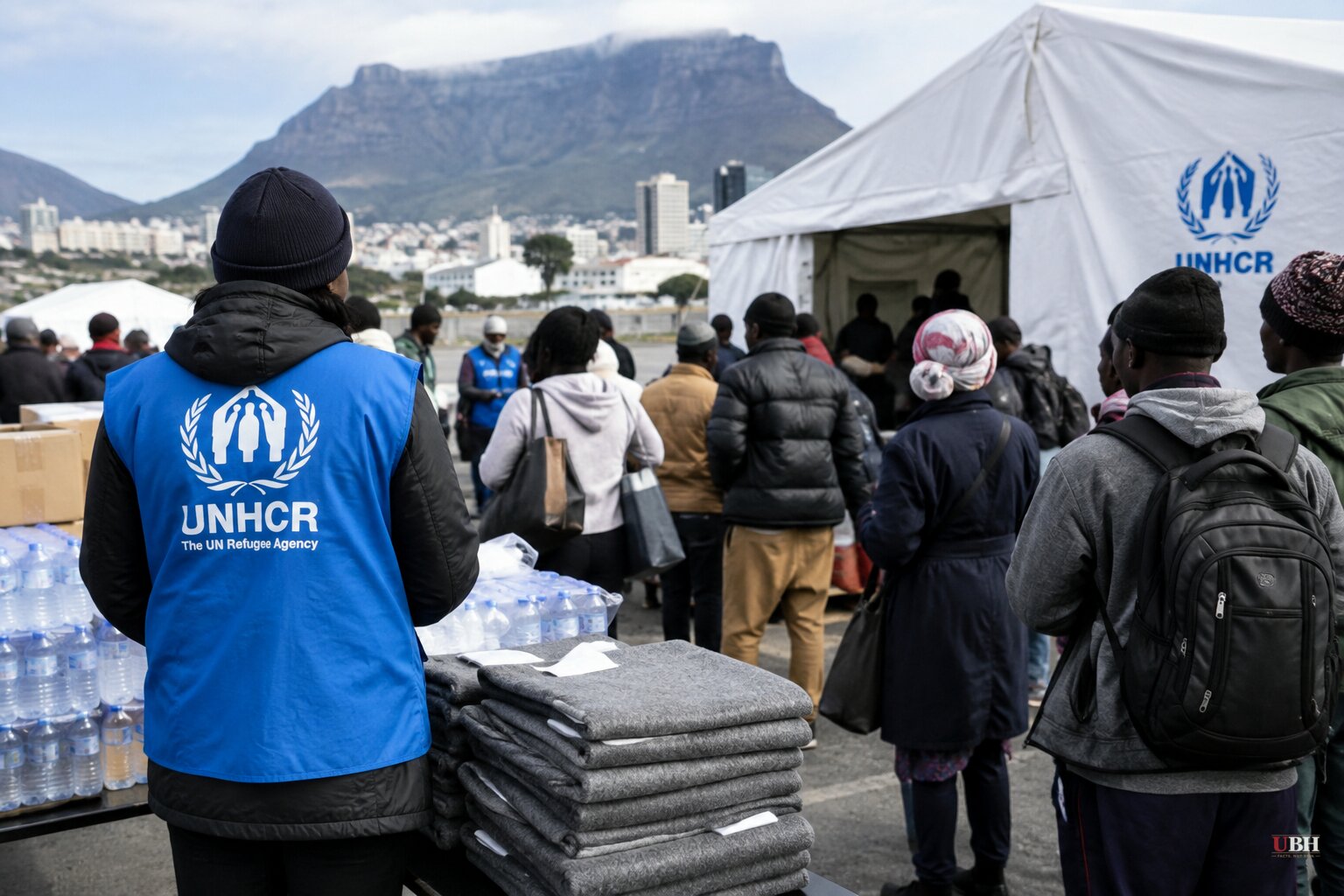
Bishop Raphael Bahebwa has lived in South Africa for 26 years since fleeing the Democratic Republic of the Congo. He's now in hiding.
"I am in hiding now because they say they are going to kill me for speaking about the rights of foreigners," Bahebwa told Al Jazeera.
The threat comes as March and March, an anti-immigration movement that has organized protests across South Africa throughout 2026, has set September 30 as a deadline for undocumented foreign nationals to leave the country. The group has warned of larger demonstrations if that demand isn't met. March and March leader Sphelele Shinga told Africanews the movement expects up to 1.5 million people to join the next major protest, framing it as communities "standing up for their home."
For refugees like Bahebwa, the documented-undocumented distinction the movement draws doesn't offer much reassurance. He and others told Al Jazeera that hostility on the street rarely starts with a request to see papers.
Four months on a sidewalk
For roughly four months, hundreds of refugees and asylum seekers, mostly from the DRC and Burundi, with others from Uganda, Mozambique and Tanzania, lived on the pavement outside the Durban Refugee Reception Centre on Che Guevara Road. They'd gone there seeking protection from the Department of Home Affairs after fleeing anti-foreigner hostility in their own neighborhoods, according to Al Jazeera.
Conditions were rough. Migrants described irregular access to food and medication, and said one man with tuberculosis died at the camp. Al Jazeera reported it could not independently confirm the circumstances of his death.
The camp itself became a flashpoint. On September 3, March and March members confronted the refugees living there. Violence broke out and police intervened; at least four people were reported injured, according to Al Jazeera and Occasional Digest's reporting. Days later, at another protest, officers formed a physical barrier between the two groups.
Kafuti Muyumba, a DRC refugee and small-business owner who represents the community, told the Times of India that many refugees are now too afraid to return to the neighborhoods where they built their lives. "Even the police allow March and March violence," Muyumba said. "They came with sticks and say we are attacking them. This is not the first time we are experiencing xenophobia. In 2008 and then in 2015 we also experienced this." South Africa's 2008 xenophobic violence killed dozens of people and displaced thousands, with further flare-ups in the years since.
Camp cleared, buses to Lindela
In mid-September, authorities dismantled the informal camp outside the reception center. Refugees were given two options: return to the areas they'd fled, or accept temporary placement at the Lindela center in Gauteng province, a state facility normally used to hold people facing deportation, according to reporting picked up from Al Jazeera.
On September 15, 274 people were bused from Durban to Lindela. About 150 others stayed in the city, still searching for housing.
What March and March says, and what its critics say
March and March has consistently described its campaign as one against undocumented immigration, crime and deteriorating conditions in South African communities, and its leaders reject being labeled xenophobic. The group says government enforcement of immigration law has been too weak, a grievance shared by many South Africans frustrated with strained public services and unemployment that officially runs above 30 percent nationally.
Ela Gandhi, a former member of parliament and granddaughter of Mahatma Gandhi, showed up alongside refugees during one demonstration and rejected the movement's framing directly. "The rhetoric that these people are using is completely untrue," she said, according to Africanews. "It's not the migrants that are causing the problems that they talk about."
Ghanaian refugee Princess Adjei told Africanews the group camped outside the reception center simply had nowhere else to go. "We can't keep sleeping on the streets forever as well. People have died because of sleeping on the street," she said, adding they were awaiting buses while documentation was verified.
South African police have said they don't plan to change their standard approach to public order policing because of the deadline, and that anyone protesting must stay within the law. The national government has separately stressed that private citizens and movements have no authority to carry out immigration enforcement or deportations themselves, that remains the job of the state.
On the enforcement side, the Interministerial Committee on Migration reported that between June 14 and August 20, authorities processed 86,596 foreign nationals for deportation and repatriation, the largest numbers being citizens of Malawi, followed by Zimbabwe and Mozambique.
What's unresolved
Whether the September 30 deadline triggers the mass demonstration March and March is promising, and whether it turns violent the way earlier flare-ups did in 2008 and 2015, is not yet known. Also unresolved is whether police intervention on the ground matches the government's public assurances. This dispute pits refugee accounts of officers standing aside during clashes against police statements that tactics won't change. No South African government agency has confirmed or denied Muyumba's specific allegation that officers allowed March and March members to use force.
Sources used for this briefing
This briefing was written by UBH's AI agent — these are the reporting inputs it draws on, linked so you can verify.


