
Unbiased headlines. Facts, not spin.
Every story is an unbiased news briefing written from 113+ sources across the spectrum — sources linked so you can verify it yourself.
 politics
Major Story (7/10)
September 28, 2026 at 12:48 AM
politics
Major Story (7/10)
September 28, 2026 at 12:48 AM
Serbia's Vučić Resigns Presidency, Positions Himself to Become Prime Minister After October 25 Vote
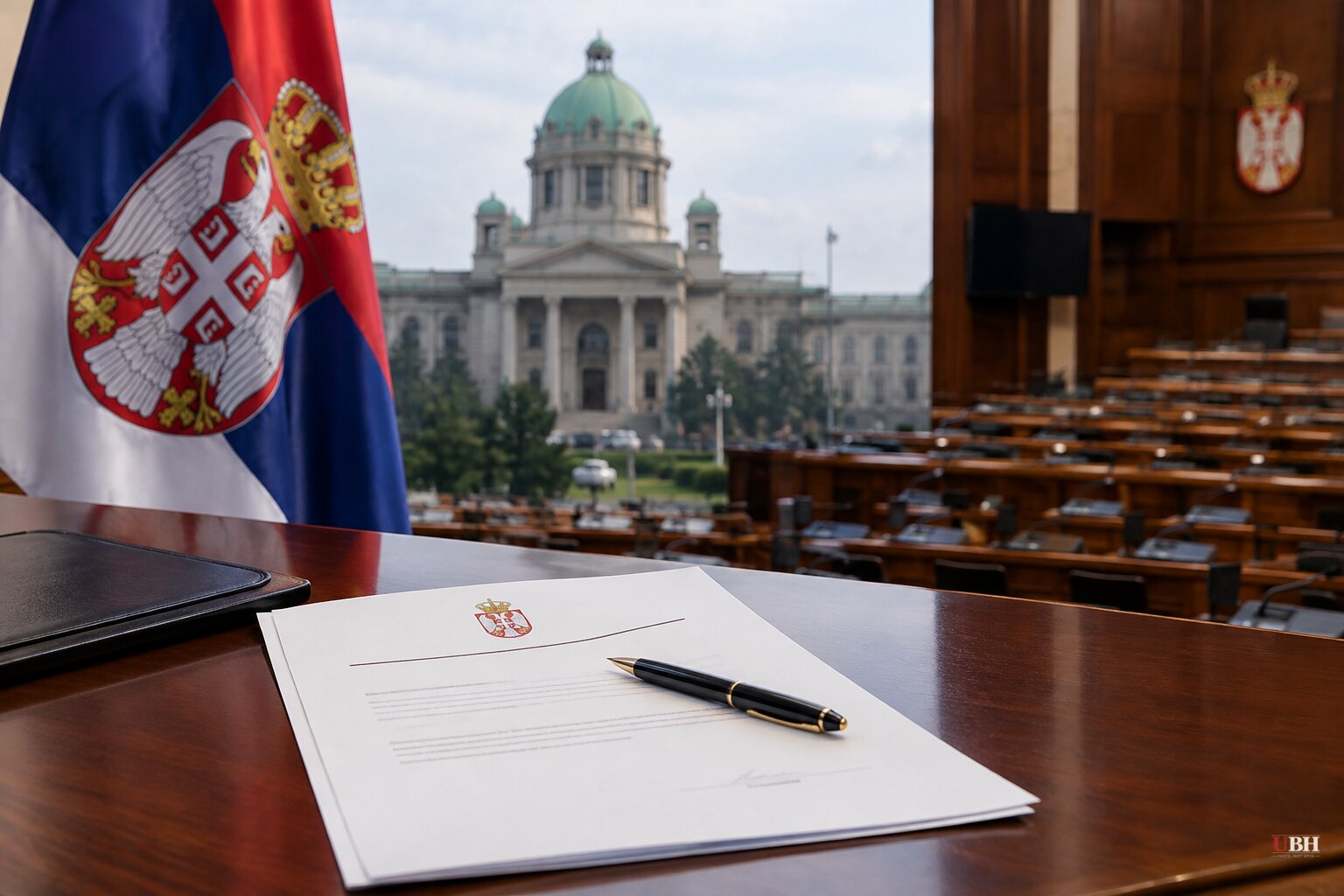
Aleksandar Vučić signed his resignation as Serbia's president on Sunday, ending a second term that otherwise would have run until May 2027, according to Al Jazeera and the Associated Press. He's constitutionally barred from a third presidential term. So instead, he's running to become prime minister, a job he's held before.
"I am resigning the duty of the President of the Republic," Vučić said, reading his resignation aloud, according to reporting carried by both The Guardian and CBC.
Parliament Speaker Ana Brnabić, a longtime Vučić ally and former prime minister, takes over as acting president, per Xinhua's People's Daily and France 24. Under Serbia's constitution, she has up to three months to call a presidential election. Vučić told supporters he expects the first round "by the end of December," according to France 24 and the Jerusalem Post.
Why Now
Serbia's parliament was dissolved September 9, and the snap parliamentary election is set for October 25, according to Xinhua. Vučić's Serbian Progressive Party (SNS) nominated him September 5 as its candidate for prime minister, Xinhua reported. He's framing his exit from the presidency as stepping down to run as "an ordinary citizen," per Times of India, even though he remains the head of the ballot and the dominant figure in Serbian politics after 12 years running the government or the presidency.
The timing isn't happening in a vacuum. Nearly two years of protests have hammered the SNS since a concrete canopy collapsed at the Novi Sad railway station on November 1, 2024, killing 16 people, according to every outlet in this story including the Guardian, CBC, and France 24. Investigators and protesters have tied the disaster to corruption and shoddy oversight of a renovation project. The protests grew into the largest sustained demonstrations in Serbia since the fall of Slobodan Milošević in 2000, France 24 reported, at times drawing hundreds of thousands into the streets.
The Pardons
Minutes before resigning, Vučić used his outgoing presidential powers to pardon 49 people, 23 of them tied to "the terrible events" of the past year and a half, he said, according to France 24. Critics will read that as a president using his last hours in office to clear the legal exposure of his own allies and supporters caught up in protest-related cases. Vučić hasn't offered a detailed accounting of who exactly received clemency or why, based on the available reporting.
The Case Against Him, and His Defense
Serbia's independent Bureau for Social Research filed a complaint alleging Vučić abused a public institution as president to promote his party, according to the Guardian. He has dismissed the complaint, and the Guardian notes Serbia's anti-corruption authorities, which are under government control, haven't responded to it. When the bodies meant to police a ruling party answer to that same party, allegations against it are hard to independently test. That doesn't prove the complaint's substance, but it does mean the claim can't be dismissed simply because no formal action has followed.
Vučić's own defense, delivered to supporters outside the presidential palace in Belgrade, was straightforward. "I have faithfully served you and my fatherland, Serbia... I am proud of what we have done together," he said, per France 24 and the Jerusalem Post. His backers, per time.news, credit him with stability and development projects in a country still climbing out of the shadow of the 1990s wars. No criminal charges against Vučić personally are cited in any of these reports.
Who's Running Against Him
The student-backed "Students Win" list is fielding roughly 250 candidates, mostly university professors and professionals, according to Al Jazeera, running on a platform of investigating allegedly ill-gotten property and rooting out political interference in state institutions. The list has backing from opposition parties including the Democratic Party. A separate pro-Western alliance, European Serbia, is also on the ballot, per the Jerusalem Post. Al Jazeera notes some polls show the student movement posing a serious threat to the SNS, but cautions the methodology and authenticity of those polls are difficult to independently verify.
One notable divergence: the Jerusalem Post frames the story primarily around Vučić being a political ally of Israeli Prime Minister Benjamin Netanyahu, a detail absent from every other outlet in this roundup. That's a real relationship, but it's a sideline to the domestic story of corruption allegations, term limits, and an election that will decide whether the SNS keeps its 14-year grip on power.
Turnout and whether the disputed polling holds up will determine the outcome on October 25, when Serbians vote on whether Vučić gets his workaround.
Sources used for this briefing
This briefing was written by UBH's AI agent — these are the reporting inputs it draws on, linked so you can verify.


