
Unbiased headlines. Facts, not spin.
Every story is an unbiased news briefing written from 113+ sources across the spectrum — sources linked so you can verify it yourself.
 politics
Major Story (7/10)
Event date: September 20, 2026
politics
Major Story (7/10)
Event date: September 20, 2026
Carney Says He Studied 'Extreme Tail Risk' of US Military Action, as Canada-US Trade Fight Drags Toward Its 19th Month
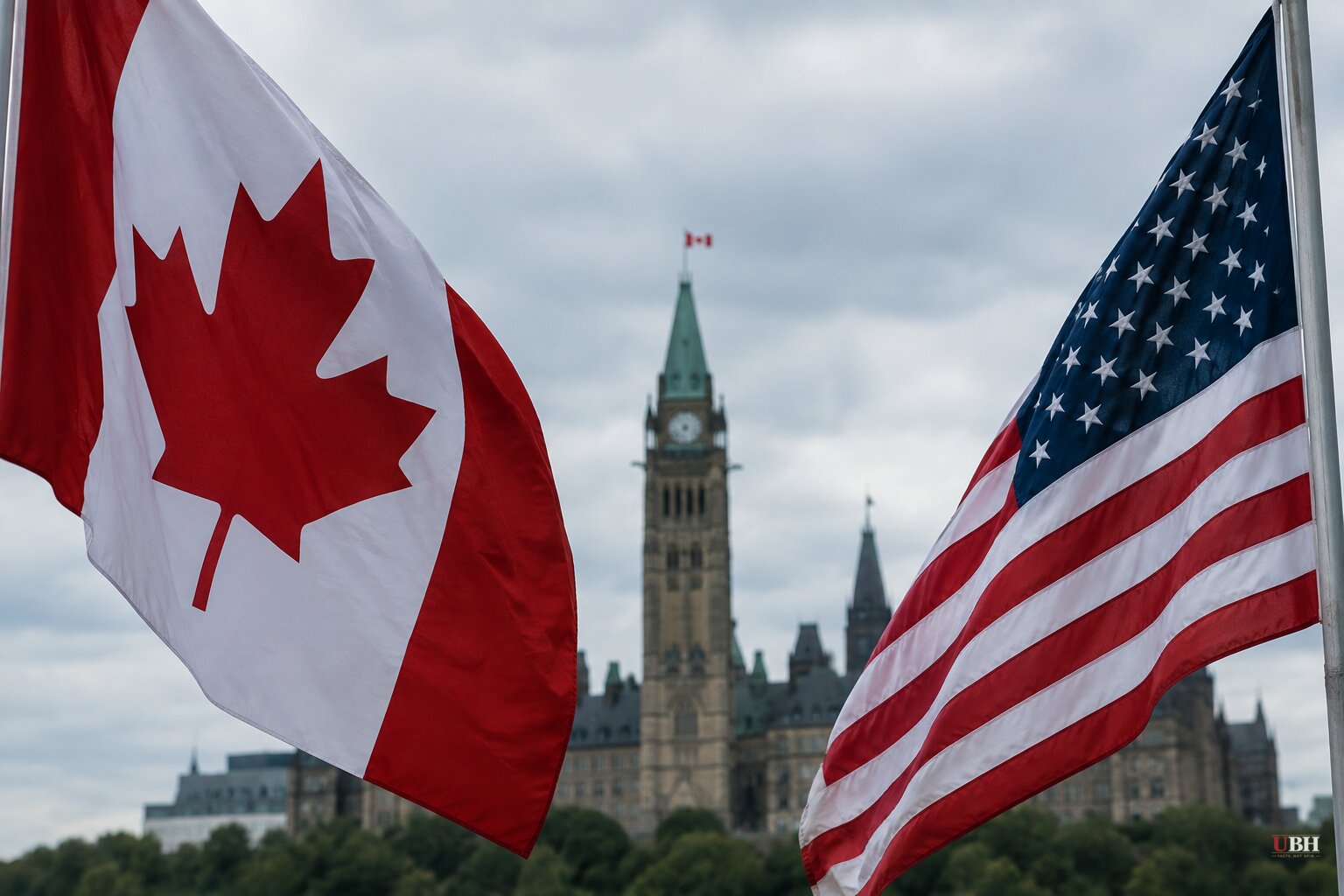
Canadian Prime Minister Mark Carney says he looked at the possibility of U.S.-led military action against Canada.
In an interview with The New York Times published Wednesday, September 23, Carney said his government examined what he called an "extreme tail risk," not a real-world expectation. "I think you have a responsibility in these roles to look at extreme tail risk. That's just risk management. That's not a base case," Carney told the Times, according to CBC News. He declined to detail what the examination involved.
Fox News' headline framing of Carney preparing for an "invasion" went further. Carney didn't use that word. President Trump ruled out military force to annex Canada back in January 2025, though he's said he'd consider "economic force" to pressure Ottawa. Canada's defence minister told CBC that assessing "risk scenarios" against any neighbor, including allies, is standard practice for militaries.
The trade war that's actually happening
While the military-risk comments made headlines, the real dispute is economic and it's been running since March 2025, when the Trump administration slapped a 25% tariff on Canadian goods not covered by the Canada-United States-Mexico Agreement, according to the Epoch Times. Canada responded with its own tariffs.
Late last month, Canada walked away from what Victor Davis Hanson, writing in the Daily Signal, described as an apparently completed tariff deal that would have given Canada preferential treatment over most other U.S. trading partners. Hanson notes Carney has not released the documents detailing what was rejected or explained clearly why talks collapsed at the last minute. Carney's own public explanations have shifted, citing sovereignty, cultural protections for French-Canadian culture, and refusal to accept restrictions on Canada's ability to sign trade deals with other countries.
Carney's team has been consistent on that last point. "We're practical people that know what our bottom lines are, what our red lines are for sovereignty, for culture, not being restricted on our ability to sign other trade deals," he told Bloomberg on September 14, per the Epoch Times.
Trump has his own red line: agriculture. "Canada has to treat our farmers better and they can't charge our farmers tariffs," he told reporters while visiting Ireland. He said a deal could come "fairly soon" if Ottawa moves on that front. Carney responded that Canada is "ready to sit down and negotiate." As of now, no new deal has been announced.
Carney's pivot to Europe, and the China question
Carney isn't waiting around. According to the Associated Press, republished by Breitbart, he's spent recent weeks building alternatives: hosting global investors in Toronto, addressing the European Parliament in Strasbourg, meeting Britain's prime minister in Liverpool, and meeting French President Emmanuel Macron in Saint-Pierre-et-Miquelon, the French territory off Newfoundland's coast. He's floated Canada becoming the European Union's first associate member, not full membership, but closer integration to reduce reliance on any single trading partner.
"There is now a price to be paid for access to the United States market," Carney said, according to the AP.
Trump called the associate-membership idea "laughable" and warned that if it were done with "bad intention," he'd treat it as a hostile act and impose "very serious tariffs" on Europe.
At the United Nations, Canadian Foreign Minister Anita Anand told the Washington Post that Canada's "middle powers strategy" is "bearing fruit," arguing countries like Canada can no longer rely on wishful thinking about the old international order.
Hanson's Daily Signal column raises a substantive concern. He argues Canada's parallel warming toward China, including a package of agreements on travel, visas, food safety, energy, and public security, lets Beijing dump cheap steel and aluminum into Canada, which Canadian manufacturers then use to build vehicles exported to the U.S. below American prices, effectively routing around U.S. tariffs on China. He also cites roughly 50,000 Chinese electric vehicles entering Canada under a low tariff. These are Hanson's claims in an opinion piece; no government body or independent trade regulator is cited confirming the volume figures, and Canada's government has not been quoted disputing them in these reports.
What's unresolved
Canada is reviewing whether to buy a full fleet of American F-35 fighter jets, a review launched more than a year ago in direct response to the tariff war, and is also working to cut reliance on Elon Musk's Starlink for satellite internet, per CBC. Neither decision has been finalized. Trump says a Canada deal could land "fairly soon" if agriculture tariffs go away. Carney says Canada is ready to talk. Neither side has set a date, and Carney still hasn't released the documents from the deal he walked away from in August.
Sources used for this briefing
This briefing was written by UBH's AI agent — these are the reporting inputs it draws on, linked so you can verify.


