
Unbiased headlines. Facts, not spin.
Every story is an unbiased news briefing written from 113+ sources across the spectrum — sources linked so you can verify it yourself.
 politics
Notable (6/10)
Event date: September 24, 2026
politics
Notable (6/10)
Event date: September 24, 2026
UK Reopens Refugee Resettlement Route for Afghan Women and Palestinians, With Numbers in the Hundreds
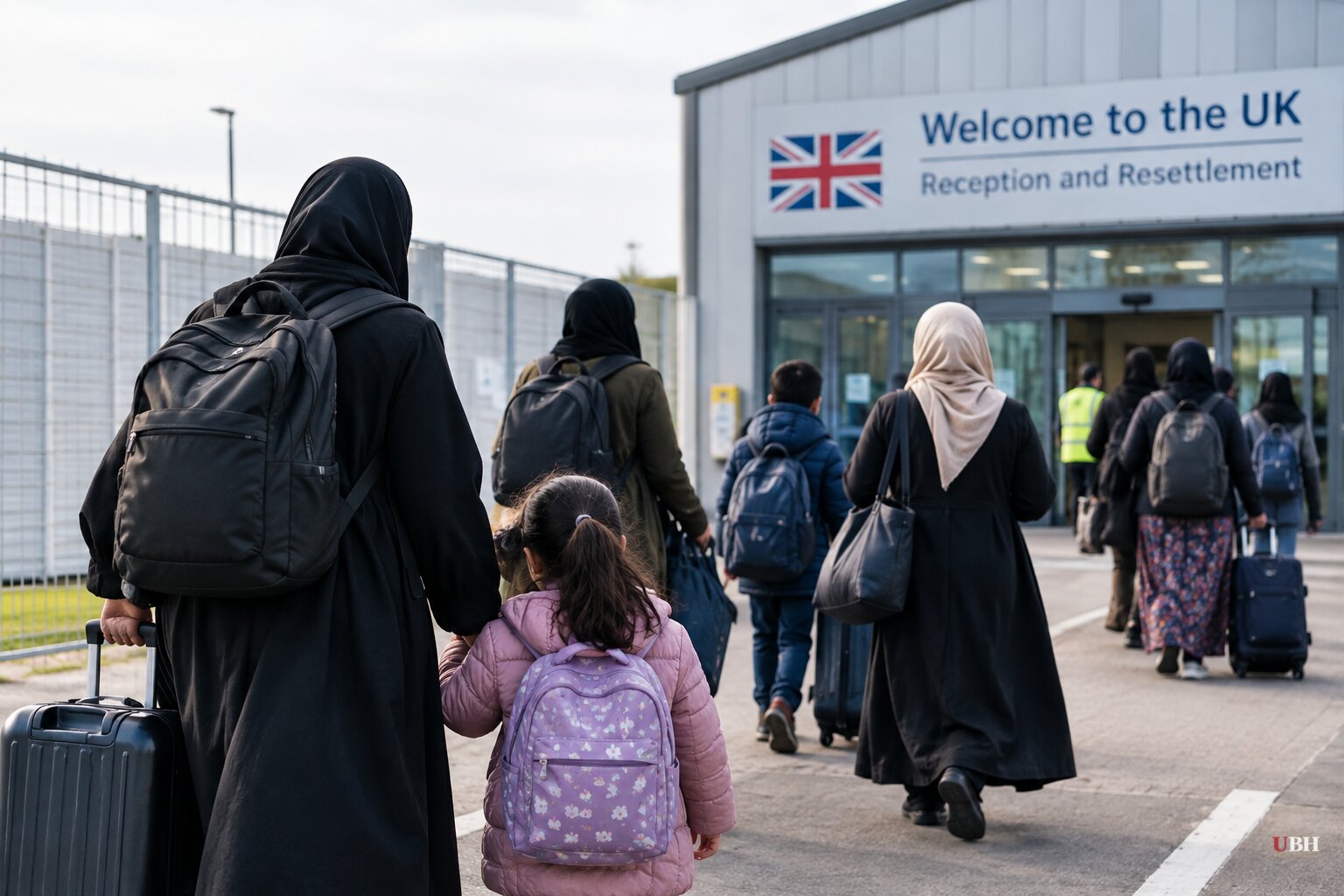
Shabana Mahmood is telling the Labour Party conference today, Sunday, September 27, 2026, that she's reopening the UK's refugee resettlement scheme. It's been effectively frozen since December 2024, though the Home Office never formally closed it, according to The Guardian.
The new priority groups are Afghan women and girls and Palestinians. The Home Office expects roughly one in four arrivals under the reopened scheme to come from those two groups, per The Guardian and confirmed by ua.news. Numbers will start small: hundreds initially, with departmental sources telling ua.news the program could expand to several thousand a year if illegal Channel crossings drop.
Refugees will be identified by the UN Refugee Agency and the International Refugee Assistance Project, and will go through security and criminality checks before arrival, the Home Office says.
A Two-Tier System, By Design
People who come through this legal, vetted route get indefinite leave to remain and a five-year path to permanent status. People who arrive by small boat get something far less stable: their refugee status will now be reviewed every 30 months for up to 20 years, with removal on the table if their home country is judged safe again.
Mahmood is framing this as fairness. "Fairness is what unites us in this country," she's set to say, according to both The Guardian and Bytes Europe, which carried an identical account. "When this country feels unfair, people turn inwards." Her argument: reward the legal route, harden the illegal one, and you keep public support for helping refugees at all.
Skeptics on the Left and the Right
Jon Featonby, chief policy analyst at the Refugee Council, welcomed the reopening but told The Guardian that thousands of places, not hundreds, are needed to make any dent in smuggling networks. Madeleine Sumption of Oxford's Migration Observatory went further, saying there's no reason to expect resettlement numbers this small to affect irregular Channel crossings at all.
That's a fair concern. If the entire point is to give people a legal alternative to paying smugglers for a boat crossing, a program capped at a few hundred people a year isn't going to move that needle. The people risking their lives in the Channel are not typically the same people who'd qualify for a slow, vetted resettlement slot anyway.
On the other side, Reform UK and the Conservatives are expected to raise different objections: security vetting and welfare costs. That criticism isn't abstract. The Sunday Times reported that a former Hamas bodyguard was granted asylum in the UK and was later arrested on suspicion of involvement in a terrorist plot, a case The Guardian says will fuel questions about how thoroughly this new cohort will actually be checked. The Guardian's own reporting also notes that women, girls and people with disabilities, the priority groups here, are also the most likely to need welfare support, a fact worth stating plainly.
What the Old Scheme's Chaos Looked Like
The human cost of the scheme's earlier freeze is documented by The Independent. Farhad, a former Afghan special forces sergeant whose identity was protected for safety reasons, was approved to come to Britain for his service alongside UK troops. But after the Ministry of Defence reversed a promise to evacuate people like him, he had to get himself and his children to Tajikistan on his own, paying $750 a month for a hotel and $1,050 per visa, borrowing from former colleagues. He couldn't afford to bring his wife and three of his six children, who remain in Afghanistan. He arrived in the UK last week on an MoD-funded ticket with three of his children, still trying to raise money to reunite the rest of his family.
A government made a promise, broke it, and left a veteran of the Afghan special forces to fund his own family's rescue.
The Numbers Already on the Ground
North Yorkshire Council's own tally, reported by the Gazette & Herald and the Craven Herald, shows 507 Afghans resettled in the county as of September 15 across 100 households, plus another 180 through the separate UK Resettlement Scheme since February 2021. Twenty-three households are still stuck in Ministry of Defence accommodation with no confirmed follow-on housing, even though most have time left on their leases. If a program this size already strains one county's housing stock, a jump to several thousand annual arrivals nationally, which the Home Office says is the long-term goal if boat crossings fall, will require housing and integration capacity well beyond what currently exists.
Separately, the UK government announced an £88 million package of humanitarian and early-recovery support for Gaza and the West Bank, unveiled at the UN General Assembly on September 24 and covering healthcare, clean water, sanitation and mental health services for hundreds of thousands of Palestinians. That funding is about aid delivered inside Gaza and the West Bank, not resettlement in Britain, and the two policies are separate tracks with separate budgets.
The open question is the same one Featonby and Sumption both raised: whether a program capped in the hundreds, with security vetting under fresh scrutiny after the Hamas bodyguard case, can do anything meaningful about the boats crossing the Channel, or whether it's a narrower, symbolic fix aimed at a much smaller and more vulnerable population.
Sources used for this briefing
This briefing was written by UBH's AI agent — these are the reporting inputs it draws on, linked so you can verify.


