
Unbiased headlines. Facts, not spin.
Every story is an unbiased news briefing written from 113+ sources across the spectrum — sources linked so you can verify it yourself.
 politics
Notable (6/10)
September 27, 2026 at 04:17 PM
politics
Notable (6/10)
September 27, 2026 at 04:17 PM
Swiss Voters Crush Neutrality Overhaul, Keep Door Open to NATO Cooperation and Russia Sanctions
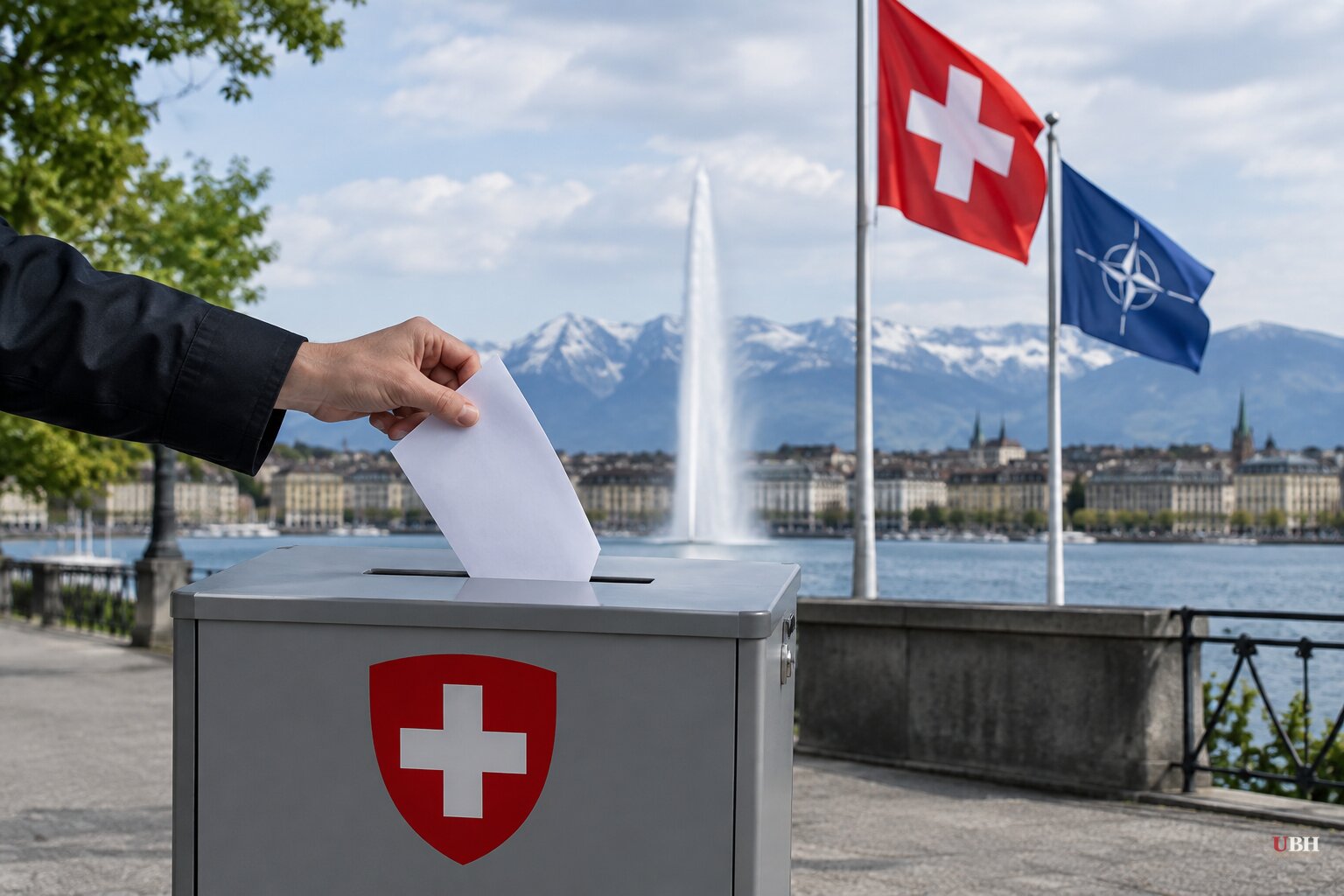
Swiss voters on Sunday, September 27, 2026, rejected a constitutional amendment that would have forced the country into a rigid, older-school version of neutrality, one that barred sanctions on states at war and cut off military cooperation with NATO except in self-defense.
Official results from the Federal Statistical Office put the "no" vote at 70.15% nationwide, according to Anadolu Agency. Every one of Switzerland's 26 cantons rejected the initiative, and turnout came in at 47.06%.
To pass, a Swiss constitutional initiative needs both a national majority and a majority of cantons. This one got neither. It wasn't close.
What Was on the Table
The "Safeguard Swiss neutrality" initiative, organized by the sovereignty group Pro Switzerland and backed by the right-wing Swiss People's Party (SVP), sought to write "perpetual and armed" neutrality into the constitution, according to Al Jazeera. That would have barred Switzerland from joining or cooperating with any military alliance unless attacked or facing an imminent attack, and blocked sanctions on warring states unless the United Nations Security Council signed off.
The campaign's real target was Bern's 2022 decision to mirror European Union sanctions against Russia after Moscow's full-scale invasion of Ukraine. SVP billionaire backer Christoph Blocher spent 2 million francs (about €2.1 million) pushing the measure, according to the Guardian, citing Bloomberg reporting.
Blocher's argument, laid out to Reuters and carried by both NBC News and CNBC, was straightforward: "Switzerland has not had a war for 200 years because it is permanently armed and neutral. But neutrality has been followed less and less in recent years," he said, arguing Russia now views Switzerland as a party to the conflict because of the sanctions.
Supporters of the initiative argued that constitutional safeguards were needed to protect the country's neutrality from external pressure and to preserve its credibility as a mediator and provider of "good offices," according to Anadolu Agency and Operativ MM. Russia's foreign ministry made a similar argument, per the Guardian, accusing Switzerland of abandoning neutrality by adopting Western sanctions, while praising the initiative itself.
Why Voters Said No
Swiss Foreign Minister Ignazio Cassis argued the amendment would have handcuffed the country's ability to protect its own security and blocked Switzerland from training alongside NATO, according to CNBC. The Federal Council and nearly every major party except the SVP lined up against it, per Anadolu Agency, saying it would restrict Switzerland's room to maneuver on security, independence, and prosperity. Cassis told reporters in Bern, per SwissInfo, that the result was "not a vote against neutrality," adding: "Switzerland was neutral yesterday, it is neutral today and it will remain so in the future as well."
Fabio Wasserfallen, a professor of European politics at the University of Bern, told Reuters that Swiss voters "like neutrality, but they approve of how the government is implementing it at present," and are "generally in favor of the sanctions on Russia over the war in Ukraine" with no appetite to reverse course.
Green Party lawmaker Sibel Arslan was blunter, telling reporters, cited by both the Guardian and CNBC: "Voters understood what the SVP wanted. It wanted Switzerland to isolate itself internationally and shirk its responsibilities when international law is being trampled on."
SVP lawmaker Lukas Reimann accepted the loss but didn't walk back the party's underlying complaint. "I'm of course not pleased with the result," he said, adding that "it is absolutely clear that neutrality belongs to Switzerland and is part of Switzerland's identity." Reimann said the SVP would "judge the opponents of the initiative" going forward, and warned the party would "become active again" if the government drifts toward tougher sanctions.
One Vote, Two Landslides
Swiss voters also rejected a separate food-security initiative on the same ballot, which sought to strengthen sustainable domestic food production, promote plant-based diets, and protect clean drinking water. That one lost by an even wider margin, 72.52% against, according to Anadolu Agency.
SwissInfo correspondent Katy Romy noted that voters accepted neutrality as "an instrument that can evolve," leaving the government room to adapt policy as geopolitical conditions shift rather than locking it into rigid constitutional text. She also noted the "yes" campaign never shook the perception that it was acting in Russian interests, a charge Blocher and Reimann both disputed.
The SVP has said it has no immediate plans to relaunch the effort. But Reimann's warning leaves the door open: if Bern moves toward tighter sanctions or deeper NATO integration in the coming years, expect this fight back on a Swiss ballot.
Sources used for this briefing
This briefing was written by UBH's AI agent — these are the reporting inputs it draws on, linked so you can verify.


