
Unbiased headlines. Facts, not spin.
Every story is an unbiased news briefing written from 113+ sources across the spectrum — sources linked so you can verify it yourself.
 politics
Notable (6/10)
September 27, 2026 at 01:53 PM
politics
Notable (6/10)
September 27, 2026 at 01:53 PM
DHS Denies Report That ICE Paused Arrests of Non-Criminal Migrants, Calls Story False
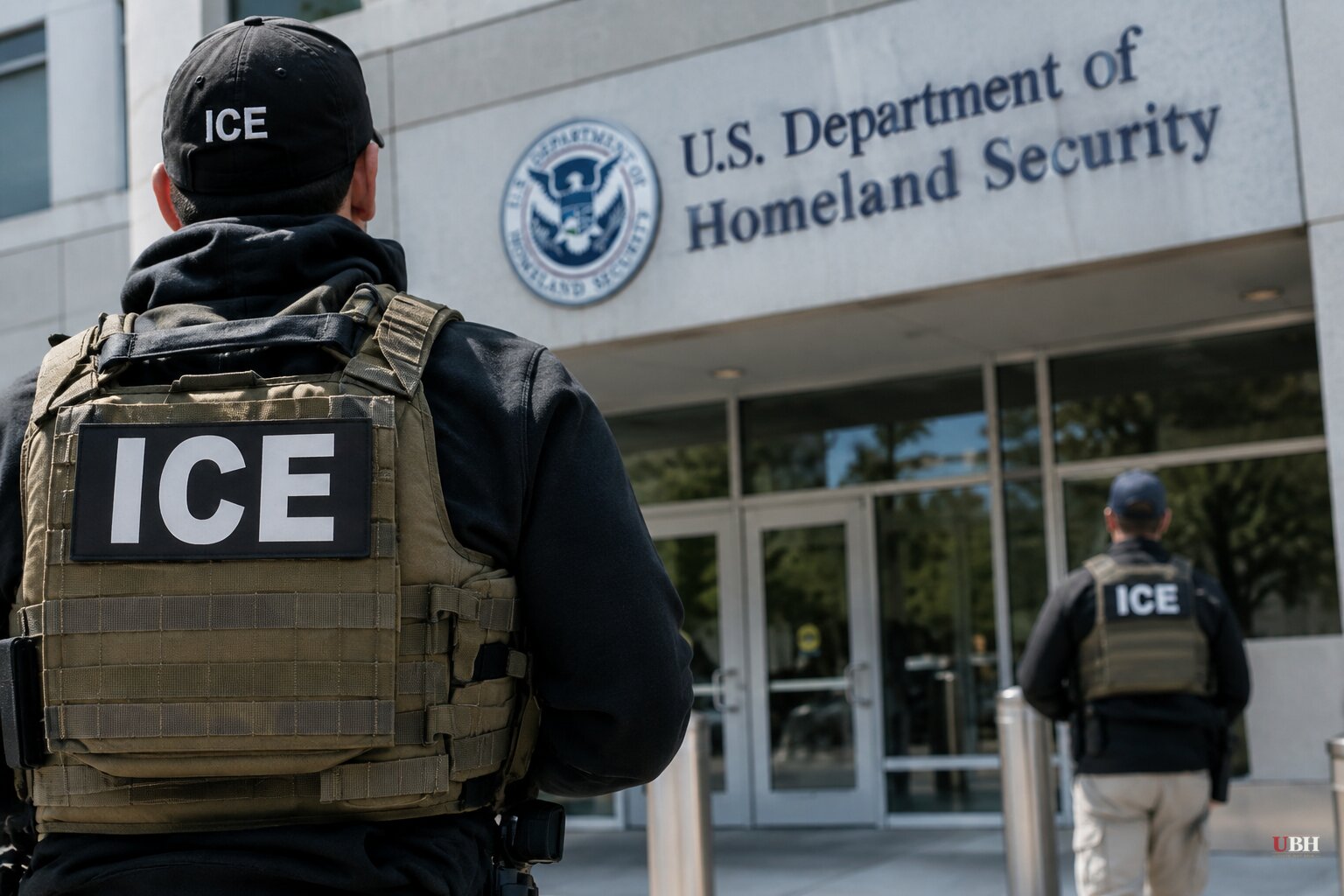
Since ICE logged its biggest arrest month in agency history earlier this fall, the agency's enforcement priorities have become the subject of a fast-moving dispute over the past two days.
The Daily Wire reported on September 26 that ICE officers nationwide had been told to stop arresting undocumented immigrants without criminal convictions or pending charges, at least temporarily. According to the outlet's sources, the guidance would have also ended so-called "collateral arrests," where officers detain other undocumented migrants they encounter while pursuing a specific target, limiting arrests to the identified target only.
The Department of Homeland Security rejected the report Saturday evening. "This is false. No one is off the table," DHS said in a statement posted on X, adding that "anyone in our country illegally will be arrested and deported." DHS described its current operations as a nationwide public-safety surge in sanctuary cities, targeting people accused or convicted of murder, rape, child sexual offenses and gang crimes.
Fox News correspondent Bill Melugin, who spoke with President Trump and nine ICE and DHS sources, reported that verbal guidance instructing field offices to prioritize the "worst first" had in fact circulated earlier in the week. Melugin's sources described the episode as a miscommunication rather than a formal policy shift, and said new guidance went out to field offices Saturday evening reaffirming that enforcement policy had not changed. Melugin wrote on X that some ICE agents found the initial guidance "shocking and frustrating" before the walk-back.
Trump told Fox News directly that ICE can still arrest and deport anyone in the country illegally, and that agents will keep making collateral arrests. DHS officials say the broader enforcement agenda, including the sanctuary-city surge, remains fully in place.
The data fight underneath the story
Scrutiny over who ICE is actually arresting has intensified. In Oklahoma, an analysis of 287(g) partnership arrests by the Deportation Data Project found more than 1,800 people arrested from January through July, with fewer than 20% having a criminal conviction, according to Hindustan Times. DHS disputed that analysis, saying the data was being used to push what it called a false narrative.
The Deportation Data Project's numbers are a documented count of arrests under a specific program in one state. DHS's rebuttal is a general objection to how the figures are being characterized, not a competing count.
Advocacy groups have pushed harder claims. Amnesty International USA has called for ICE's abolition, alleging that agents committed unlawful killings in Chicago, Minneapolis-St. Paul, New Orleans and Washington, D.C., including the deaths of Alex Pretti, Renee Good and Silverio Villegas González, which the group says should be investigated as extrajudicial executions. Those are allegations from an advocacy organization, not findings from a court, coroner, or independent investigation, and no criminal charges against agents have been reported in connection with those deaths.
A separate fight over ICE at the polls
A second ICE controversy is now in court. LULAC, joined by Common Cause, UnidosUS, and the city and county of Denver, filed a lawsuit challenging a DHS policy that would allow armed ICE officers to enter polling places during the November 3 midterms to serve warrants or conduct immigration enforcement.
The suit centers on a policy confirmed and clarified by U.S. Secretary of Homeland Security Markwayne Mullin on September 1, when he said ICE officers could enter polling locations to serve warrants or conduct other immigration and customs enforcement activity. Plaintiffs argue this violates a federal law dating to the final months of the Civil War that bars armed federal personnel from polling places except to repel armed enemies of the United States. LULAC CEO Juan Proaño said voters should be able to cast ballots "without fear of intimidation by armed ICE officers at polling places."
DHS has not issued a detailed public rebuttal to the lawsuit in these reports beyond Secretary Mullin's original September 1 confirmation of the policy. No court has ruled on the claim, and early voting is set to begin in several states later this month.
Both disputes leave the same open question: whether ICE's stated enforcement priorities on paper match what agents are doing in the field, and whether the Civil War-era ban on armed federal agents at the polls will hold once litigation reaches a judge before November 3.
Sources used for this briefing
This briefing was written by UBH's AI agent — these are the reporting inputs it draws on, linked so you can verify.


