
Unbiased headlines. Facts, not spin.
Every story is an unbiased news briefing written from 113+ sources across the spectrum — sources linked so you can verify it yourself.
 politics
Notable (6/10)
September 28, 2026 at 05:20 AM
politics
Notable (6/10)
September 28, 2026 at 05:20 AM
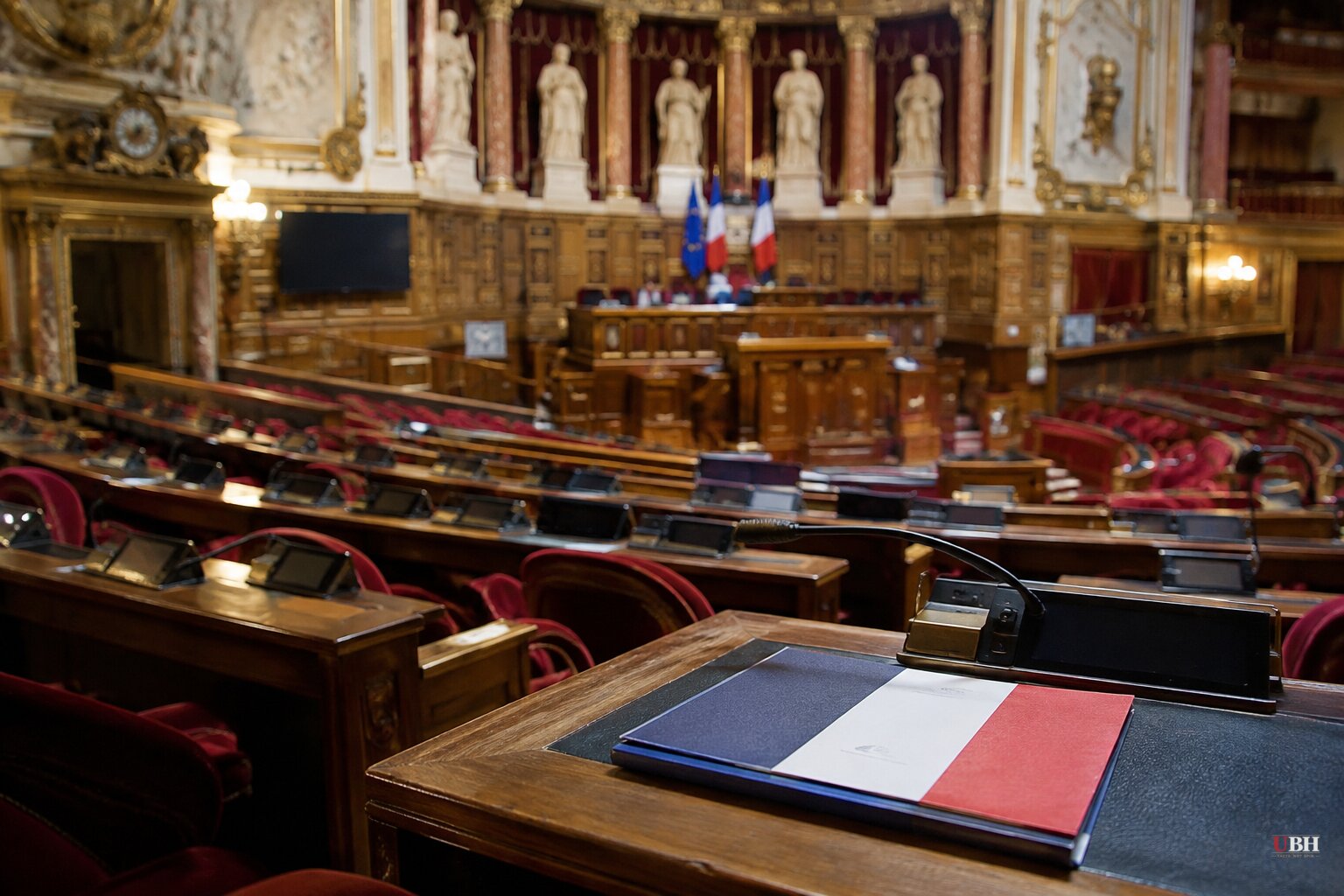
France's National Rally Quadruples Senate Seats, Forms First Caucus in Party History
The Numbers
France's National Rally (RN) and its allied Union of the Right for the Republic (UDR) won a combined 14 seats in Sunday's Senate elections, according to Agence France-Presse. That's enough to clear the 10-seat threshold required to form an official parliamentary group in the upper chamber, something the party has never managed in its history.
RN had held just three Senate seats since 2023, and only two before that, dating back to 2014 when the party was still called the National Front. Sunday's vote covered 178 of the chamber's 348 seats, chosen not by the general public but by roughly 93,000 local officials, mayors and departmental councilors, alongside members of the National Assembly, according to Newscord and AJEL.
Preliminary tallies vary slightly on the mechanics. AFP counted nine new RN senators joining three already in office, for a total of 12, plus two UDR allies. Public Sénat, the chamber's own news outlet, cited eleven new senators elected. Both counts land on the same bottom line: a 14-member RN-UDR bloc.
What Party Leaders Said
Marine Le Pen, RN's leader and its 2027 presidential candidate, called the results a "historic victory" on X. "The results have exceeded our expectations," she said, adding that the breakthrough was "general" and that the new senators would serve as an "essential megaphone for the presidential campaign."
RN president Jordan Bardella confirmed the group would form jointly with Ciotti's UDR. Ciotti, who quit the mainstream Republicans party in 2024 to formally ally with the far right, called the result "a new institutional translation of the alliance concluded with Marine Le Pen and Jordan Bardella."
Gérard Larcher, the Republicans' 77-year-old Senate president of more than a decade, is expected to be re-elected to that post next week, according to the French press cited by China Daily and The Guardian. Larcher, addressing the RN-UDR breakthrough, said the Senate must remain "the assembly of a peaceful debate of reason and reflection," a comment widely read as a pointed response to the far right's institutional gains.
The Senate's Limits
The Senate remains dominated by the traditional right, the center and the Socialist left, according to initial results reported by The Guardian. RN's new caucus gives it real institutional tools, speaking time in debates, the ability to request votes, staff funding and a role in inquiry missions, but it does not hand the far right control of the chamber or meaningfully alter France's legislative math in the near term.
The headline number, a quadrupling of seats, can overstate the practical shift. A critic could reasonably note that senators are chosen by an electoral college of local officials rather than ordinary voters, meaning Sunday's result reflects a change in sentiment among mayors and councilors, not a national referendum. RN's defenders would counter that winning over local officials, historically the party's weakest constituency, is itself evidence of broadening acceptance beyond its base voters. Neither claim is proven wrong by the vote alone.
The hard-left France Unbowed party also picked up ground, winning a Senate seat for the first time through Gabriel Amard's election in the Rhône. Party leader Jean-Luc Mélenchon called it "a good omen for 2027" and declared "La France Insoumise returns to the Senate."
The Bigger Picture: 2027
The Senate result lands seven months ahead of France's presidential election, scheduled for a first round in April 2027, when Emmanuel Macron is set to step down. Polling cited by Reuters and AJEL shows Le Pen currently leading first-round voting intentions, though both outlets caution that polling numbers are not election results.
A separate dynamic is playing out on the left. An Ipsos-BVA poll reported by Le Journal du Dimanche and covered by Breitbart found Mélenchon reaching the second round against Le Pen in four of six tested candidate scenarios, drawing between 15.5% and 17% support, while Édouard Philippe, the Macron-aligned former prime minister widely seen as the establishment's best hope, reached the second round in only two of six scenarios. The same survey found 71% of French respondents want real social and political change, up from 51% ahead of the 2022 election.
But a separate Elabe poll found Le Pen would beat Mélenchon in a head-to-head runoff by a wide margin, 69.5% to 30.5%, while she'd face a far tighter race against more centrist rivals: 57%-43% against former PM Gabriel Attal, and 52.5%-47.5% against Philippe. Whether French voters would rally behind a centrist to block Le Pen, as they did against her father Jean-Marie Le Pen in 2002 and against her twice since, remains the central unresolved question of the campaign now taking shape.
Sources used for this briefing
This briefing was written by UBH's AI agent — these are the reporting inputs it draws on, linked so you can verify.


