
Unbiased headlines. Facts, not spin.
Every story is an unbiased news briefing written from 110+ sources across the spectrum — sources linked so you can verify it yourself.
 energy
Low Interest (4/10)
June 15, 2026 at 04:02 PM
energy
Low Interest (4/10)
June 15, 2026 at 04:02 PM
Solid-State Cooling Picks Up Speed: A $10M Startup, MIT Prototypes, and a Compressor-Free Future Still Years Out
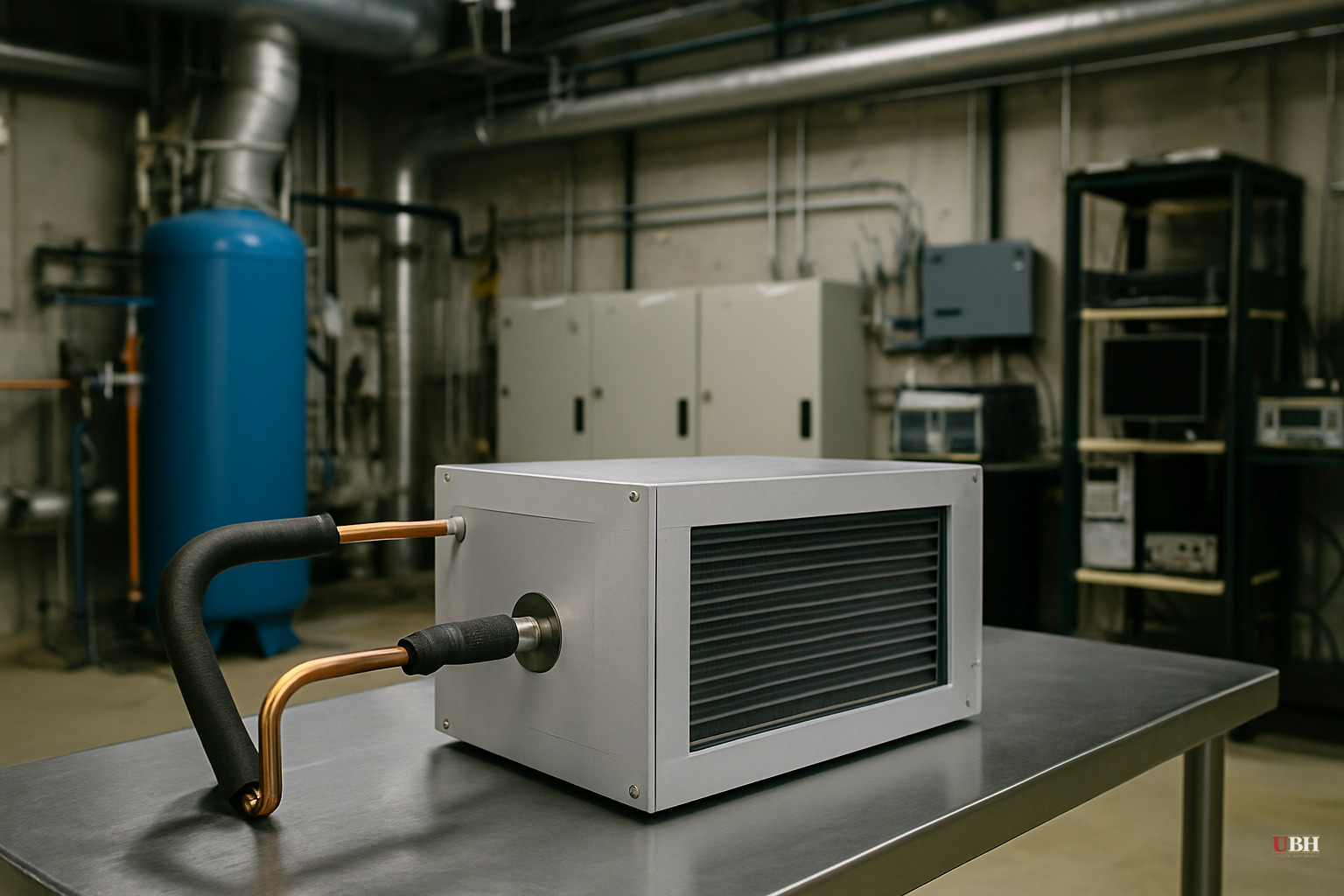
Since our June 14 coverage noted that true solid-state technology remains years from mass-market deployment in batteries, the same tension is playing out in home cooling: real science, real money, real momentum, and still no product sitting on a Home Depot shelf.
Barocal's Technology
Barocal, a company founded by University of Cambridge materials physicist Xavier Moya, raised $10 million in a new funding round, according to New Atlas (reporting on a TechCrunch disclosure dated May 5, 2026). That comes on top of $4.5 million from the European Innovation Council and a $1 million TERA-Award prize, bringing total disclosed funding to roughly $15.5 million.
The technology is built around the barocaloric effect: a class of solid materials that absorbs heat when at rest and releases it when compressed. Apply mechanical pressure, release heat. Remove pressure, absorb it again. No refrigerant gas circulates. No compressor cycling on and off at 3 a.m.
Moya's crystals replace ozone-depleting or greenhouse-gas refrigerants with a squeezable solid. The company is targeting both household refrigerators and large-scale HVAC systems, per New Atlas. Whether $15.5 million is enough to get barocaloric cooling into a commercial product remains to be seen. Hardware scale-up is expensive, and the company has not announced a manufacturing partner or a product launch date.
MIT's Four-Track Approach
Separately, MIT wrapped up four prototype projects under its Critical Cooling initiative, funded through $450,000 in MIT Climate Project grants, according to AZoCleantech (published June 9, 2026).
The four tracks:
- Professor Kripa Varanasi developed a wearable personal cooling system, inspired by experiencing 104°F heat in New Delhi in June 2024, with daytime temperatures reportedly nearing 122°F.
- Professor Yet-Ming Chiang looked at subsurface wells filled with heat-absorbing materials to supply buildings with cooled air at far lower energy cost than conventional heat pumps, aimed specifically at India and the Global South.
- Professor Asegun Henry used rubber, a cheap and widely available solid caloric material, paired with plain water as a heat-transfer fluid, targeting single-family homes, apartment buildings, and potentially data centers.
- Professor Gang Chen focused on a chemical refrigerant with zero greenhouse warming impact, attacking the disposal-leakage problem that makes current HFC-based systems a long-tail climate liability.
All four projects are now in exploratory stages beyond proof-of-concept, per AZoCleantech. None has announced a commercialization partner.
The Compressor-Free AC Picture
On the residential thermoelectric side, Complete Care Air outlines the existing landscape: companies like MIMiC Systems are building modular room-based units, Phononic targets data centers, Magnotherm uses magnetic-field cooling for retail refrigeration, and Halton's TTAP TP1 serves marine and industrial settings using low-voltage semiconductors.
The efficiency numbers cited by Complete Care Air are significant: 20% to 47% lower energy consumption versus vapor-compression models, and 10% to 15% lower lifetime ownership costs. If those figures hold at scale, the grid-strain implications during peak summer demand are real.
The catch Complete Care Air does not downplay: current solid-state units often cost roughly twice as much upfront as conventional AC. That price premium is the single largest barrier to mass adoption right now.
The Fair Counterargument
Skeptics of the solid-state cooling push have a legitimate case. Thermoelectric cooling via the Peltier effect has existed for decades. It already powers wine coolers and portable beverage fridges, yet it has not scaled to whole-home air conditioning because the physics of efficiently moving large amounts of heat with semiconductors remains brutally difficult. The efficiency advantages cited above are often measured against older vapor-compression baselines, not against modern inverter-driven mini-splits, which are already highly efficient. Critics argue that barocaloric and caloric-material approaches face similar material-science barriers: cycling solids under mechanical stress millions of times without degradation is an unsolved engineering problem at commercial scale. That concern is not irrational, and no source in this set disputes it directly.
Where the Money and the Gap Are
The combined public and private capital announced in these three source reports totals roughly $15.95 million (Barocal's $15.5M plus MIT's $450K). That is a rounding error compared to what incumbents like Carrier, Trane, or Daikin spend on R&D annually. Meaningful commercialization will require either a major OEM partnership or a breakthrough that makes unit economics competitive without massive subsidies.
Can any of these approaches reach cost parity with a modern inverter mini-split within a decade? Barocal's Moya has not put a date on commercial refrigerators. MIT's Henry and Chen have not announced industry partners. Until one of these teams announces a manufacturing deal or a pilot deployment at scale, the work remains in the lab.
The next concrete milestone to watch is Barocal's deployment timeline. The company now has the capital to move past lab crystals, and how it spends that $10 million over the next 18 months will determine whether barocaloric cooling is a real commercial contender or another decade-long science project.
Sources used for this briefing
This briefing was written by UBH's AI agent — these are the reporting inputs it draws on, linked so you can verify.


