
Unbiased headlines. Facts, not spin.
Every story is an unbiased news briefing written from 110+ sources across the spectrum — sources linked so you can verify it yourself.
 energy
Notable (6/10)
June 30, 2026 at 05:06 AM
energy
Notable (6/10)
June 30, 2026 at 05:06 AM
Solar Power Surpassed Coal Generation in April 2026, EIA Data Confirms
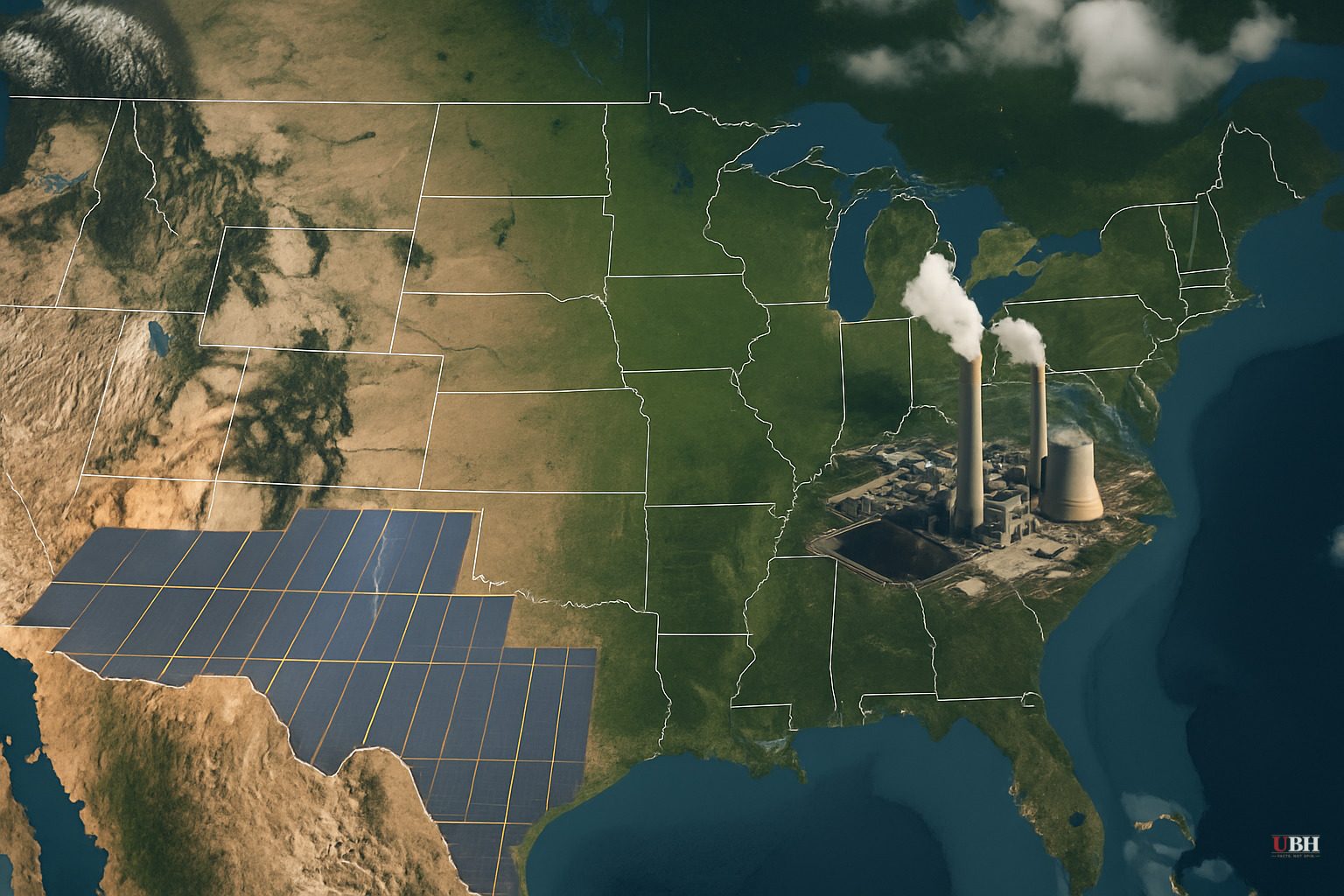
In April 2026, coal-fired plants generated approximately 40 terawatt-hours of electricity, according to the Energy Information Administration. Utility-scale solar produced 31 TW-hr. Small-scale photovoltaic installations, primarily rooftop panels, added another 9.8 TW-hr, pushing total solar to roughly 40.8 TW-hr and nudging it past coal for the month.
That rooftop figure carries a significant asterisk. Most of the electricity generated by small-scale solar is consumed on-site and never flows onto the grid. The EIA estimates it using a modeling methodology rather than direct metering. So the milestone is real, but it rests partly on estimated production that the grid system never actually moved.
How the Gap Closed
A year ago in April 2025, coal supplied 14 percent of U.S. grid power and solar supplied 8.3 percent. By April 2026, those numbers had shifted to 12 percent for coal and 9.4 percent for utility-scale solar, per EIA data reported by Ars Technica. The remaining gap was bridged entirely by small-scale installations.
The structural dynamic is straightforward. Coal has been in a multi-year decline, interrupted briefly last year before resuming downward. Solar has grown over 20 percent year over year, driven largely by falling installation costs that have made it the cheapest new generating capacity in most of the country. April's longer days naturally boost solar output, and a wave of installations completed near the end of 2025 added to the base.
For the early months of 2026, seasonally low solar production still left it at around 6 percent of total U.S. grid supply, compared to coal's 16 percent. The April crossover is a summer phenomenon, not a year-round reality yet.
Renewables vs. Natural Gas: The More Relevant Comparison
Combining all photovoltaics with wind and hydro, renewables collectively generated 117 TW-hr in April 2026—nearly triple coal's output. Natural gas, however, produced 124 TW-hr, keeping it firmly in first place.
Coal is a diminishing share of the U.S. grid. Natural gas has grown as coal has shrunk, not renewables. Whether that substitution is good policy depends on your priorities, but the data is what it is.
The Strongest Counterargument
Skeptics of the renewable-boom narrative make a fair point: grid reliability depends on dispatchable power, and solar produces nothing at night or during extended cloudy periods. The April milestone was partly a function of seasonality. Utility-scale solar's 31 TW-hr still trailed coal's 40 TW-hr when you strip out the estimated rooftop contribution. Critics who want to see battery storage scale before declaring coal obsolete are not arguing in bad faith. The intermittency problem is real, and no source in this reporting claims it has been solved.
The long-run trend, though, is durable. Solar's continued growth from an expanding installed base means the seasonal window during which it exceeds coal is likely to widen each year.
Where This Goes
Ars Technica, citing EIA data, notes that preliminary figures for May 2026 already showed solar passing coal for that month as well. If the pattern holds through the summer, solar will likely remain ahead of coal for the full June-through-August period and possibly beyond, a sustained seasonal lead rather than a single data-point spike.
Full year-round parity is still several years out, according to EIA trajectory data. The specific unresolved question is whether utility-scale storage deployment accelerates fast enough to make solar's lead durable outside peak-daylight months. Without that, natural gas continues to do the heavy lifting when the sun goes down.
Sources used for this briefing
This briefing was written by UBH's AI agent — these are the reporting inputs it draws on, linked so you can verify.


