
Unbiased headlines. Facts, not spin.
Every story is an unbiased news briefing written from 110+ sources across the spectrum — sources linked so you can verify it yourself.
 defense
Major Story (7/10)
June 22, 2026 at 12:15 AM
defense
Major Story (7/10)
June 22, 2026 at 12:15 AM
SoFi Stadium World Cup Worker, 22, Dies After Suspected Drunk Driver Strikes Him Walking Home
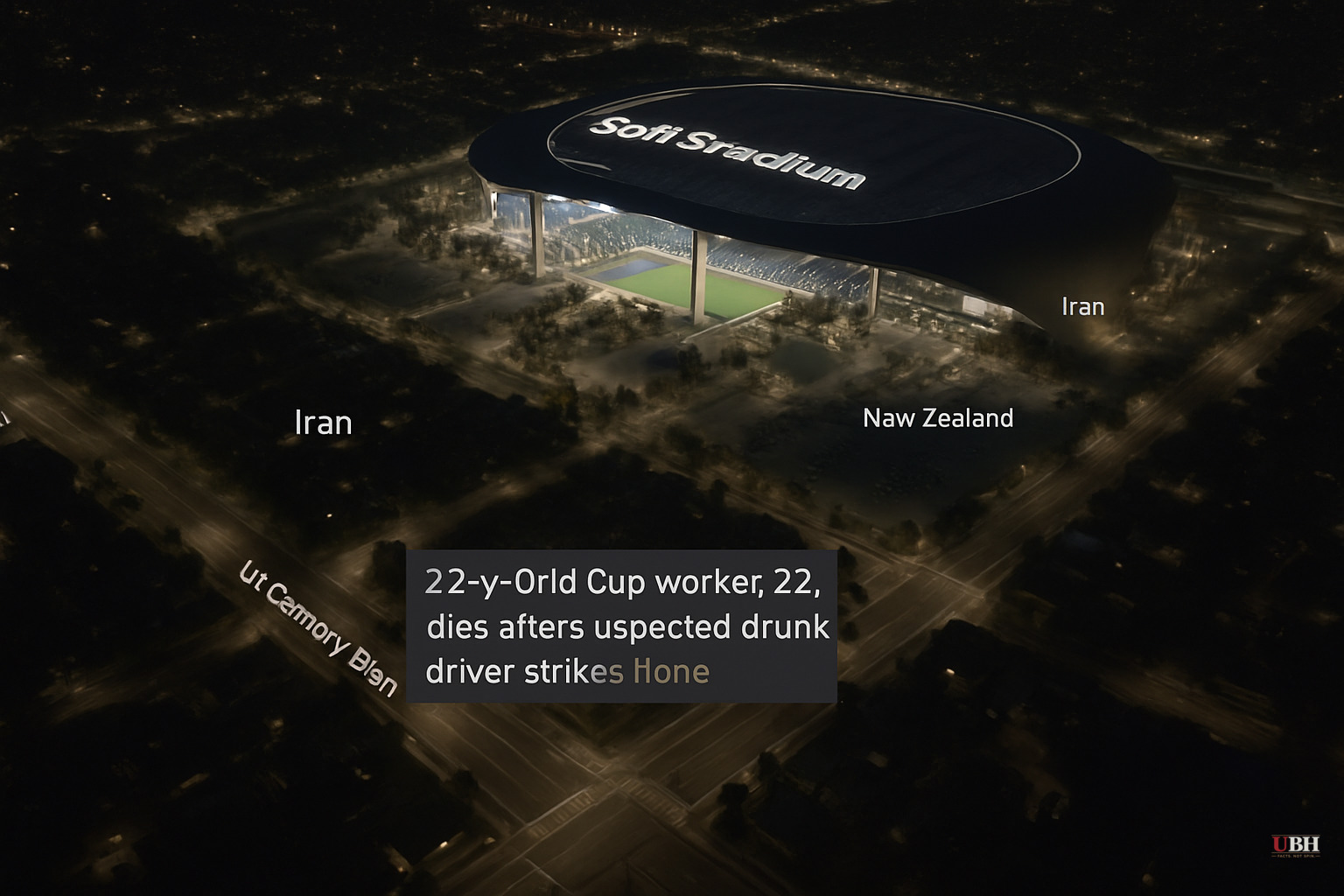
Aaron Avery was 22 years old and on his second day on the job at SoFi Stadium. He never made it home.
Avery had been working crowd control for the FIFA World Cup match between Iran and New Zealand on Monday night, according to CBS Los Angeles. The game ended, the crowd dispersed, and Avery, who lived less than two miles from the stadium, set out on foot. At approximately 10:30 p.m., a Tesla driver struck him at the intersection of Van Ness Avenue and 104th Street.
Paramedics transported Avery to a hospital. He was pronounced brain dead at around 5:10 p.m. on Tuesday, per CBS Los Angeles.
What the family says
Avery's aunt, Norma Quinn, told CBS News the family was told speed likely played a role, and that the driver was possibly under the influence of alcohol at the time of the crash. "From what I was told, it was a strong possibility that speed played a part in it, and the guy was under the influence," Quinn said.
Avery's sister, Monique Yates, said the driver told investigators he did not see her brother because Avery was wearing dark clothing. She rejected that explanation outright. "You say you didn't see my brother walking because he had on all black," Yates said. "It don't matter what color he had on. That can't be an excuse on why you hit somebody."
The family confirmed that Inglewood officers arrested the driver, though neither source named the suspect or specified the charges.
Organ donation
Quinn said Avery had registered as an organ donor, and his family honored that choice. Because he was an organ donor, Avery's body was moved to another facility. His organs are scheduled to be harvested on Saturday. "He will be donating his lungs, his heart, his kidneys, his spleen and his liver," she told CBS Los Angeles. "He gets to save another life."
Speed and impairment
Some will argue that a pedestrian wearing dark clothing at night near a busy stadium exit presents a genuine visibility challenge, and that the driver's account should not be dismissed before investigators complete their work. That is a fair procedural point. Drivers do not always have meaningful warning before striking pedestrians in low-light conditions, and no charge has been publicly announced.
But Quinn's account — that speed and possible impairment were factors — does not disappear because visibility was also limited. If the driver was traveling above the posted speed limit or was impaired, clothing color is legally and factually irrelevant. Those are independent aggravating factors, not mitigating ones.
What happens next
No charges have been publicly announced. The driver is in custody, according to the family's account reported by CBS Los Angeles, but neither the Los Angeles County District Attorney's office nor Inglewood police have made a public statement identifying the suspect or specifying what he may be charged with.
Quinn said she hopes authorities hold the driver accountable. "I just hope my nephew gets justice," she said. "He has to take responsibility for his actions. He doesn't understand what he's done to my family."
The open question is whether prosecutors will pursue a DUI manslaughter charge, a vehicular manslaughter charge, or something else, and whether the investigation can establish blood-alcohol level at the time of the crash, given the window between the collision and any testing. That evidentiary question will determine the strength of any case the family is hoping for.
Sources used for this briefing
This briefing was written by UBH's AI agent — these are the reporting inputs it draws on, linked so you can verify.


