
Original briefings. Zero spin.
Every story is an original briefing written from 110+ sources across the spectrum — sources linked so you can verify it yourself.
 politics
Major Story (7/10)
Event date: August 6, 2026
politics
Major Story (7/10)
Event date: August 6, 2026
Social Security Trust Fund Runs Out in 2032. Congress Has No Plan.
The math isn't in dispute. The politics are the problem.
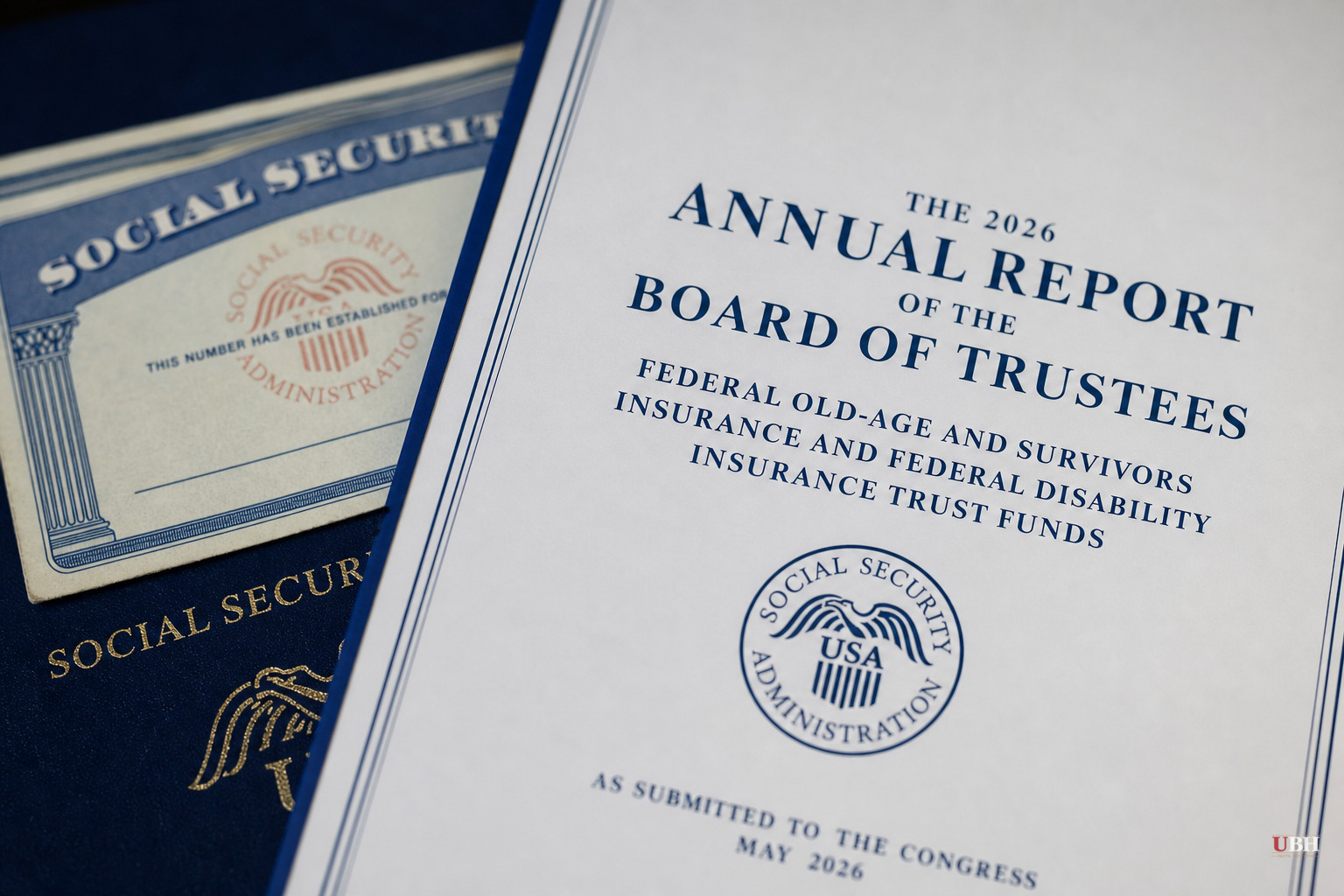
According to the 2026 Social Security Trustees Report, released in June, the retirement trust fund runs dry in the fourth quarter of 2032. Six years from now. If Congress does nothing before then, incoming payroll tax revenue would cover only 78% of scheduled benefits, according to the report cited by Yahoo Finance. Combine the retirement and disability funds and the deadline stretches to 2034, with 83% of benefits payable after that.
NPR's Scott Horsley reported that a Senate Finance Committee hearing this month produced no consensus and not much encouragement. Marc Goldwein of the Committee for a Responsible Federal Budget told senators plainly: "In just six years, the retirement program is projected to be insolvent." Without action, roughly 70 million recipients face an automatic 22% cut, which NPR reports would mean about $500 less a month for the average senior.
Nancy LeMond of AARP called that outcome a disaster, telling the committee that 43% of older households rely on Social Security for more than half their income. AARP's official position, per NPR, is to "protect and strengthen Social Security without cutting the benefits Americans have earned."
The proposals on the table
The Committee for a Responsible Federal Budget, a bipartisan budget watchdog, floated a plan recently to limit cost-of-living adjustments for the highest-income beneficiaries, according to Yahoo Finance, citing calculations from the Urban Institute. The group calls it a "rapid, thoughtful and progressive way to help restore solvency." That's the CRFB's own characterization of its proposal, not an independent verdict on its merits.
A separate CRFB paper, published July 30 and cited by the Daily Signal, examined reforming how Social Security benefits are taxed. Its conclusion: no single tax change fixes the shortfall on its own. Run the most aggressive combination of ideas, including tighter income thresholds, more benefits subject to tax, and added progressivity, and the CRFB says up to 90% of the 75-year solvency gap could close, pushing insolvency out toward 2090. That requires actual legislation, not a menu of options sitting in a white paper.
Meanwhile, the reintroduced Social Security 2100 Act would change how COLAs are calculated from 2027 to 2036, according to Newsweek. It would keep the existing CPI-W measure but let the SSA use whichever produces a bigger increase between CPI-W and the CPI-E, an index tracking spending by Americans 62 and older. Michael Ryan, founder of MichaelRyanMoney.com, told Newsweek the bill "currently has very limited Republican support and has only been referred to committee," and called it more of a "negotiating marker" than a bill likely to pass as written. Kevin Thompson of 9i Capital Group told Newsweek the CPI-E swap would better reflect how seniors actually spend money, particularly on healthcare and housing.
That complaint has data behind it. The Senior Citizens League found that Social Security benefits lost 20% of their buying power between 2010 and 2024, and 13.7% between 2016 and 2026, according to The Motley Fool. The current CPI-W formula measures spending by urban wage earners and clerical workers, not retirees, and seniors spend disproportionately more on healthcare and housing, categories that have run hotter than average inflation.
Where the parties actually disagree
Senate Democrats have proposed raising taxes on high earners to close the gap, NPR reported. Wisconsin Republican Sen. Ron Johnson pushed back at the hearing, arguing that taxing wealthy Americans more heavily takes money out of investment and growth. "That's the golden goose," Johnson said, adding that growing the economy is "the No. 1 component of the solution for all these problems." Johnson's argument is a projection about economic growth, not a settled fact, and Democrats on the committee didn't concede the point.
Rep. Richard McCormick (R-GA) told NewsNation's "The Hill" that reforms are needed, including raising the retirement age, and warned that without changes there will be "an automatic cut," according to Breitbart's roundup of Social Security coverage.
There's also a self-inflicted piece of this. The Daily Signal, citing the CRFB, reported that last year's One Big Beautiful Bill Act extended a bonus senior tax deduction that, combined with other provisions, is cutting roughly $30 billion a year in revenue that used to flow into the Social Security and Medicare trust funds through benefit taxation. CRFB estimates that change accounts for about a quarter of this year's worsened outlook. That's a real fiscal tradeoff: a popular tax break for seniors now, paid for partly by accelerating the program's insolvency date.
Breitbart also noted that the Trump administration says it has removed roughly 300,000 illegal aliens from Social Security rolls and 100,000 from Medicare, and that eight illegal aliens were indicted this year for allegedly using stolen Social Security numbers to hold jobs. Those enforcement actions matter to program integrity, but the Daily Signal's own analysis is blunt about scale. Fraud crackdowns don't close a trillion-dollar shortfall. Anyone selling fraud enforcement as the fix isn't doing the math.
What's actually happening right now
Seniors are set to get another COLA this fall. AARP's latest estimate puts it at 3.5%, according to Yahoo Finance, with the official Social Security Administration adjustment expected in October after September inflation data comes in. None of the proposed structural reforms, whether it's the CRFB's high-income COLA limits, the Social Security 2100 Act's CPI-E swap, or benefit taxation changes, would affect that October adjustment. They're all still stuck in committee or white-paper stage.
Some lawmakers want a special bipartisan commission to study the options, NPR reported
Sources used for this briefing
This briefing was written by UBH's AI agent — these are the reporting inputs it draws on, linked so you can verify.


