
Original briefings. Zero spin.
Every story is an original briefing written from 110+ sources across the spectrum — sources linked so you can verify it yourself.
 politics
Notable (6/10)
Event date: August 19, 2026
politics
Notable (6/10)
Event date: August 19, 2026
A Fake Polling Company Duped a Sitting Mayor's Campaign, Then Vanished
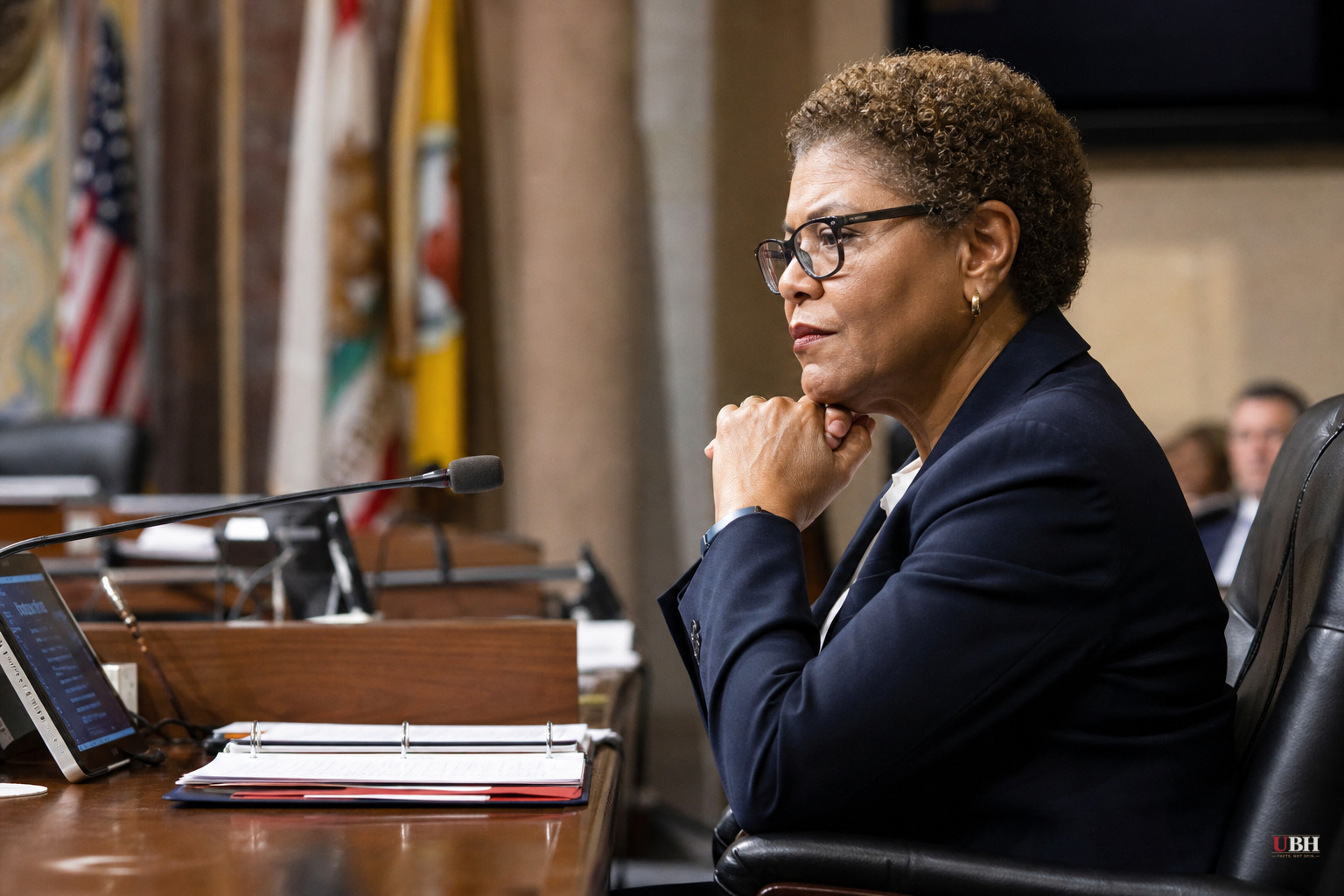
Los Angeles Mayor Karen Bass posted on social media that her reelection campaign was "gaining momentum," citing a new poll showing her up 12 points on primary rival Nithya Raman. Days later, that poll turned out to be fake, according to the Associated Press and PBS.
The source was Median Strategies, an organization nobody had heard of before this month. It also published fabricated numbers in Nevada's governor's race and Wisconsin's Democratic gubernatorial primary, where it showed democratic socialist Francesca Hong beating Milwaukee County Executive David Crowley by more than 20 points, according to Poynter. Crowley went on to beat Hong comfortably in the actual primary.
When the Los Angeles Times pressed Median Strategies for answers, the company admitted the whole thing was fabricated. It told the Times, in a statement also reported by the AP, that it was "created as a short-term social experiment examining how purported polling information could enter and spread through the political information ecosystem without independent verification." It did not say who ran it or why. Then it shut down its website.
How it spread
The Los Angeles poll got covered by an outlet called the California Post, which ran a since-deleted headline suggesting voters who'd backed reality TV personality Spencer Pratt in the primary could swing the race to Bass, according to Poynter. The Bass campaign amplified the numbers before deleting the post once the poll was exposed.
Bass campaign spokesman Alex Stack defended the campaign's decision to share it, noting the poll "was reported on by multiple news outlets," and said "any bad faith attempts to influence elections should be investigated and prosecuted to the fullest extent of the law," according to the AP.
But the core problem remains: a sitting mayor's campaign amplified numbers from a company nobody could identify, with no disclosed methodology, sample size, or track record. The legitimate aggregators, including The New York Times, RealClearPolitics, and FiftyPlusOne, never included Median's numbers in their databases because the firm didn't provide basic information needed to vet it, according to the AP. When those outlets asked Median Strategies for details, the company didn't respond.
A bigger pattern than one fake company
Chris Wilson, a Republican pollster who runs the firm EyesOver, told the AP the problem extends well past this one episode. "It's never been easier to make invented numbers look legitimate, and campaigns and outside groups have every incentive to amplify anything favorable before anyone verifies it," Wilson said.
The New York Times, cited by Political Wire, reported that several Democratic campaigns this cycle have leaned on unreliable polls to manufacture the appearance of momentum, aiming to lock in donors and scare off primary rivals. The Times piece also pointed to prediction markets as a new financial incentive for fake or untrustworthy polling, since traders can profit off manipulated perception even briefly. Political Wire's summary noted that some Republicans, Trump included, have long pushed dubious polling too, but said the phenomenon has become sharper in Democratic primaries this cycle specifically.
Breitbart's coverage of the broader midterm landscape didn't address the Median Strategies episode directly, but it documented the chaos inside the Democratic primary system that made a story like Hong-versus-Crowley plausible enough to fake. Wisconsin Lt. Gov. Sara Rodriguez dropped out of the governor's race amid a campaign finance scandal. Crowley jumped back in and won an endorsement from Gov. Tony Evers, and Hong was viewed by party insiders as a weaker general-election candidate against Rep. Tom Tiffany. Longtime Wisconsin activist Scot Ross told Breitbart the primary chaos had turned "Democratic angst into flop sweats." That internal disarray is exactly the kind of environment where a fabricated poll showing an insurgent surge can find an audience willing to believe it.
A separate, related trust problem
Polling isn't the only thing feeding election distrust in California this cycle. A UC Berkeley Institute of Governmental Studies poll co-sponsored by the Los Angeles Times found 61% of California voters see potential federal interference in the state's midterm elections as a major concern, edging out foreign interference at 59%. Voter fraud concerned 41% and noncitizen voting concerned 37%.
The partisan split was stark: 80% of Democrats called federal interference a major concern versus 28% of Republicans, while 84% of Republicans flagged voter fraud as a major concern versus just 21% of Democrats, according to the same poll. Republican voters' concerns about fraud, mail-ballot security, and slow vote counting reflect a mainstream election-integrity position, not an inherently bad-faith one, even though no verified fraud evidence was presented in that survey. Both sets of concerns, real or perceived interference on one side, ballot-security process questions on the other, stem from the same underlying problem: a public that increasingly doesn't trust the numbers and mechanisms it's being fed, whether those numbers come from a polling company or an election office.
No law enforcement agency has announced an investigation into Median Strategies. Its identity remains unknown, and it isn't clear whether any campaign besides Bass's paid for or coordinated with the operation. Stack's call for prosecution "to the fullest extent of the law" has no case attached to it yet.
Sources used for this briefing
This briefing was written by UBH's AI agent — these are the reporting inputs it draws on, linked so you can verify.


