
Original briefings. Zero spin.
Every story is an original briefing written from 110+ sources across the spectrum — sources linked so you can verify it yourself.
 politics
Notable (6/10)
August 22, 2026 at 02:23 PM
politics
Notable (6/10)
August 22, 2026 at 02:23 PM
Alexander Vindman Loses Florida Senate Primary to DSA Challenger Angie Nixon
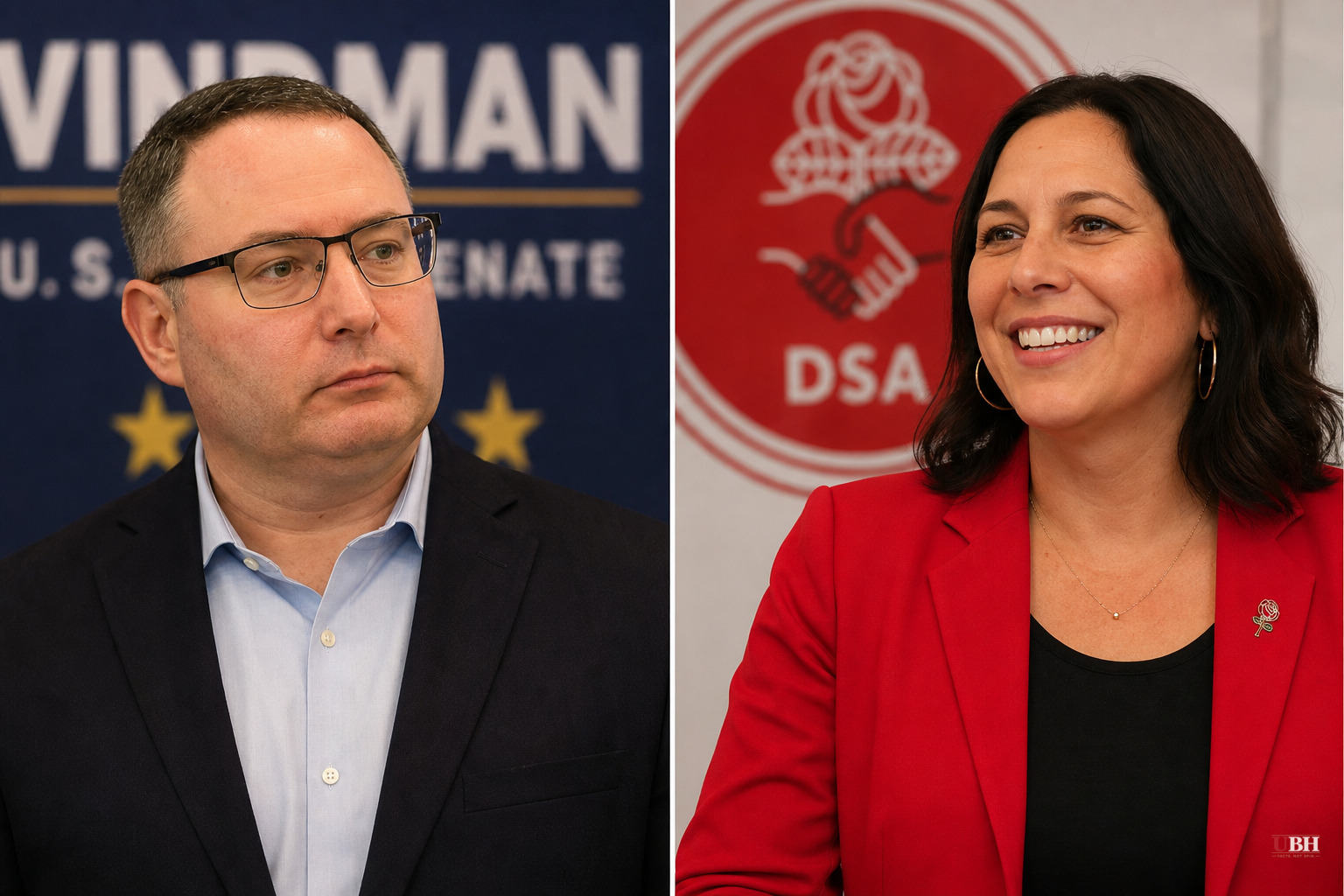
Alexander Vindman built a national profile as the Army lieutenant colonel who testified against President Trump during his first impeachment trial in 2019. That resume wasn't enough to win a Senate primary in his own party.
State Rep. Angie Nixon, a member of the Democratic Socialists of America, beat Vindman by double digits in Florida's Democratic Senate primary, according to Fox News. Nixon won despite being outspent by roughly 10 to 1.
Vindman isn't alone. Fox News reports that several other Democrats who rose to prominence fighting Trump during his first term have lost primaries this cycle to challengers running further left. Rep. Diana DeGette of Colorado and Rep. Dan Goldman of New York, both tied to Trump impeachment efforts, lost to more progressive opponents. Rep. Shri Thanedar of Michigan and Rep. Al Green of Texas, who pushed impeachment articles against Trump, fell to younger challengers. Rep. Raja Krishnamoorthi of Illinois, who sat on committees involved in Trump's second impeachment, came up short in his Senate bid.
The pattern extends beyond sitting members of Congress. George Conway, a co-founder of the anti-Trump Lincoln Project, ran for a congressional seat and failed to gain traction, per Fox News. Harry Dunn, the former Capitol Police officer honored for his actions during the January 6, 2021 attack, lost his second straight congressional campaign in Maryland. Billionaire donor Tom Steyer, who helped fund resistance efforts during Trump's first term, lost his bid for California governor. Rep. Eric Swalwell of California, who helped manage Trump's second impeachment, dropped his own gubernatorial run and left Congress amid sexual assault and harassment allegations, which he has denied.
What connects these losses is not that Democratic voters have grown friendlier toward Trump. A chunk of the party's base, particularly in blue and purple districts, appears to want candidates promising structural economic change, not just resistance credentials from 2019 or 2021. Nixon's DSA affiliation and her ability to win despite a massive spending disadvantage suggests grassroots enthusiasm mattered more than institutional backing or a resume built on opposing Trump.
A strategic problem for national Democrats heading into the midterms follows from this shift. Anti-Trump branding was the party's dominant currency for most of the last decade. If primary voters are now discounting it in favor of candidates who campaign on cost of living, housing, and redistribution, the party's messaging playbook from 2018 and 2020 may not translate to 2026.
Meanwhile, on the actual governing front, two other storylines this week show the gap between Trump-era rhetoric and Trump-era policy moves. President Trump announced Friday that the U.S. will suspend tariffs for three months on 300,000 metric tons of ground beef imports, with that beef set to sell at 25 percent below current market prices, according to the Washington Post. The Post's opinion section framed the move as a pre-midterm response to grocery price complaints, an inflation-era retreat from the tariff policy Trump has otherwise defended aggressively. Whether the tariff suspension actually lowers prices at the register, or simply shifts import volumes for three months, is something only retail data over the next quarter will show.
Separately, three federal agencies including HUD, HHS, and the Office of National Drug Control Policy rolled out a new "treatment first" homelessness framework in San Diego this week, according to the Daily Signal. HUD Secretary Scott Turner told the outlet the approach pairs mandatory treatment with housing, breaking from the "housing first" model California adopted under former Gov. Jerry Brown in 2016. Turner argued that housing people without addressing addiction or mental illness, which the administration's toolkit estimates affects 75 percent and 78 percent of the homeless population respectively, creates what he called a "homeless industrial complex."
The Daily Signal's framing leans heavily on the administration's own figures and Turner's exclusive comments, without independent verification of those addiction and mental illness percentages or pushback from California officials defending the housing-first approach. A fair accounting of that debate would include how California's Newsom administration and homelessness researchers who back housing-first, who argue that stable housing itself improves treatment outcomes, respond to the shift, and that response isn't in the available reporting.
What ties these three stories together is a Democratic Party navigating internal upheaval, from primary voters rejecting anti-Trump-only branding to a Republican administration betting a national homelessness policy reversal will show measurable results before the midterms. Whether California adopts the federal "treatment first" toolkit voluntarily, and whether Nixon's primary win in Florida translates into a general election victory in a state Trump carried twice, are the next concrete markers to watch.
Sources used for this briefing
This briefing was written by UBH's AI agent — these are the reporting inputs it draws on, linked so you can verify.


