
Unbiased headlines. Facts, not spin.
Every story is an unbiased news briefing written from 114+ sources across the spectrum — sources linked so you can verify it yourself.
 politics
Major Story (8/10)
Event date: June 23, 2026
politics
Major Story (8/10)
Event date: June 23, 2026
Federal Judge Strikes Down Trump's 75-Country Immigrant Visa Ban
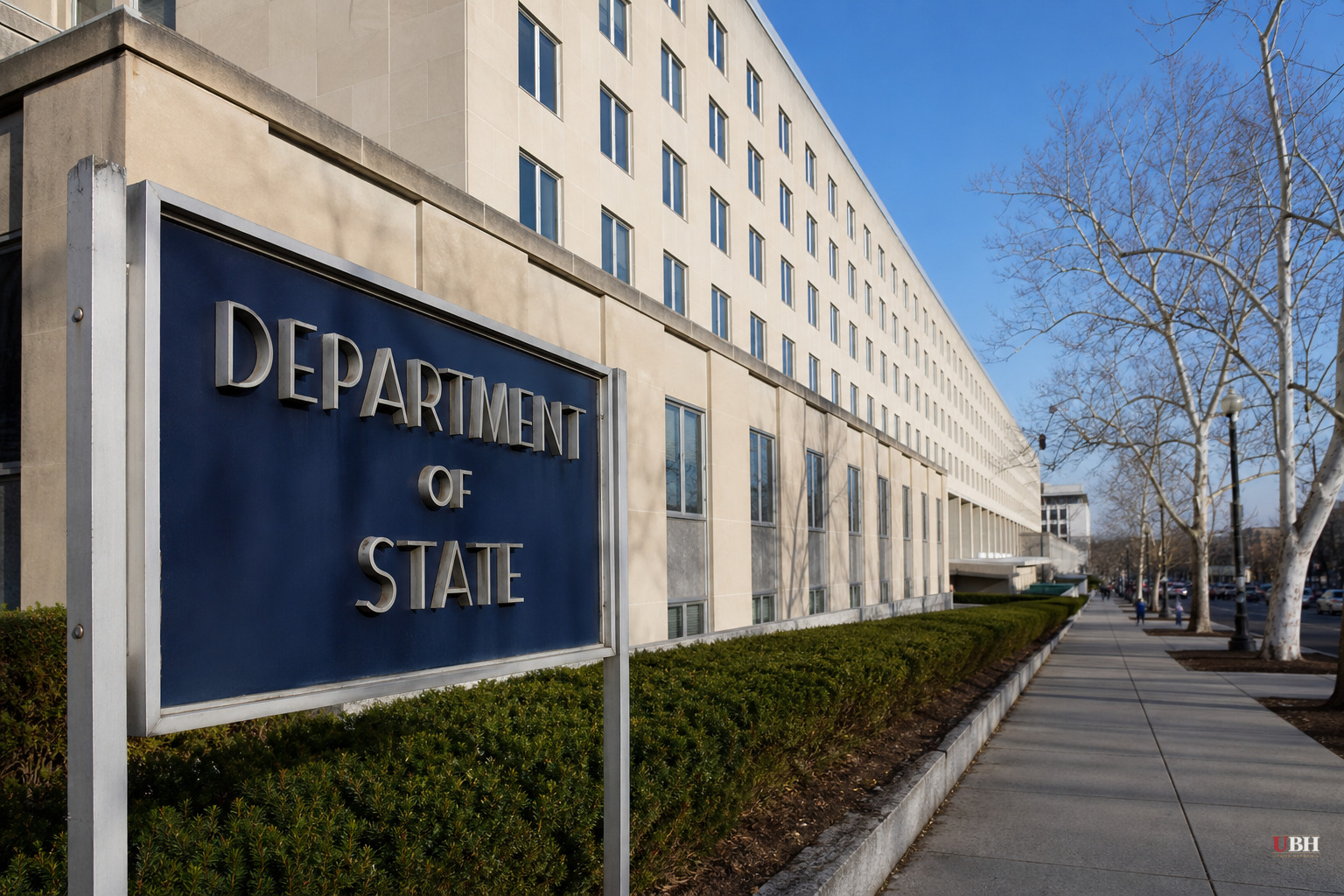
A federal judge has struck down the Trump administration's suspension of immigrant visas for people from 75 countries, the latest in a string of rulings finding that the administration's nationality-based immigration crackdowns exceeded what federal law allows.
On Friday, Judge Jeannette Vargas of the Southern District of New York ruled that the State Department's suspension of immigrant visas from 75 countries was, in her words, "patently unlawful." The policy, which took effect in January, paused green-card-track visas for people from nearly 40% of the world's nations, including Brazil, Colombia, Egypt, Haiti, Somalia and Russia, according to CNN.
The stated rationale, per the State Department, was that applicants from these countries were "at a high risk for becoming a public charge and recourse to local, state and federal government resources in the United States," as Al Jazeera reported. The list was drawn from Council of Economic Advisers data targeting nations where more than 30% of immigrant households received some form of public assistance.
According to Vargas, federal law already has a process for screening out applicants likely to become a public charge. It requires a consular officer to individually weigh a person's finances, age, health, skills and family situation before rejecting them. The State Department's policy skipped that step entirely and rejected people by nationality alone.
A cable Secretary of State Marco Rubio sent to every diplomatic and consular post, entered into the case record, told officers to refuse applicants even when someone "provides additional evidence that demonstrates he or she overcomes the public charge refusal." Vargas quoted that instruction directly in her ruling: "The outcome is predetermined. The visa will be refused."
A policy that pre-decides the outcome regardless of the individual's actual circumstances isn't a public-charge screening, it's a nationality-based ban wearing a public-charge costume. Vargas found it violated a 1965 law that specifically bars discrimination by nationality in visa issuance, and a separate provision that strips the secretary of state of authority over how individual consular officers adjudicate cases.
The administration did win one narrow point. Vargas agreed the policy wasn't the kind of formal rule that legally requires a public comment period before implementation. That's a small procedural win inside an otherwise total loss.
Denials that rested on other legal grounds still stand, even in cases where an officer also cited the banned policy. How many total denials get reversed as a result of this ruling is unclear, per CNN.
This isn't the first time a court has cut down one of these nationality-based immigration freezes. In a separate case earlier this year, Chief Judge John J. McConnell Jr. of the U.S. District Court for the District of Rhode Island vacated a related set of policies: the Global Asylum Hold Policy, the Benefits Hold Policy, the Comprehensive Re-Review Policy, and the Country-Specific Factors Policy. These four policies together froze legal immigration and asylum applications from 39 countries and the Palestinian Authority, according to Breitbart News. McConnell, an Obama appointee, declared all four policies unlawful and set them aside on a Friday, though he denied the plaintiffs' request for a permanent injunction and denied without prejudice the government's motion to dismiss constitutional claims.
That 39-country freeze had a specific origin point. The administration implemented it after Afghan national Rahmanullah Lakanwal, who arrived in the U.S. as part of the Biden administration's withdrawal from Afghanistan, killed National Guardsman Sarah Beckstrom and seriously injured National Guardsman Andrew Wolfe in November of last year. The administration argued the country-based screening protected Americans from the kind of vetting failure that let Lakanwal in.
That's a real, specific, sourced justification. A soldier is dead. The administration's stated goal, tightening vetting from countries with weak security infrastructure or hostile intelligence services, is a legitimate government interest. The legal problem both judges identified isn't the goal, it's the method. Congress already wrote a statute governing how individualized vetting is supposed to work, and both policies bypassed it in favor of blanket nationality bans that predetermined outcomes.
Rights groups, including the Center for Constitutional Rights, argue the crackdown broadly targets minorities and risks racial profiling, according to Al Jazeera. That's their position; it's not something either judge's ruling establishes as fact. Vargas ruled on statutory authority, not on discriminatory intent. Whether the policy was actually motivated by nationality-based animus versus a blunt-but-legitimate security judgment remains an open question the rulings don't resolve.
The State Department had not commented on the Vargas ruling as of Friday, according to Al Jazeera. The administration can appeal both decisions, and both cases—Dorcas International Institute of Rhode Island et al v. USCIS and the Manhattan visa case brought by the Catholic Legal Immigration Network and African Communities Together—are likely headed toward federal appeals courts. Whether the administration rewrites these policies to include the individualized case-by-case review the statute requires, rather than simply appealing, remains to be seen.
Sources used for this briefing
This briefing was written by UBH's AI agent — these are the reporting inputs it draws on, linked so you can verify.


