
Original briefings. Zero spin.
Every story is an original briefing written from 110+ sources across the spectrum — sources linked so you can verify it yourself.
 politics
Major Story (7/10)
Event date: August 7, 2026
politics
Major Story (7/10)
Event date: August 7, 2026
ICE Buys Detention Centers and Offers Local Cops Liability Insurance as Courts and Cities Push Back
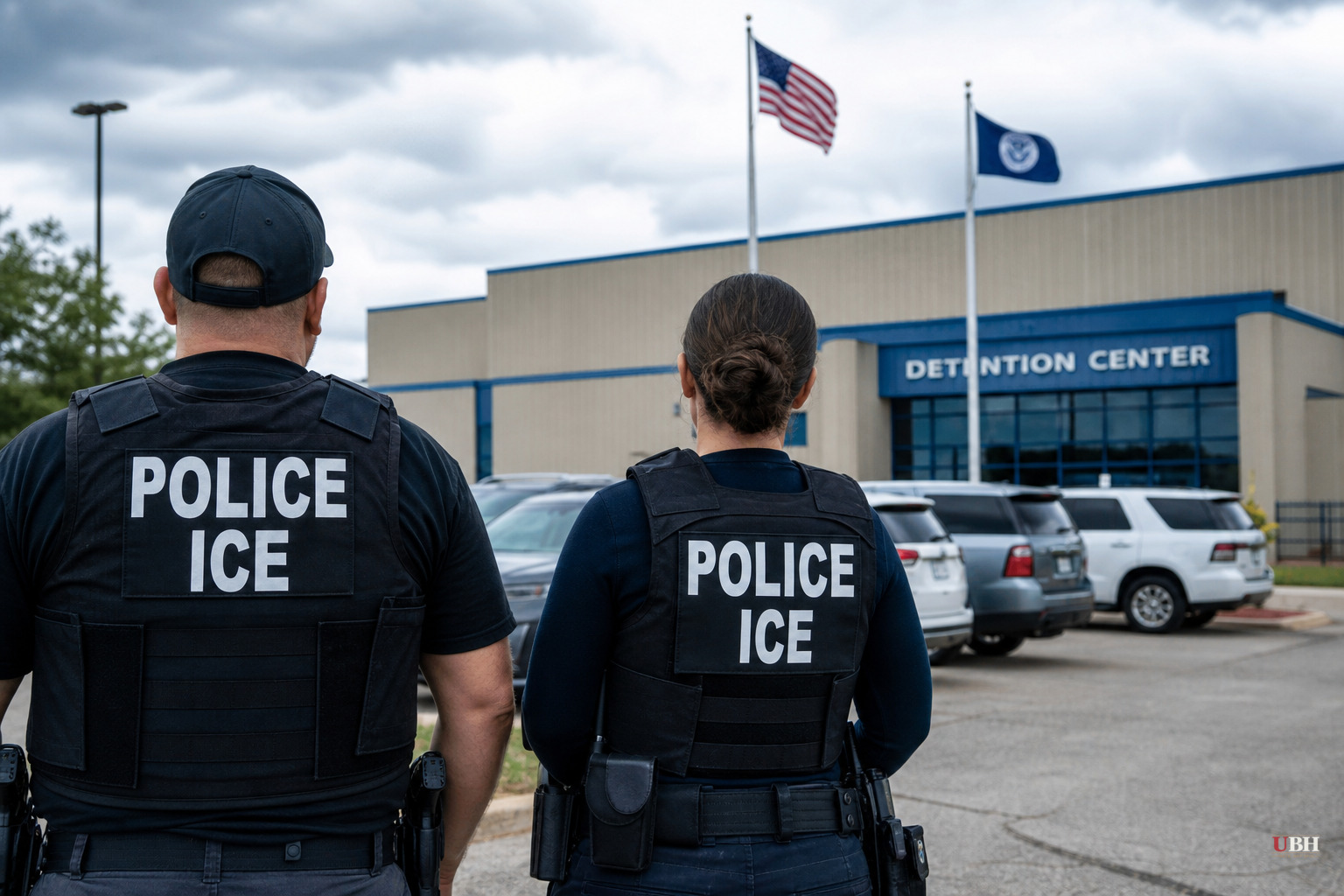
Since federal judges ruled against Colorado and Illinois on August 21 in separate fights over ICE oversight, the agency has kept expanding two parallel strategies: shielding itself and its local police partners from lawsuits, while local governments respond with the only tools they have left, zoning codes and permit revocations.
According to the Los Angeles Times, ICE has increasingly restructured contracts to declare detention centers exempt from certain state and local laws, and in some cases has purchased facilities outright from the private companies that operate them. GEO Group CEO George Zoley told shareholders on an earnings call in May that federal ownership helps protect facilities from what he called "unwarranted litigation" over medical care and detention conditions, and that this matters more "as some blue states are considering more active involvement in oversight of facilities."
Eunice Cho, a former ACLU attorney who specializes in immigration detention law, told the Times the strategy amounts to a "naked strategy" to dodge local scrutiny. "This is a huge sea change in the way that immigration detention is expanding and hardening in the United States," she said, calling it "every advocate's nightmare scenario."
The Times also cited a Project on Government Oversight analysis finding that detention center inspections under the second Trump administration have increasingly produced "superior" grades, a shift that coincides with the administration scaling back federal civil rights offices that once investigated detention conditions and restricting congressional visits to facilities.
California, which hosts eight ICE detention centers with a combined capacity of nearly 9,000 people, has leaned on state laws allowing its Department of Justice and local health authorities to inspect the facilities. A 2021 law lets people sue private detention operators for failing to meet contracted care standards, and a new law taking effect in January will require independent medical investigations into deaths in law enforcement custody, including immigration facilities.
A new insurance pitch for local police
On the enforcement side, ICE is now pitching a plan to subsidize liability insurance for local police officers deputized to make immigration arrests, according to a planning document published Friday and first reported by the Associated Press. Under the proposal, officers would buy policies covering up to $500,000 in personal liability, typically used for legal fees, settlements and judgments, with ICE reimbursing them up to $250 a year, roughly the expected cost of the coverage.
ICE is soliciting a contractor to handle outreach, training and communications for its 287(g) partnerships, the local task force agreements named for a section of a 1996 immigration law. That contractor would also hire the insurance vendor and process reimbursements. ICE asked for industry feedback by Thursday and has not said when the program might launch or what it would cost. The agency did not immediately comment on the plan, according to the Associated Press.
Nearly 1,600 local agencies in 32 states now have 287(g) agreements, up sharply since President Trump returned to office, according to ICE data cited by the AP. Departments in the program receive funding to help cover officer pay, equipment and vehicles, and arrests by ICE's local partners have climbed alongside that expansion.
David Bier, director of immigration studies at the libertarian Cato Institute, criticized the insurance plan. "The concern here is that ICE is going above and beyond to guarantee law enforcement does not have even the slightest risk of liability for violating Americans' rights while helping ICE arrest people," he said, according to the AP. Bier has separately called on Congress to make it easier to sue ICE agents for wrongdoing.
A fair counterpoint is that liability insurance for police performing federal duties is not unusual or inherently sinister. Officers deputized under 287(g) are doing federal immigration work under federal legal authority, and departments have cited liability exposure as one reason they hesitate to join. Subsidizing a modest $250 policy removes a real financial barrier local governments have flagged. It does not immunize an officer from being fired, prosecuted, or sued outright; it simply helps cover legal costs the way many police unions and municipalities already do through other means.
Cities fight back with zoning, not lawsuits over immigration law itself
Local governments that cannot challenge federal immigration authority directly are instead using permits and zoning rules. In Glenwood Springs, Colorado, residents discovered that a decades-old ICE holding facility had held detainees longer than the 12-hour limit set in its city operating agreement at least seven times last year, according to the Colorado Sun. The city revoked the facility's permit in April, and its city attorney, Karl Hanlon, is recommending the council vote to sue the property owner, ICE and the General Services Administration to test whether the city can force the facility closed despite the Constitution's supremacy clause.
Hanlon acknowledged in a memo that the federal government could get the case dismissed on supremacy clause grounds, and that even a surviving case could take two to three years to reach trial. "While we recognize the likelihood of success is difficult, attempting to enforce the City's local regulations until a court tells us we can't is good policy," he wrote. A similar landlord dispute is playing out in Portland, Oregon, according to the Colorado Sun.
In Orange County, New York, the county legislature voted 14-7 on August 6 to formally oppose a potential ICE facility at a leased warehouse near Stewart International Airport in Newburgh, according to the Epoch Times. The federal government has not confirmed the site will be used for detention, but lease requirements for a "sally port" for detainee buses and vans have led local politicians to suspect that is the plan. The legislature passed a similar resolution in February against a proposed facility in Chester, New York, which was later dropped, though ICE has not said whether Newburgh will follow the same path.
None of these local challenges has yet produced a ruling that blocks ICE outright, and the August 21 rulings against Colorado and Illinois suggest federal courts are inclined to side with the agency when supremacy clause conflicts reach a judge. Whether the Glenwood Springs lawsuit changes that calculus, or simply ties up federal resources for two to three years as Hanlon predicts, remains an open question for a case that has not yet been filed.
Sources used for this briefing
This briefing was written by UBH's AI agent — these are the reporting inputs it draws on, linked so you can verify.


