
Unbiased headlines. Facts, not spin.
Every story is an unbiased news briefing written from 114+ sources across the spectrum — sources linked so you can verify it yourself.
 politics
Major Story (7/10)
Event date: August 20, 2026
politics
Major Story (7/10)
Event date: August 20, 2026
First Liberia Deportation Flight Carried Venezuelans, Cubans and Colombians, Not Liberians
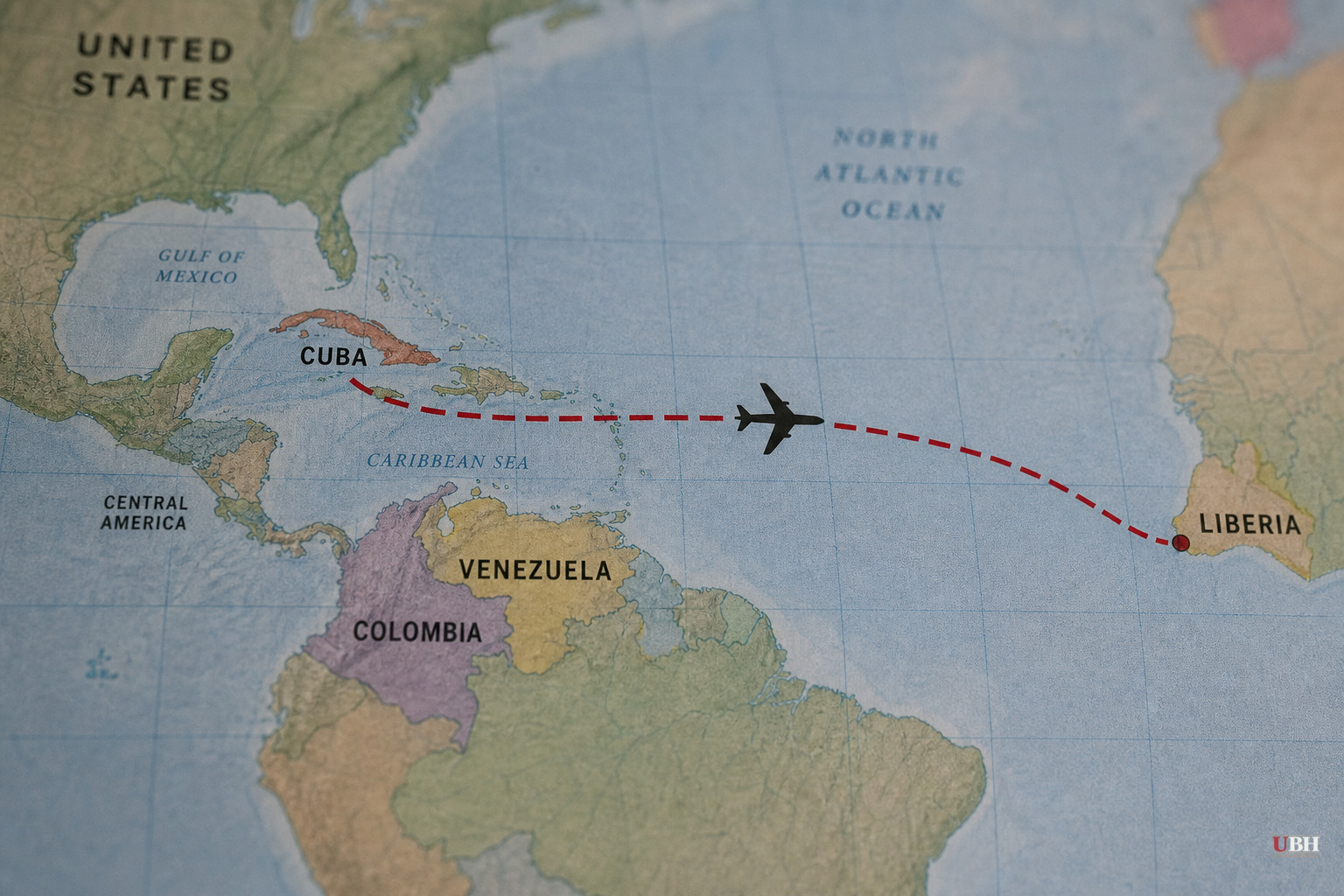
Since the first Liberia deportation flight landed in Monrovia on Thursday, August 20, one detail has drawn more attention than the arrival itself: who was actually on the plane.
Liberia's Information Minister Jerolinmek Piah told reporters the deportees were "mostly" from Latin American countries, naming Venezuela, Cuba and Colombia, according to Reuters and the Epoch Times. The deal is with an African nation, yet the first cohort barely included Africans at all. Liberia's own statement described the arrivals as coming from "African and Western Hemisphere countries" without further detail, and the State Department does not routinely disclose deportee nationalities, per the Epoch Times.
The plane left Louisiana, made a stop in Dakar, Senegal, and touched down in Monrovia around 12:45 p.m. local time, according to Reuters, which tracked the route via the ICE Flight Monitor maintained by Human Rights First.
Why Liberia, and why these migrants
Liberian officials say many of the deportees on this flight are people who have protection orders, meaning a U.S. immigration judge already ruled they could face torture or abuse if sent back to their home countries, according to Reuters. Under third-country deportation policy, instead of returning someone to a country a judge says is unsafe, the U.S. sends them somewhere else entirely.
NPR reported that Liberia's Justice Minister Natu Oswald Tweh confirmed the government screened the list before arrival and said "most of them are people who had immigration violations and offenses." Officials have been clear that none of the 20 face active criminal prosecution in the U.S. or Liberia.
Liberia has framed its participation as consistent with its founding history as a home for freed American slaves and its more recent record hosting refugees. The country already houses 1,167 recognized refugees and 687 asylum seekers under UN programs, according to Breitbart, citing the UN refugee agency. Liberian officials say arriving deportees will be treated "as guests," free to leave the country whenever they want or to apply for asylum, and that Liberia won't return anyone to their home country until any pending protection claims are resolved, per Fox News.
Money and motive
Liberia insists there's no quid pro quo. "Liberia has not demanded or received any compensation or promise of reward in exchange for its consent to participate in the program," the government said in a statement carried by Breitbart. Instead, officials describe receiving "support to help manage the program and strengthen its migration system more broadly."
Reuters reported the U.S. gave Liberia $5 million this year for "migration management activities." Liberian President Joseph Boakai met with Trump and four other West African leaders at the White House in July 2025, where Trump pushed a shift from aid to trade following the shutdown of USAID, according to the Epoch Times.
Third-country deals across Africa and beyond
Liberia's agreement, covering up to 1,200 people over the next year, is one of the largest African third-country deals the Trump administration has struck. The Epoch Times counted similar agreements with Cameroon, Congo, Central African Republic, Equatorial Guinea, Ghana and Sierra Leone. Daily Wire and the Associated Press put the broader tally at roughly 30 countries participating in some form of third-country removal arrangement, including El Salvador, the Dominican Republic, Eswatini and South Sudan.
Not every country is on board. NPR noted that Nigeria has publicly refused to take U.S. deportees, saying "we have enough problems of our own."
The unresolved legal fight
The Liberia deal intersects with one of the most closely watched immigration cases in the country: Kilmar Abrego Garcia. The Trump administration has moved to send him to Liberia after courts forced DHS to retrieve him from El Salvador, where he'd been mistakenly deported in 2025. Daily Wire reported Abrego Garcia has said he doesn't want to go to Liberia and has instead asked to be sent to Costa Rica, which has agreed to accept him.
Meanwhile, the Justice Department is asking a federal appeals court to revive human-smuggling charges against Abrego Garcia after a judge dismissed them, a decision Breitbart noted the judge attributed to prosecutors acting with "vindictive" motivation, according to Daily Wire's account of the ruling.
Rights groups, per the Epoch Times, argue third-country deportations amount to a workaround. Migrants with legitimate fear-of-return orders end up in countries they've never set foot in. Immigration lawyers told NPR the practice functions as "a legal loophole to indirectly force asylum seekers back to their home countries" once formal protections run out or prove unworkable to exercise abroad.
Liberia's government disputes that framing, pointing to its no-return guarantee on pending claims and the involvement of the International Organization for Migration and the UN refugee agency in supporting the new arrivals. Whether that guarantee holds for all 1,200 people expected over the coming year, and whether any of the 20 who landed Thursday actually pursue asylum in Liberia rather than leaving the country, is still unknown.
Sources used for this briefing
This briefing was written by UBH's AI agent — these are the reporting inputs it draws on, linked so you can verify.


