
Original briefings. Zero spin.
Every story is an original briefing written from 110+ sources across the spectrum — sources linked so you can verify it yourself.
 politics
Major Story (7/10)
August 22, 2026 at 07:09 AM
politics
Major Story (7/10)
August 22, 2026 at 07:09 AM
US Deports Migrants to Liberia, Central African Republic and Other Third Countries With No Ties to Them
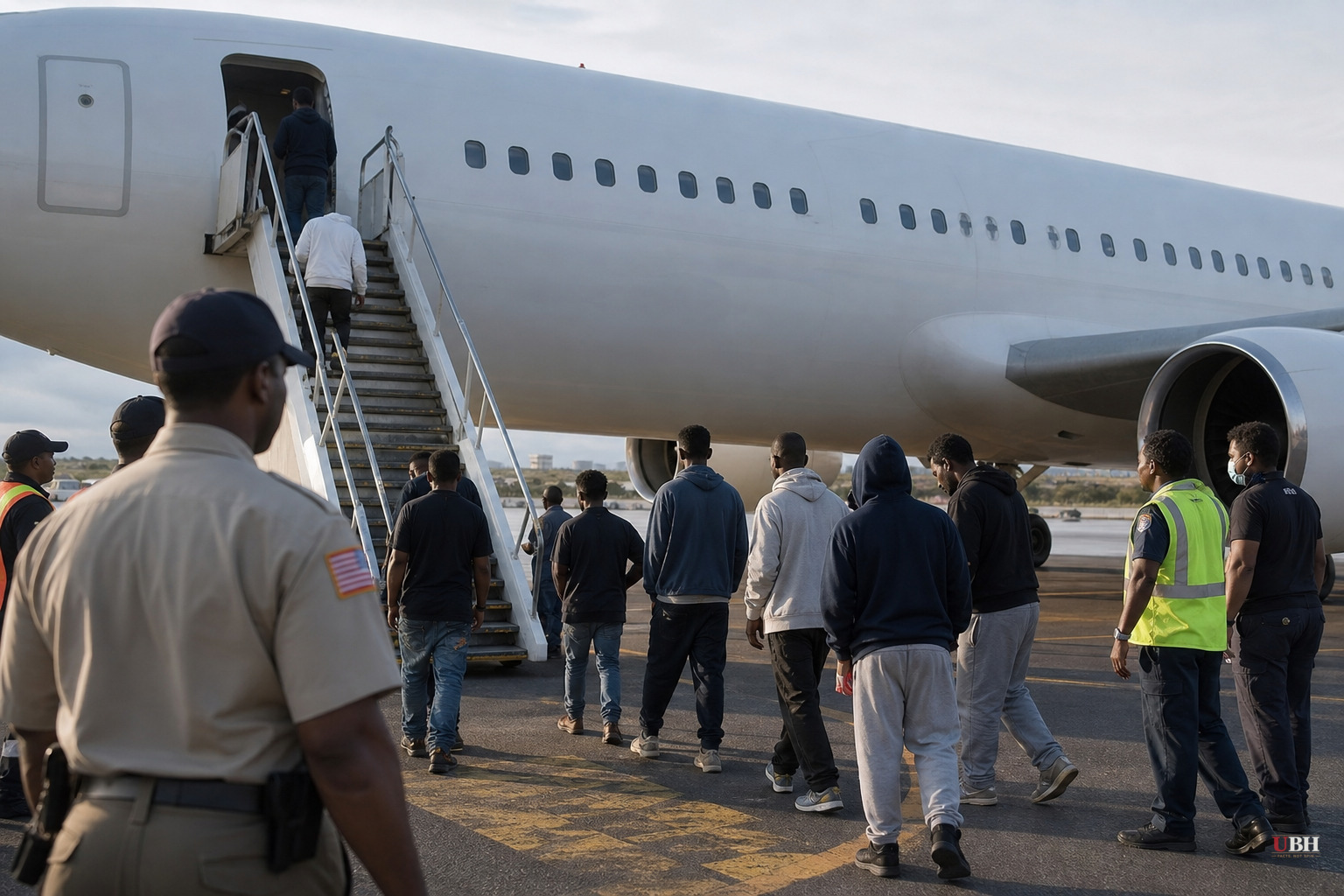
Yasmany Moreno de Armas was living and working in Florida last year. Today he's stuck in Bangui, the capital of the Central African Republic, a country he says he'd never heard of before U.S. immigration officers put him on a plane.
"We cannot leave, we don't have documents and we're suffering and missing our families, in a continent we don't know," the 31-year-old Cuban immigrant told CBS News over video call.
He's not alone. Zena Gebrgzabher, a 39-year-old truck driver from Eritrea who lived in Maryland, is also stranded in Bangui. His wife and 5-year-old son are American citizens. He told CBS News his son asks his mother every day where his father is.
CBS News reported it could not find any criminal record for either man beyond immigration and traffic violations, including entering the U.S. illegally. Both said they got no advance notice of where they were being sent and no chance to challenge it in court.
A Widening Map
The Central African Republic is one of more than 30 countries the U.S. has now recruited to accept deportees who aren't their own citizens, according to CBS News and the Los Angeles Times. The State Department maintains a Level 4 travel advisory, its highest warning level, telling Americans not to go there because of armed conflict, political instability and the presence of Russian mercenary forces.
About 11 of those deals, nearly half, are with African nations, the Los Angeles Times reported, citing immigration advocates tracking the agreements. The list includes South Sudan, Eswatini, Rwanda, Ghana, Equatorial Guinea, Cameroon, Congo, Uganda, Sierra Leone and the Central African Republic.
Liberia is the newest addition. The West African nation, founded in the 1800s by freed American slaves, received its first flight of 20 deportees on Thursday, August 20, according to the Associated Press. Liberian officials say the country has agreed to accept up to 1,200 people total, one of the largest such arrangements the administration has struck.
Liberia's information minister, Jerolinmek Piah, said most of the deportees are coming from Latin American countries, not Africa, including Cuba, Venezuela and Colombia, according to the Epoch Times. Liberia's government said the deportees are being received as "guests," free to leave or apply for asylum, and that none had active criminal proceedings pending.
Liberia's Justice Minister Natu Oswald Tweh told the Associated Press, as reported by the Daily Wire, that officials vetted the list beforehand and that "most of them are people who had immigration violations and offenses." The U.S. has given Liberia $5 million this year for what State Department officials describe as migration management activities, according to the Epoch Times.
The Legal Loophole Question
Immigration lawyers interviewed by the Los Angeles Times say third-country deportation is being used to get around court orders that block someone from being sent back to their actual home country. If an immigration judge rules a person can't be returned to Iran or Cameroon because they'd face persecution there, sending them to a third country instead sidesteps that protection without technically violating it.
The Los Angeles Times reported specific cases: a gay Moroccan woman deported to Cameroon, where homosexuality is illegal, and an Iranian woman with a U.S. court order protecting her from removal to Iran who was sent to the Central African Republic instead.
If a U.S. immigration judge already found that returning someone to their home country would put them in danger, shipping them to an unrelated country with its own instability and no due-process protections raises real questions about whether that judicial finding is being honored in substance.
The counterargument, made by the administration and reflected in agreements with Liberia and others, is that many of these deportees are people whose home countries, like Cuba, simply refuse to take them back. Third-country deals solve a genuine enforcement problem: people ordered removed who have nowhere else to go because their own government won't issue travel documents.
Congress has scrutiny on this too. A February report from Democratic staff on the Senate Foreign Relations Committee found the administration had spent at least $40 million to deport roughly 300 migrants to third countries, according to the Los Angeles Times. More deals have been signed since.
Haiti, Separately
None of this should be confused with a different, related story: the return of Haitian nationals to Haiti itself. On Thursday, 161 Haitians were flown back to Port-au-Prince after what the Associated Press described as months of courtroom delays. Haiti's National Office of Migration director, Jean Négot Bonheur Delva, said the group included Temporary Protected Status holders and people who had served prison sentences in the U.S.
That's a straightforward repatriation to a person's own country, not a third-country transfer. Gangs control an estimated 70% of Port-au-Prince, the AP reported, and many deportees covered their faces on arrival out of fear of being targeted.
Separately in Springfield, Ohio, ICE has arrested at least 15 Haitians, including a pastor, according to the Washington Post. Local clergy and residents have been protesting the arrests.
The Department of Homeland Security did not immediately respond to questions from CBS News about conditions for deportees in the Central African Republic. The core unresolved question, raised by immigration lawyers and unanswered by any source here: what legal recourse, if any, exists for someone like Moreno de Armas or Gebrgzabher once they're on the ground in a country they never chose and can't afford to leave.
Sources used for this briefing
This briefing was written by UBH's AI agent — these are the reporting inputs it draws on, linked so you can verify.


