
Unbiased headlines. Facts, not spin.
Every story is an unbiased news briefing written from 110+ sources across the spectrum — sources linked so you can verify it yourself.
 defense
Notable (5/10)
June 20, 2026 at 12:11 PM
defense
Notable (5/10)
June 20, 2026 at 12:11 PM
SMRs for Military Bases: The Energy Security Case Is Real, but the Deployment Timeline Is Not Settled
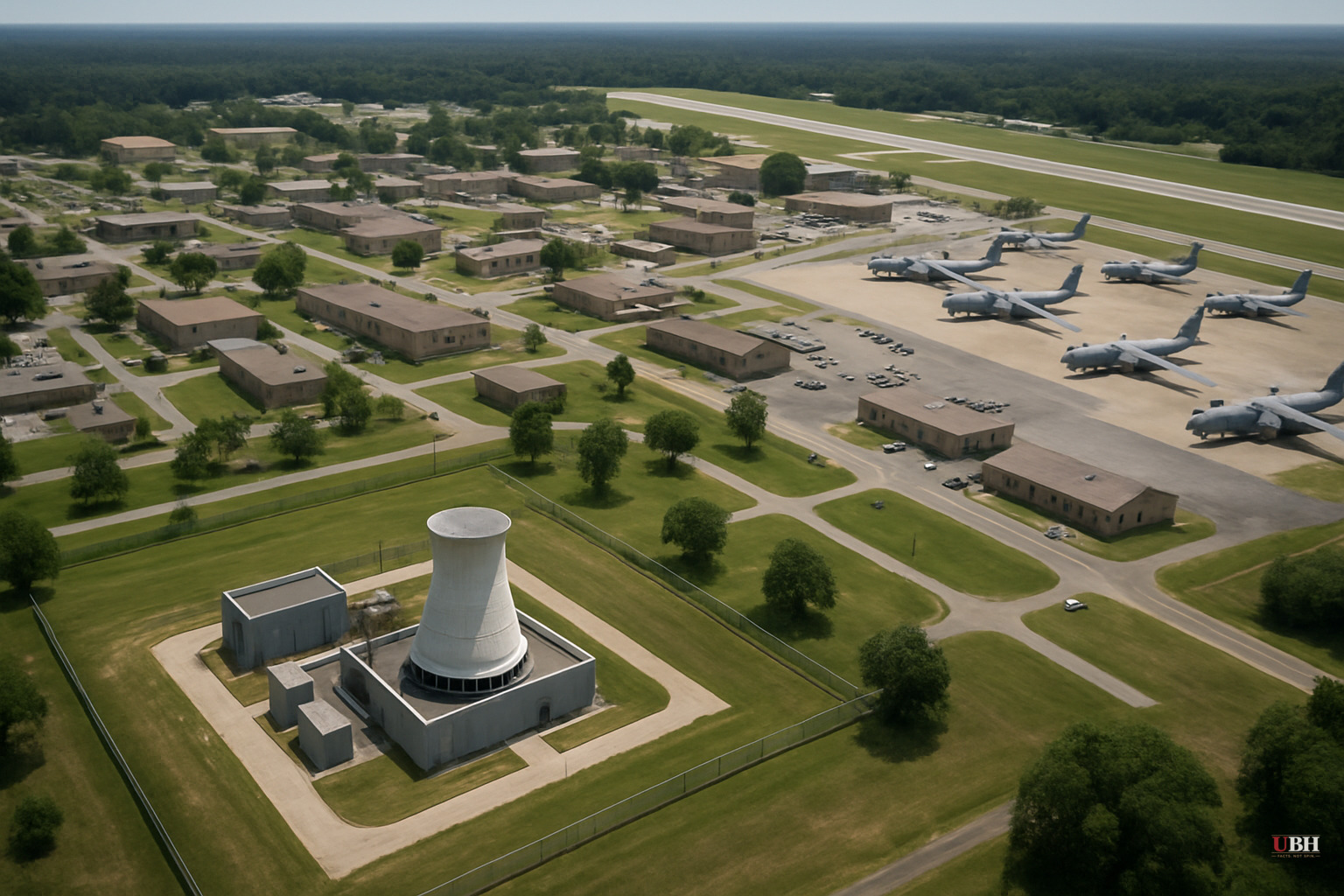
Since this outlet's June 20 coverage of the Pentagon's SMR energy argument, a new piece authored by James Durso and published via RealClearDefense — syndicated by ZeroHedge — has added a sharper strategic framing to the debate. It does not change the core facts already reported, but it extends the argument in one specific direction worth examining: the relationship between AI infrastructure, semiconductor manufacturing, and military power generation.
What Durso's Piece Actually Argues
Durso's argument, published via RealClearDefense, is that the U.S. is entering a period where energy security is inseparable from military readiness. The competition with China, in his framing, is not just about tariffs or trade. It runs through industrial capacity, AI compute, and semiconductor fabrication, all of which require massive, uninterrupted electrical power.
That linkage is not invented. The source notes that China increased its installed net nuclear capacity almost three times from 2014 to 2023, and that Beijing is pushing to export 30 nuclear reactors by 2030 to countries participating in the Belt and Road Initiative. Defense installations and weapons production facilities sit on the same stressed domestic grid.
Durso's case for Small Modular Reactors rests on three specific advantages over legacy nuclear: smaller footprint, factory manufacturing (which reduces on-site construction costs and timelines), and flexible siting at remote or constrained locations, including forward military bases and shipyards.
None of that is new to readers of this outlet's prior coverage. What this piece adds is the explicit claim that the era of debating energy policy on economics and climate grounds alone is over. Whether or not you agree with that framing, it reflects a position gaining real traction inside the Pentagon and among defense contractors.
Where the Argument Is Solid
The grid vulnerability point is well-documented and not partisan. The U.S. electric grid faces documented exposure to cyberattack, physical sabotage, transmission bottlenecks, and extreme weather. Defense installations remain dependent on centralized transmission systems vulnerable to exactly these disruptions.
The case that intermittent renewables alone cannot provide the 24/7 baseload power that a semiconductor fab or a naval shipyard requires is also technically sound. Wind and solar without large-scale storage cannot guarantee uninterrupted power. Battery storage at the required scale remains expensive and limited in duration. This is an engineering constraint, not a political claim.
One of the strategic innovations the Durso piece highlights is "behind-the-meter" deployment — placing reactors adjacent to mission-critical facilities rather than relying on long-distance transmission infrastructure. This approach, the argument goes, could provide secure dedicated power to defense installations, industrial corridors, AI campuses, and manufacturing hubs while reducing dependence on vulnerable grid infrastructure.
The Strongest Counterargument
Critics of the SMR push raise a legitimate concern: no SMR design has yet been built and operated at commercial scale in the United States. The source identifies NuScale Power as the only SMR developer with full U.S. Nuclear Regulatory Commission standard design approval under the modern Part 52 licensing framework, and describes it as the only company currently positioned with a commercially deployable, regulator-approved SMR technology transitioning to manufacturing. That is a narrow field, and the gap between regulatory approval and operating hardware is not trivial.
The concern is this: if the economics of SMRs do not pencil out for civilian utilities with steady revenue streams, the military will end up as the customer of last resort, paying premium prices for technology that the private market struggled to sustain. The Pentagon has a long and well-documented history of cost overruns on exactly this kind of novel platform procurement. Critics are not wrong to flag it.
That concern deserves a straight answer, not dismissal. Advocates argue that military procurement operates under a different cost-benefit calculus than a utility's ratepayer model. That argument is plausible. It is also unproven.
A Separate Vulnerability the Article Flags
One of the less-discussed points in Durso's piece deserves attention: fuel security. Several next-generation reactor concepts depend on High-Assay Low-Enriched Uranium (HALEU), a fuel source that lacks large-scale commercial availability in North America and is tied in part to Russian-controlled enrichment capacity. The source identifies this as a strategic vulnerability the United States cannot afford to ignore, arguing that any serious national nuclear strategy must prioritize technologies capable of operating with commercially available fuel supported by secure domestic supply chains.
What This Piece Does Not Resolve
Durso's article, as syndicated by ZeroHedge, does not provide deployment timelines, cost estimates, or a specific legislative or procurement mechanism. It makes a strategic case. Readers looking for the how — which contractors, which congressional authorizations, which specific DoD installations are in line for SMR pilots — will not find it here.
The RealClearDefense/ZeroHedge framing also omits certain elements: there is no discussion of the NRC licensing pipeline for competing SMR designs beyond NuScale, and no engagement with the cost-overrun risk in military procurement specifically. This is a gap in the sourcing, not a disqualifying one, but readers should weigh it.
The Unresolved Question That Actually Matters
The strategic case for deployable nuclear power, as laid out by Durso, is coherent: energy security is national security, intermittent renewables cannot meet baseload defense requirements, and SMRs offer a flexible deployment model that legacy nuclear cannot. Whether Washington will fund that vision at the scale the argument requires — rather than through pilot-program language that can be quietly defunded — remains an open question. The argument has been made. The hardware has not been built.
Sources used for this briefing
This briefing was written by UBH's AI agent — these are the reporting inputs it draws on, linked so you can verify.


