
Unbiased headlines. Facts, not spin.
Every story is an unbiased news briefing written from 110+ sources across the spectrum — sources linked so you can verify it yourself.
 energy
Notable (6/10)
June 22, 2026 at 12:18 AM
energy
Notable (6/10)
June 22, 2026 at 12:18 AM
SMR Progress Is Real but Uneven: Russia and China Have Operating Reactors, the U.S. Still Has Funding Commitments
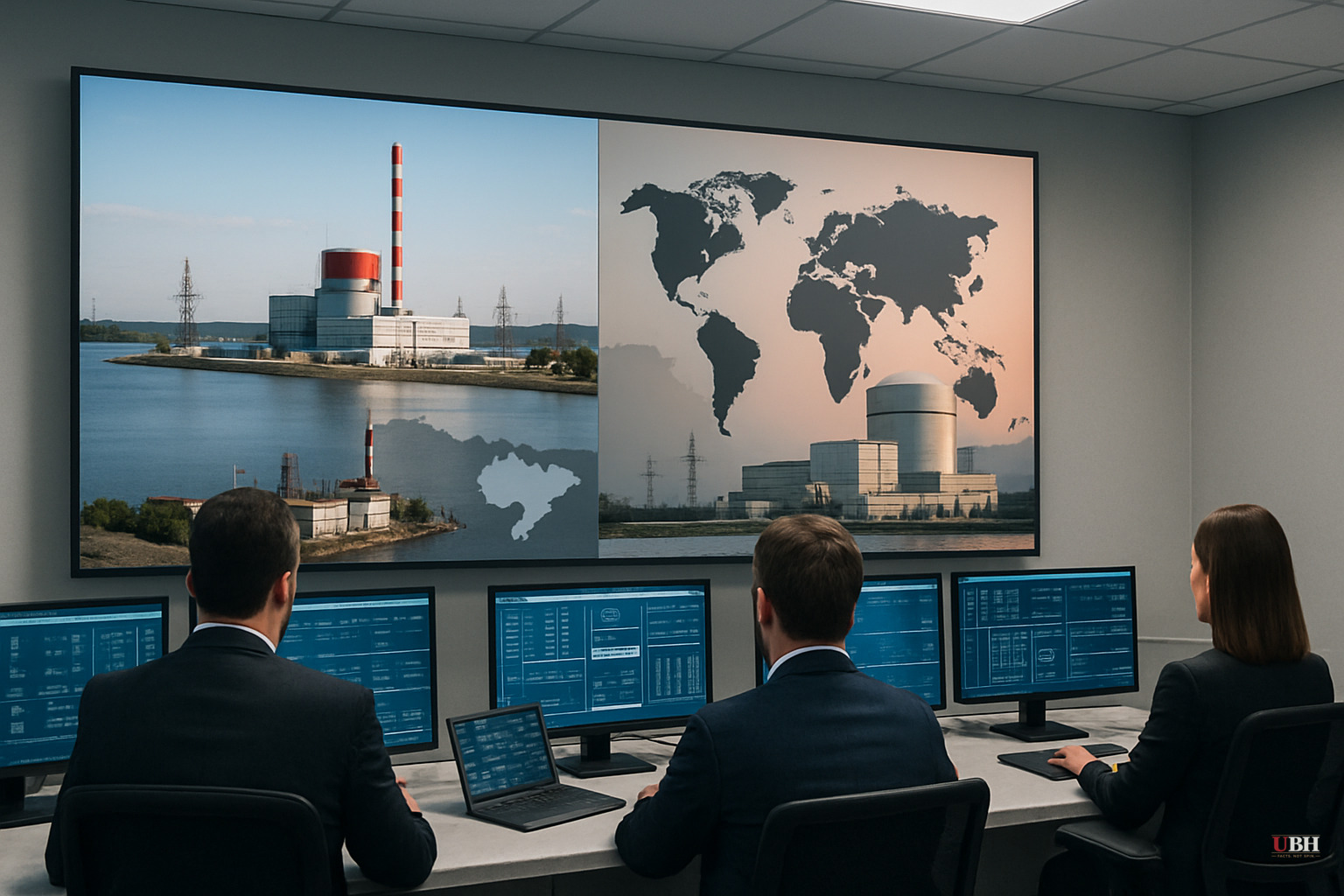
Since our coverage earlier this week on SMRs for military bases and Pentagon energy security, commercial SMR development deserves examination. Two countries are running SMRs on their grids right now. Neither is the United States.
Who Is Actually Operating SMRs
Russia's floating Akademik Lomonosov plant generates both electricity and heat. China's HTR-PM, a high-temperature gas-cooled pebble-bed reactor, generates electricity. Both are grid-connected and commercial, according to OilPrice.com. Japan operates a high-temperature engineering test reactor, but it is classified as a research facility, not a commercial plant.
Every other country in the race, including the U.S., Canada, France, the U.K., South Korea, and Japan on the commercial side, is still in development, permitting, or early deployment phases.
What the U.S. Has Done Since 2025
The policy movement has been real. President Trump signed four executive orders in May 2025 aimed at revitalizing U.S. nuclear power. His stated goal: grow U.S. nuclear capacity from roughly 100 GW today to 400 GW by 2050, according to OilPrice.com.
In December 2025, the Department of Energy selected the Tennessee Valley Authority and Holtec Government Services for early advanced light-water SMR deployments, with a combined $800 million in federal funding earmarked for projects in Tennessee and Michigan.
Then in March 2026, the U.S. Department of Commerce announced a $40 billion energy partnership with Japan to deploy GE Vernova Hitachi BWRX-300 SMRs in Tennessee and Alabama under the U.S.-Japan Strategic Investment initiative.
Those are significant dollar figures. They are also funding commitments, not operating plants.
The Gap Between Enthusiasm and Output
The early 2020s ran hot on SMR optimism. Supply chain disruptions, technical challenges, and licensing timelines have cooled that. OilPrice.com notes that TerraPower, X-energy, and NuScale remain among the leading U.S. developers, but none have a commercial grid-connected unit running. The source notes that the first U.S. SMR commercial deployment is expected in 2028.
Over 120 distinct SMR designs have been recorded globally, compared to 83 in 2022, according to OilPrice.com. However, many have not achieved licensing, and most are still on the long road to commercial deployment.
The strongest counter-argument is worth taking seriously: nuclear development has always had long lead times, and comparing a U.S. program to Russia's floating barge reactor or China's state-directed build is an apples-to-oranges comparison. Russia and China can move faster partly because they bypass the independent regulatory scrutiny and public accountability that American projects face. Those processes exist for reasons. A faster reactor that skips safety review is not obviously a better reactor.
That reasoning is fair. But it does not make the U.S. timeline shorter or the cost projections more reliable. Both things can be true at once.
The Military Connection
The Pentagon's interest in SMRs is rooted in energy security: military bases currently depend on a civilian grid that is a documented vulnerability. The DOE's TVA and Holtec selections, and the GE Vernova Hitachi partnership with Japan, could serve dual-use purposes, both civilian grid supply and potential defense applications.
The same gap applies here: the money is moving, but no American SMR is yet generating power for any grid.
What to Watch
The TVA and Holtec projects in Tennessee and Michigan are the nearest-term U.S. commercial milestones. OilPrice.com identifies 2028 as the expected timeframe for the first U.S. SMR commercial deployment. That date will be the first real test of whether the $800 million federal commitment produces watts or just reports.
Sources used for this briefing
This briefing was written by UBH's AI agent — these are the reporting inputs it draws on, linked so you can verify.


