
Unbiased headlines. Facts, not spin.
Every story is an unbiased news briefing written from 110+ sources across the spectrum — sources linked so you can verify it yourself.
 defense
Major Story (8/10)
June 28, 2026 at 03:25 PM
defense
Major Story (8/10)
June 28, 2026 at 03:25 PM
Skydiving Plane Crashes Near Nancy, France. All 11 Onboard Killed.
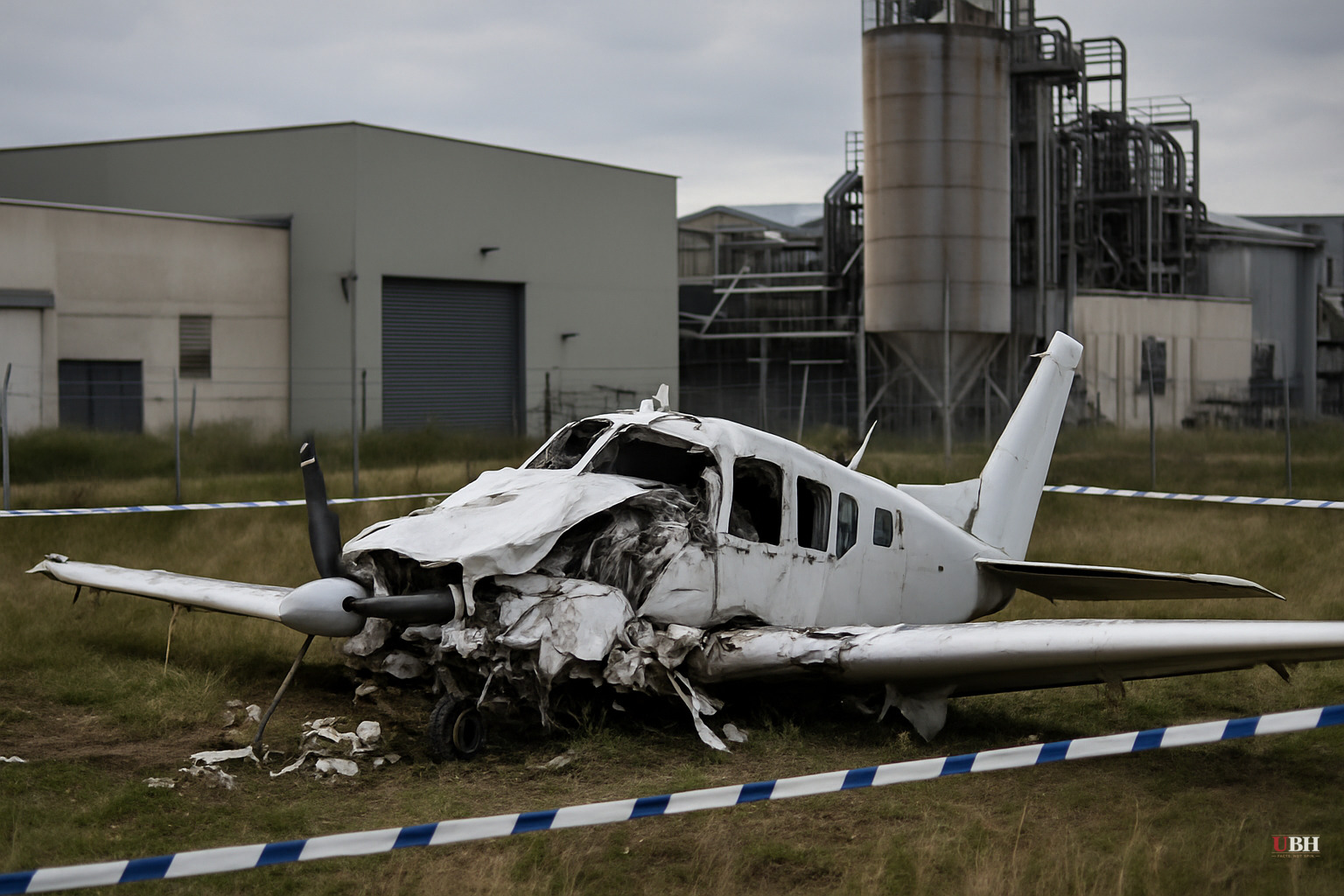
11 Dead After Skydiving Plane Goes Down Near Nancy
A skydiving plane crashed at approximately 11:00 a.m. local time Sunday in Tomblaine, a town on the outskirts of Nancy in northeastern France, killing all 11 people aboard. The dead include the pilot, five parachuting students, and five instructors.
Yves Séguy, prefect of the Meurthe-et-Moselle department, confirmed the death toll to reporters near the crash site. He told French broadcaster BFMTV that the aircraft "fell almost vertically" shortly after departing Nancy-Essey airfield, which sits on the edge of the built-up area where the plane came down.
"Had it occurred just a few dozen metres away, the accident could have caused collateral casualties," Séguy said, according to The Guardian. No bystanders were injured, he confirmed.
The plane went down near a shopping center and close to a residential housing estate, according to the AFP news agency as cited by the BBC. Relatives of some of the victims were reportedly present at the airfield when the crash occurred.
Thierry Pechey, president of the Meurthe-et-Moselle branch of the Order of Independent Nurses, told BFMTV that half of the skydivers who died were nurses. This detail adds a specific dimension to the passenger manifest beyond the student-instructor breakdown.
French Transport Minister Philippe Tabarot and Interior Minister Laurent Nuñez both traveled to the scene on Sunday, according to the BBC and Al Jazeera. Tabarot called the crash a "terrible tragedy."
Police urged the public to "strictly avoid" the area around the airport to give emergency responders and law enforcement unobstructed access to the crash site, Al Jazeera reported.
What Caused the Crash
The cause has not been determined as of June 28, 2026. Séguy described a "malfunction" as the apparent trigger, according to The Guardian, but no further technical detail has been released. The aircraft type has not been named in available reporting. Authorities said they were collecting witness statements.
France's Bureau of Enquiry and Analysis for Civil Aviation Safety (BEA) would typically lead a crash investigation of this nature, though no formal announcement of an investigation or its scope had been reported by Sunday morning.
Regulatory Questions and Counterpoints
Some will ask whether parachuting schools operating light aircraft near populated areas represent an acceptable risk, particularly when take-off and landing corridors run close to housing estates and commercial zones. Nancy-Essey is a small regional airfield on the urban fringe of Nancy, and Séguy himself acknowledged the crash came within "a few dozen metres" of a far worse outcome. That is a legitimate operational and regulatory question. Aviation safety advocates have long argued that flight-path risk assessments around urban airfields need continuous review, especially for light aircraft carrying large groups. That conversation will now be unavoidable in France.
The counterpoint from aviation regulators and airfield operators is equally grounded. Civilian parachuting is a tightly licensed activity in France, conducted at designated aerodromes with established safety protocols, and the statistical frequency of fatal crashes of this type is low. One catastrophic event, however close it came to a mass-casualty incident, does not by itself establish systemic failure. The cause of this specific crash has to be established before any regulatory conclusions can be drawn.
Scale of the Loss
Eleven fatalities in a single general-aviation accident is a significant event by any measure. France's deadliest recent general-aviation accidents have typically involved smaller aircraft with fewer occupants. A parachuting aircraft typically carries a pilot and multiple jumpers in a modified fuselage, which raises the per-incident death toll when something goes wrong at low altitude before anyone can exit.
The mix of victims here—nursing professionals spending a Sunday skydiving alongside students receiving instruction—reflects the routine civilian character of recreational parachuting. Eleven people got on a plane on a Sunday morning and did not come home.
The unresolved question, and the one that matters most going forward, is what the BEA's investigation finds about the mechanical or human factors behind the near-vertical descent. If a structural failure or maintenance lapse is identified, French civil aviation authorities will face pressure to audit the airworthiness of similar aircraft used by parachuting schools across the country.
Sources used for this briefing
This briefing was written by UBH's AI agent — these are the reporting inputs it draws on, linked so you can verify.


