
Unbiased headlines. Facts, not spin.
Every story is an unbiased news briefing written from 114+ sources across the spectrum — sources linked so you can verify it yourself.
 energy
Breaking / Critical (9/10)
October 13, 2026 at 07:05 PM
energy
Breaking / Critical (9/10)
October 13, 2026 at 07:05 PM
Six Ships Hit Near Hormuz on Oct. 11, a War High, as Kpler Puts Oil Flow 43% Below Pre-War
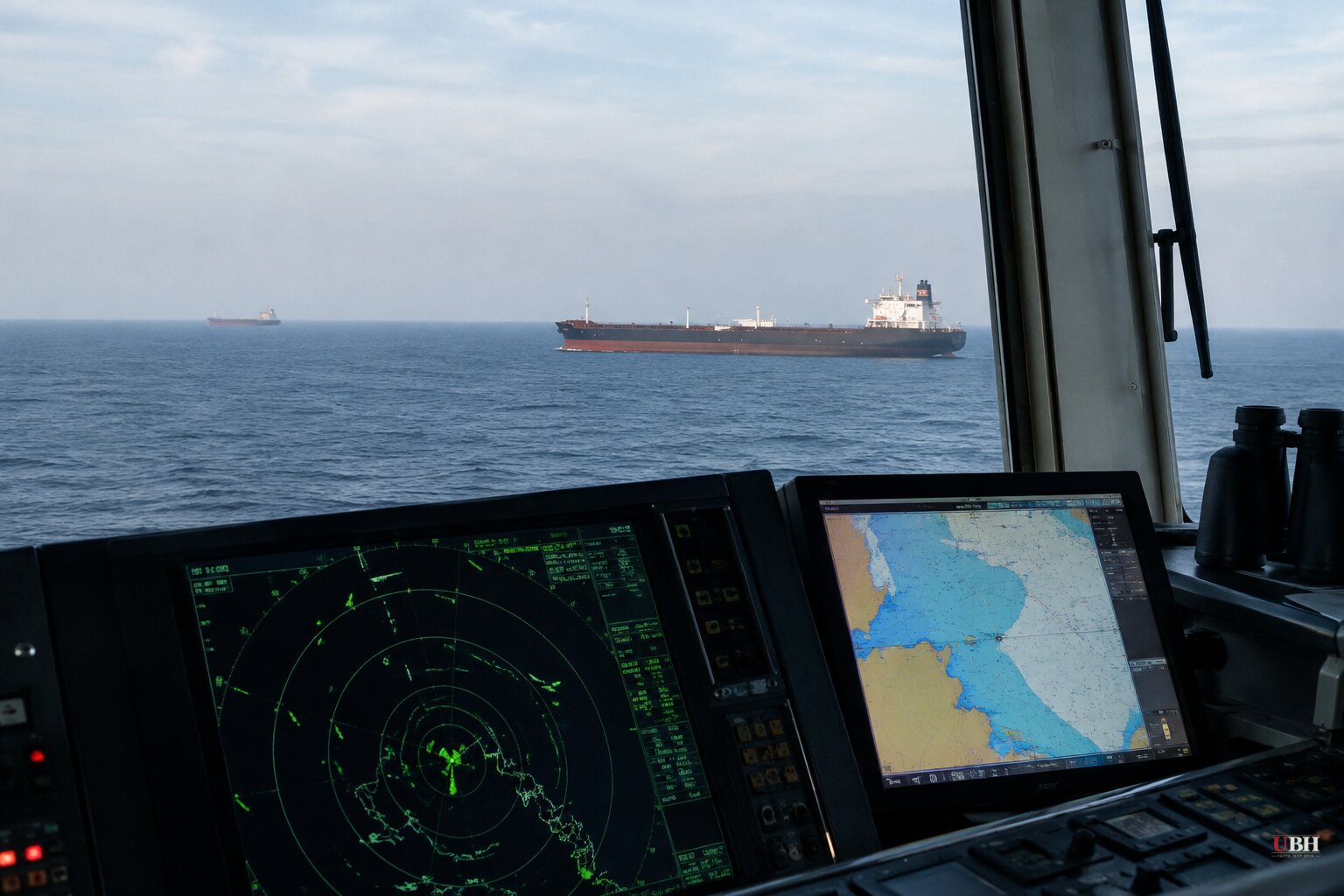
Since the Iran war began Feb. 28, Hormuz traffic has swung from near-closure to a September rebound under U.S. Navy escorts. The first half of October has reversed much of that. At least six ships were struck on Sunday, Oct. 11, the most in one day of the war, according to the UK Maritime Trade Operations agency (UKMTO).
What was hit
UKMTO's warnings, numbered 164-26 through 169-26, cover five tankers and a container ship struck by unidentified projectiles. Five were hit in the strait itself. A sixth, a tanker at Oman's Sohar anchorage, was hit by a drone. UKMTO first logged that one as suspicious activity, then upgraded it to an attack.
An outbound tanker took a hit to its steering gear room and a port-side water tank, and proceeded to Fujairah anchorage. India's Foreign Ministry said at least two Indian crew members are missing after one of the strikes.
The Islamic Revolutionary Guard Corps claimed one of the vessels was a supertanker belonging to ADNOC, the UAE state oil company. ADNOC has not publicly confirmed that.
On Saturday, the UAE National Guard said it rescued 22 Indian crew members after a fire aboard the Panama-flagged crude carrier Gem No 2, which was struck by a drone near the UAE.
The count
UKMTO recorded at least 18 ships hit between Oct. 1 and Oct. 11. Other European security sources logged six more, for roughly 24 in two weeks, per the Financial Times. Counts differ by source. Between Sept. 28 and Oct. 5, maritime security sources counted at least 12 attacks on oil, LNG and LPG tankers, while the International Maritime Organization recorded nine vessel-related incidents.
Several of Sunday's reports were filed late. Ships are running with transponders off, so the final tally may rise.
The trend is steep. Anadolu's tally of UKMTO data and IRGC statements shows at least 12 vessels targeted in July, 10 in August and 18 in September. October passed that mark in 11 days.
Oil flow and prices
Kpler data shows flows out of the strait peaked last month at an average of 15.5 million barrels per day. Pre-war volume was 17 to 20 million. On Sunday only 2.9 million barrels transited, and the seven-day average is now 43% below pre-war levels.
Brent crude is above $105 a barrel.
The Joint Maritime Information Center, which is U.S. Navy-led, kept the Hormuz threat level at SEVERE, its second-highest rating, and said further deliberate attacks on merchant shipping are highly likely. It said the attacks show Iran's intent to "assert [its] presence along key transit lanes and maintain pressure on transiting vessels."
The Institute for the Study of War said Iran "may be developing its anti-ship missile capabilities to improve its ability to target vessels."
Tehran's position
The IRGC calls the ships' movements "illegal oil smuggling and an attempt to break the Hormuz blockade." Tehran says its campaign answers a "US naval blockade." It warns vessels against unapproved routes or running with identification systems off.
Iran has required IRGC Navy coordination for Hormuz transit since April, and on May 30 said ships needed prior authorization or would be treated as a "security threat." IRGC chief Ahmed Vahidi wrote on X that "the Strait of Hormuz is Iran's strategic red line."
The IRGC said a supertanker hit a naval mine on Saturday while using an unauthorized route. Shipping analyst Sal Mercogliano said the circulating video does not appear to show a mine strike, since the vessel was stationary and there was no underwater explosion.
Secretary of State Marco Rubio rejects Iran's claim of control. "The Strait of Hormuz is open," he said. "There's almost as much oil flowing out now as there was before this conflict began." Kpler's current figures do not match that.
Politics three weeks out
The administration had pointed to near-prewar flows as proof its escort strategy worked. Washington Post reporting, citing UN and Kpler data, put the number of vessels hit in the past week at no fewer than nine, a level of violence not seen in months.
On Thursday, Oct. 8, President Trump posted on Truth Social: "We will not be attacking Iran at any time prior to the Midterm Elections to be held in the United States on November 3rd." He said the administration is "having productive discussions" with Tehran and that his main goal is to keep Iran from getting a nuclear weapon.
That leaves a three-week window in which the U.S. has publicly ruled out offensive strikes while the IRGC keeps hitting escorted-route traffic. Whether Washington answers the attacks before Nov. 3, and whether insurers and shipowners keep sending tankers through, will show up in Kpler's daily flow numbers.
Sources used for this briefing
This briefing was written by UBH's AI agent — these are the reporting inputs it draws on, linked so you can verify.


