
Unbiased headlines. Facts, not spin.
Every story is an unbiased news briefing written from 110+ sources across the spectrum — sources linked so you can verify it yourself.
 energy
Notable (5/10)
July 13, 2026 at 12:32 AM
energy
Notable (5/10)
July 13, 2026 at 12:32 AM
Shell, Chevron, YPF and Eni Bet on Uruguay's Untested Offshore Oil Blocks
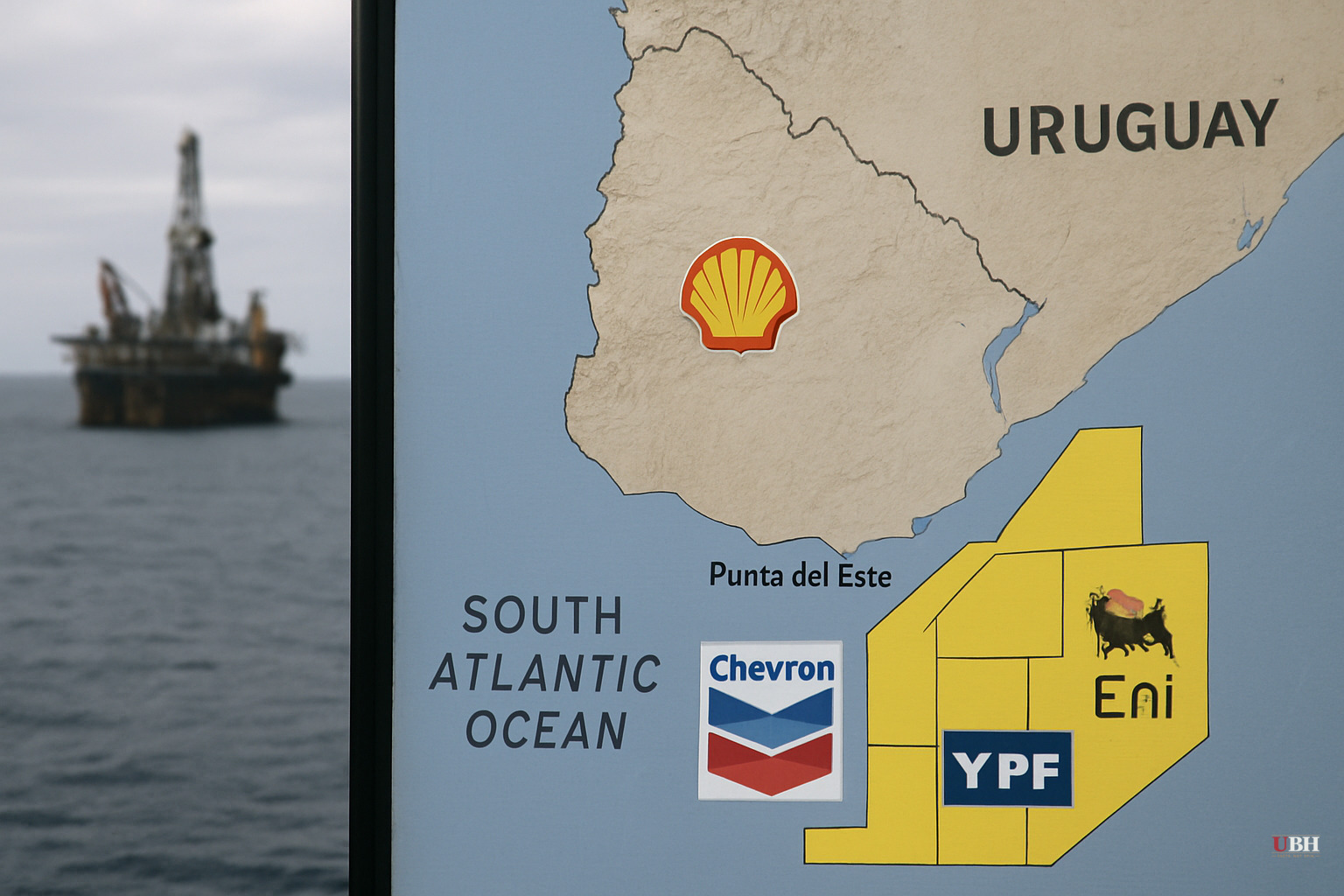
Shell, Chevron, Eni, APA Corp, QatarEnergy and Argentina's YPF have all bought into Uruguay's offshore exploration blocks, chasing a theory that has zero proven barrels behind it so far, according to OilPrice.com.
Uruguay has drilled exactly three offshore exploration wells in its history. All three were dry, according to OilPrice.com. That track record hasn't stopped seven offshore blocks from getting snapped up by some of the biggest names in global energy.
The Namibia Connection
The interest traces back to geology, not hype. Africa and South America were once joined as a single landmass, and Namibia's offshore basin has already produced major discoveries in recent years. Companies betting on Uruguay are wagering that the same source rock and trapping structures continue across the Atlantic on the South American side, according to OilPrice.com.
That's an educated bet based on real seismic and geological data. It's still a bet. No well has confirmed commercial oil offshore Uruguay as of this writing.
Who's In and What They Paid For
QatarEnergy bought participating interests in three blocks, OFF-2, OFF-4 and OFF-7, from BG International Limited, a Shell subsidiary, earlier this year, according to OilPrice.com. Chevron and QatarEnergy also farmed into multiple blocks next to Sintana Energy's OFF-3 acreage.
Sintana Energy said it completed the first season of 3D seismic acquisition on its OFF-1 block and is still working to farm out interests in OFF-3. The company called the wave of major-operator investment "a strong endorsement of the prospectivity of the Company's Uruguayan assets," according to OilPrice.com. Sintana has a direct financial stake in convincing the market this basin is real, so its enthusiasm should be weighed against that interest, not treated as neutral analysis.
Eni signed a deal late last year to acquire a 50% share and operatorship of Block OFF-5 from YPF. The Italian major called the block "a highly prospective area" that fits its strategy of pairing near-field exploration with higher-risk, higher-reward targets, according to OilPrice.com. That deal still needs sign-off from Uruguayan authorities before it closes.
YPF's Bold Claim
YPF CEO Horacio Marín made the boldest public statement yet on OFF-5, telling local media this week that the block "could be much bigger than Vaca Muerta, it could yield millions and millions of barrels of production," according to OilPrice.com's reporting of local coverage.
That's a striking claim. Vaca Muerta is Argentina's flagship shale formation, one of the largest unconventional oil and gas plays on Earth, and YPF's own turnaround has been built substantially on it. Marín is the CEO of the company with a direct stake in OFF-5. His job is partly to generate investor and government enthusiasm for YPF's projects. His statement is a prediction, not a discovery. No drill bit has touched OFF-5 yet.
The Actual Timeline
Nobody has drilled anything yet. APA Corp is expected to spud the first exploration well in the region later this year or in early 2027, according to OilPrice.com. YPF's own drilling on OFF-5 isn't expected to start until late 2027 or early 2028.
That means the earliest anyone will have hard data on whether Uruguay's offshore actually holds commercial oil is at least several months away, and the real test of YPF's biggest claims is roughly a year and a half out. Everything said publicly right now, from Marín's comments to Sintana's optimism to Eni's strategic framing, is a bet on geology that hasn't been tested by a drill bit in this specific acreage.
What Skeptics Would Point To
A fair skeptic would note Uruguay's three-for-three dry-hole record and argue that geological similarity to Namibia doesn't guarantee results. Basins that look alike on seismic maps have disappointed before. Namibia itself took decades of exploration, including plenty of dry wells, before recent discoveries by TotalEnergies and Shell paid off.
The amount of capital committed by Shell, Chevron, Eni, APA, QatarEnergy and YPF suggests these companies see the seismic data as compelling enough to justify the risk. But committing capital to lease blocks and run seismic surveys is a much smaller bet than actually finding oil. The real answer comes when APA's well and, later, YPF's well in OFF-5 either hit hydrocarbons or come up dry, sometime in late 2026 through 2028.
Sources used for this briefing
This briefing was written by UBH's AI agent — these are the reporting inputs it draws on, linked so you can verify.


