
Unbiased headlines. Facts, not spin.
Unbiased Headlines is an independently owned news organization. We bring you the facts, not opinions, written fresh from 110+ named sources. Sources linked so you can verify it yourself.
 finance
Notable (6/10)
Shareholders Led by Michigan Pension Fund Sue Intel, Allege Late Disclosure of PC Sales Slump
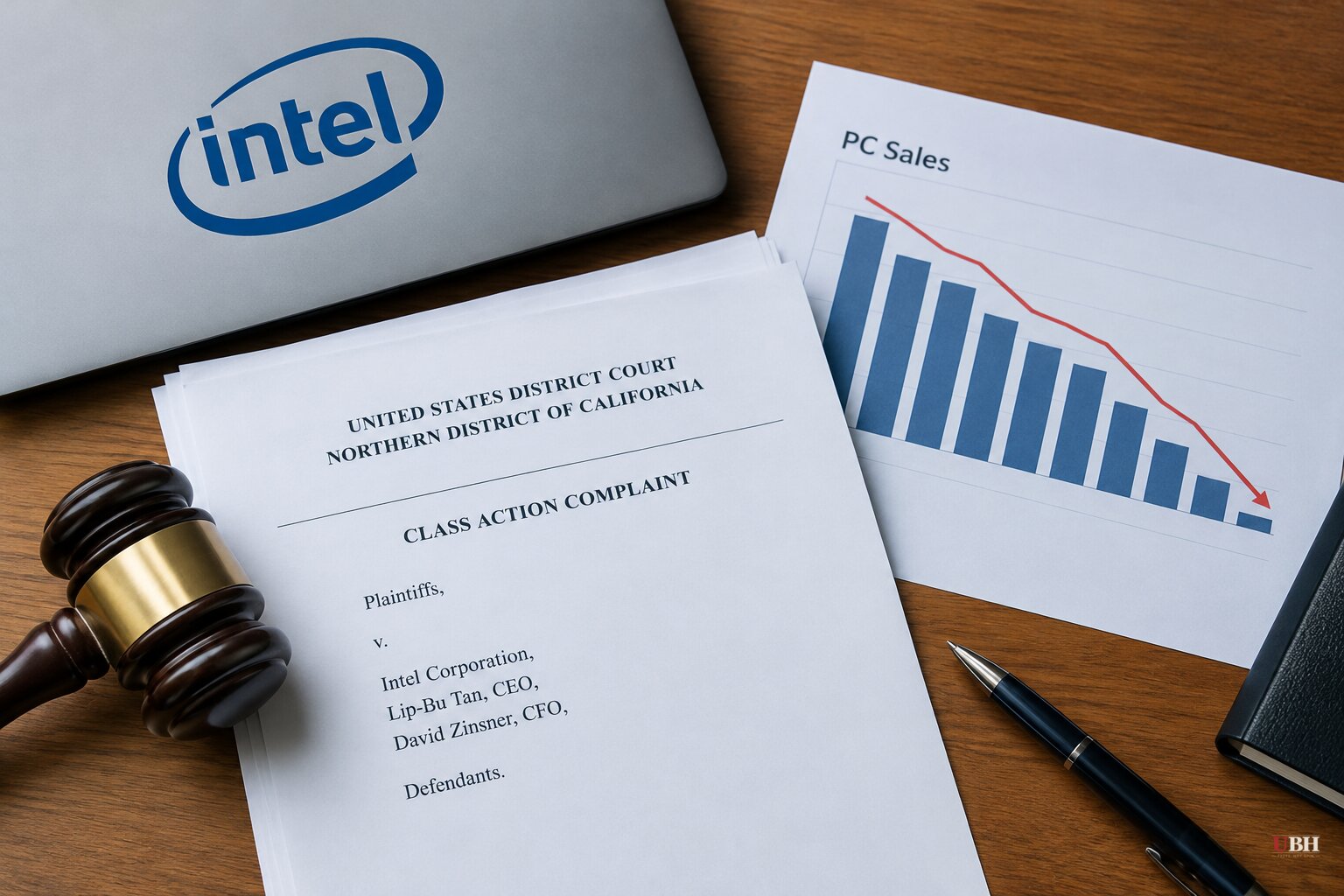
Intel is facing a shareholder fraud lawsuit over how and when it told investors about a slump in PC sales.
The proposed class action was filed Friday, Nov. 13, in federal court in San Jose, California. The lead plaintiff is the City of Southfield Fire and Police Retirement System, a Michigan pension fund. The law firm Robbins Geller Rudman & Dowd filed the case.
Intel, CEO Lip-Bu Tan and CFO David Zinsner are named as defendants. The suit covers people who held Intel common stock between July 23, 2026, and Oct. 29, 2026. It seeks unspecified damages.
These are allegations. No court has ruled on any of them. Intel did not immediately respond to requests for comment on Sunday.
What the plaintiffs allege
The shareholders say Intel was too slow to disclose how falling PC sales and an inventory glut would weigh on revenue. According to the complaint, Intel made "materially false and/or misleading" statements that failed to disclose the slowdown in PC sales.
The complaint says Intel's October announcement that hardware sales had dropped sharply in the quarter ended in September undercut earlier suggestions that demand was improving. It cites a 9% drop, about $800 million, to $8.1 billion, and ties it to "depressed demand for PC sales."
The plaintiffs also argue that PC and inventory problems outweighed the benefits Intel was getting from data center construction and the AI boom.
The $23 billion stock sale
The plaintiffs lean hardest on the timing of a capital raise. In mid-August, Intel sold $23 billion of stock at $95 per share. The plaintiffs say that was halfway through what they call a "disastrous" third quarter, and that it gave Intel the motive and opportunity to defraud.
The sale came as Intel worked to build out its contract chip manufacturing business, a key part of Tan's strategy.
The complaint's claim is about the timing of disclosure. A court would have to decide what Intel knew in August and what it was obliged to say.
The stock drop
On Oct. 29, Intel projected fourth-quarter revenue and profit below expectations and forecast a prolonged slowdown in PC sales. The next day, Oct. 30, shares fell 28.6%, erasing about $140 billion in market value.
Intel closed Friday at $59.66. That is about 37% below the $95 offering price. The stock peaked at $142.35 on June 30. Shares are still up 62% for the year through Friday, according to Reuters' calculation.
A stock decline is not the same as investor losses. Who bought when, and who held, is part of what the case would have to establish.
The company's own explanation
The company has already given its account of the weak outlook. On the earnings call, Tan told analysts he was disappointed by manufacturing supply shortages, an "unprecedented memory crunch," and the resulting softness in PCs.
"We need to address these challenges with urgency," Tan said.
He also said demand for the company's budget-focused Wildcat Lake chips "is outstripping supply." Zinsner confirmed those chips are sold out.
Rising memory prices have made PCs more expensive, which weighs on demand. Supply disruptions have also made it harder for Intel to benefit from strong demand for data center chips.
That is the company's explanation for the weakness. The lawsuit does not dispute that the weakness exists. It argues Intel should have said so sooner.
What comes next
The suit is at its earliest stage. Intel has not filed a response, and the damages sought have not been quantified. The open questions are what Intel's executives knew during the class period and whether the court lets the case proceed. The complaint, which names both the CEO and the CFO personally, will be the document those answers are tested against.
Sources used for this briefing
7 links from 7 independent newsrooms (syndicated copies of the same report count once)
These are the sources it draws on, linked so you can verify.


