
Unbiased headlines. Facts, not spin.
Unbiased Headlines is an independently owned news organization. We bring you the facts, not opinions, written fresh from 110+ named sources. Sources linked so you can verify it yourself.
 finance
Major Story (7/10)
Event date: November 18, 2026 ·
China Cuts Margin Deposit Ratio to 80% as Stock Rescue Widens; Taiwan Bans Short Selling After 6% Drop
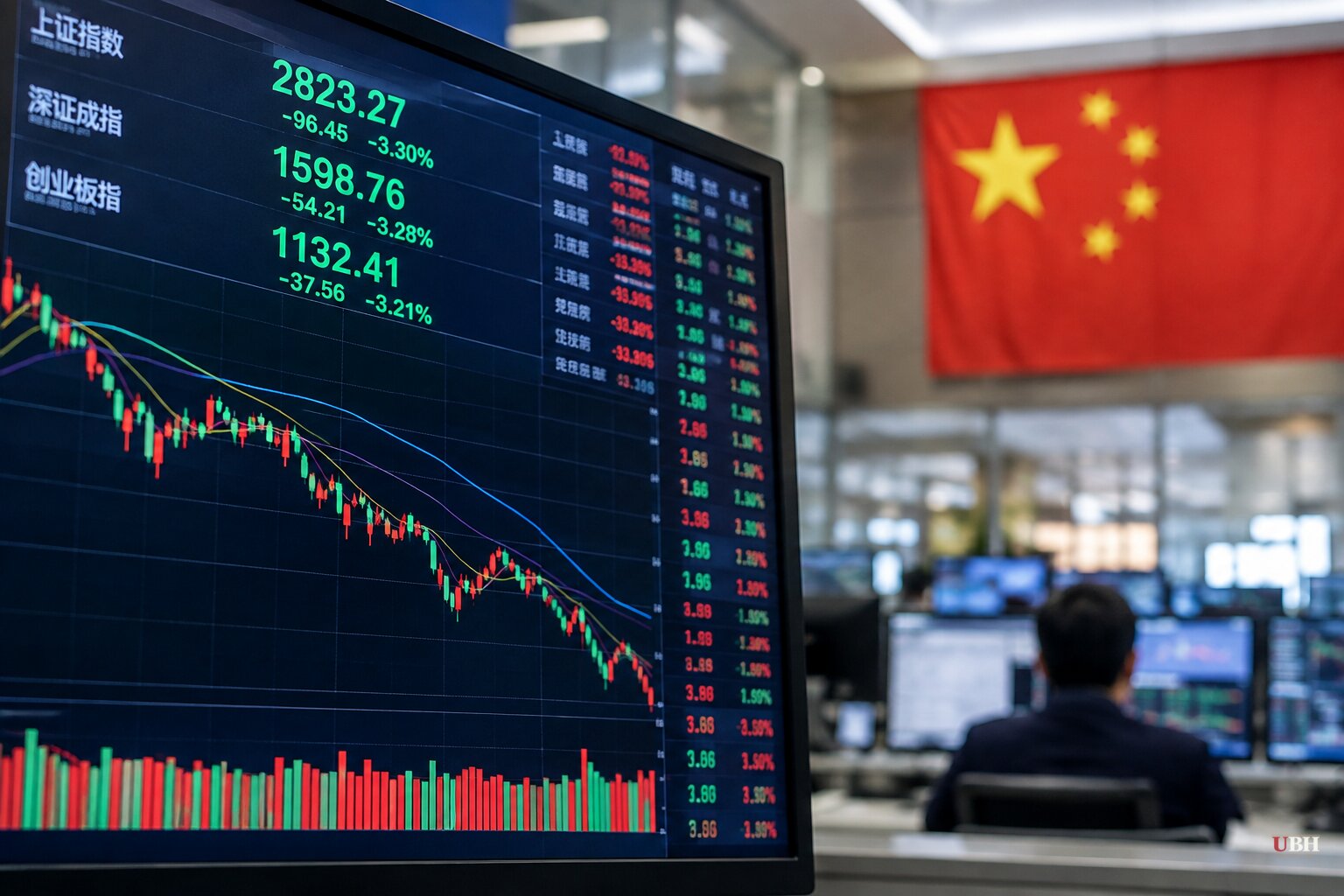
China's Shanghai, Shenzhen and Beijing stock exchanges announced today, Nov. 22, that they will lower the minimum margin deposit ratio for buying stocks on credit from 100% to 80%. The change, approved by the China Securities Regulatory Commission, takes effect Nov. 30.
That lifts the maximum leverage in A-share margin trading back to 1.25x from 1x. An investor who posts 1 million yuan (about $150,000) can support purchases of up to 1.25 million yuan.
It is the fourth adjustment to the ratio. In January, regulators raised it to 100% from 80% to cool trading. They are now reversing that move.
The size of the new money
The market-wide margin balance stands at about 2.2 trillion yuan (roughly $330 billion), according to regulatory officials. On that base, the change could free up nearly 100 billion yuan from new positions and nearly 300 billion yuan from existing contracts. That is a theoretical total of nearly 400 billion yuan, or about $60 billion.
That figure is a ceiling, not a forecast. It assumes investors use every bit of the extra room.
The exchanges said margin trading has fallen noticeably and overall leverage is not high, so a moderate cut under the countercyclical adjustment arrangement will improve liquidity. Securities firms were also told to apply stricter risk controls to investors engaging in abnormal trading, to curb excessive speculation.
The Shenzhen exchange separately proposed market-making rules for ChiNext-board stocks, saying they would make the market more stable and resilient. It will also waive trading unit fees for 2026 and extend other fee waivers through 2028.
A rescue playbook from 2024
The margin move follows steps announced earlier this month by the People's Bank of China, the National Financial Regulatory Administration and the CSRC. The central bank made its relending facility for share buybacks and stake increases a permanent program and cut its annual rate to 1% from 1.25%. Under the facility, the PBOC supplies low-cost funds to commercial banks, which lend them on to listed companies.
The CSRC will also run a third round of its swap facility, which lets securities firms, funds and insurers swap assets for liquid government bonds. Thirty-one institutions applied for a total of 100 billion yuan. The term is one year and can be extended. Both programs date to October 2024.
The PBOC also began conducting overnight reverse repurchase operations every business day at 1.25%, according to state news agency Xinhua.
The numbers behind the urgency are large. The CSI 300 fell 8.5% in October, the market's worst month in more than a decade, and has since slid into a bear market, down more than 20% from its late-June peak. The tech-heavy STAR 50 has fallen about 40% in less than four months, erasing roughly $480 billion in market value, according to The Epoch Times. Bloomberg columnist Shuli Ren put the index's peak-to-trough drop at as much as 48%.
Ren also wrote that regulators appear to be using informal window guidance again, telling institutions and brokerages not to sell, and that the state-linked "national team" of funds appears to have stepped up its operations. Beijing has not publicly confirmed either.
Skeptics say the cure is not the problem
Analysts doubt liquidity alone will turn this around. Xu Zhen, a senior finance professional in China, told The Epoch Times that the overnight repo operations are "little more than a market placebo," and that "the Chinese Communist Party does not do charity for stock investors." He argued Beijing's main worry is panic selling that threatens financial stability, and that it had hoped to channel household savings into equities to fund its AI ambitions.
Davy Jun Huang, a U.S.-based political economist and former CNTV columnist, said a weak economy and falling prices can feed each other. Falling prices hit household wealth and corporate financing, he said, and raise risks for financial institutions holding stocks as collateral.
The Epoch Times analysts say weak corporate earnings, sluggish consumer demand and low business investment keep undermining confidence. Ren wrote that the latest rescue may be treating symptoms rather than the policy distortions behind repeated crashes.
Official statements frame the new margin step differently. Beijing's argument is that leverage has shrunk and a measured cut restores room for trading.
Taiwan tightens the other way
Taiwan took the opposite tool off the shelf. The Financial Supervisory Commission announced Saturday that it is barring short selling of any stock that fell in the previous session. It is the first blanket restriction of that kind since 2015.
The FSC also raised the minimum margin requirement for short selling from 130% to 150%. The rules take effect Monday, Nov. 23.
The move followed a plunge on Friday, Nov. 20, when the TAIEX fell 2,393.60 points, or 6.23%, to close at 36,033.29, its lowest close in about seven months and the third-largest single-session point loss on record. From its Oct. 6 intraday record of 49,968.92, the index hit an intraday low of 35,738.68, down 28.48%. The FSC cited concern over the outlook for global AI stocks.
Premier Cho Jung-tai met economic and financial agency heads Saturday morning and ordered stabilization steps. The FSC also suspended applications for new put warrants and called on lenders to suspend securities lending and recall lent shares early.
Taiwan's Ministry of Finance said the decline largely mirrored global markets and that there are no problems with the economy.
The next test comes quickly. Taiwan's short-selling restrictions begin Monday, Nov. 23, and China's lower margin ratio takes effect Nov. 30.
Sources used for this briefing
6 links from 6 independent newsrooms (syndicated copies of the same report count once)
These are the sources it draws on, linked so you can verify.


