
Unbiased headlines. Facts, not spin.
Unbiased Headlines is an independently owned news organization. We bring you the facts, not opinions, written fresh from 110+ named sources. Sources linked so you can verify it yourself.
 finance
Major Story (7/10)
Event date: November 19, 2026 ·
Gold Hits 14-Month Low as Fed Hike Bets and a Strong Dollar Hammer Metals
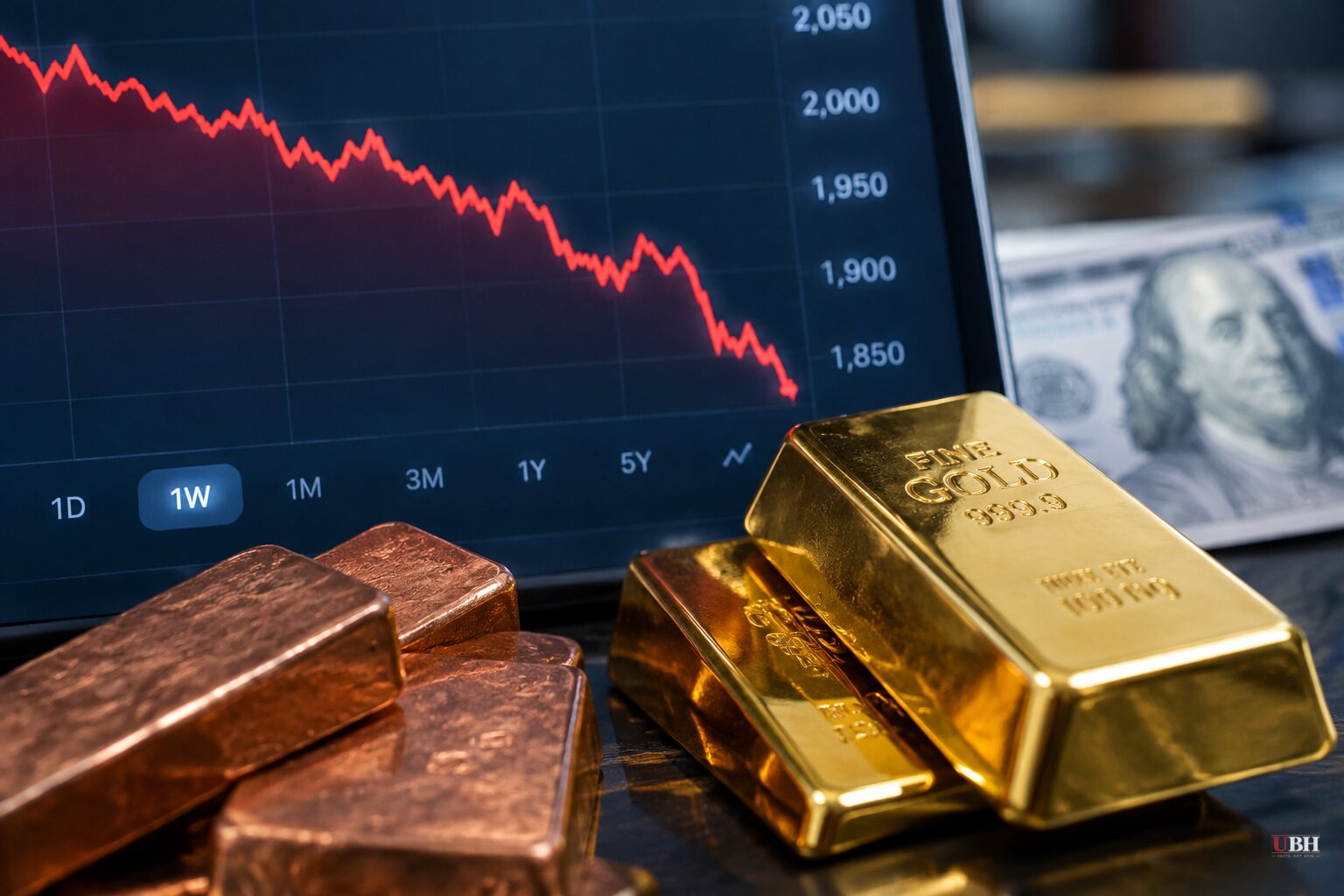
The market rout that started with AI stocks has spread deep into commodities. Gold has dropped to a 14-month low, according to the latest readings published Saturday, Nov. 21. U.S. markets are closed this weekend and reopen Monday, Nov. 23.
An ING strategist said gold could stay vulnerable as long as rate expectations and the dollar remain elevated.
That points to interest rates, not chips, as the main driver for metals.
Why metals are falling: a December Fed hike
Cashu Research, an Australian analyst, traced Wednesday's metals sell-off to one idea: the Federal Reserve is going to raise rates in December, not cut them. Its Nov. 19 note covers the Nov. 18 sessions. Gold broke below $3,800, silver fell 5% and copper had its worst day in eight months.
Cashu estimated the gold and silver drop alone erased more than $500 billion in value in a day. That is the firm's own calculation.
The rate story built quickly. On Nov. 5, futures put the odds of a December hike at 67%. The October jobs report then showed 165,000 new jobs, about 2.5 times what economists expected. Consumer prices came in hot on Nov. 10.
Fed Governor Christopher Waller said the central bank should hike. In a live interview Wednesday he floated a half-point move to "shock people," and the 2-year Treasury yield rose to 4.83%.
Minutes of the Fed's October meeting, released the same day, showed a couple of policymakers open to more than 25 basis points if inflation data stays unfavorable. By Wednesday, CME FedWatch put a quarter-point hike at about 95%, with the rest on a half-point move.
The Fed already raised rates in September, its first increase in more than three years. The target range now sits at 3.75% to 4.00%.
The dollar, yields and the cost of holding gold
Gold pays no yield. Cashu's analysis says that with the 10-year Treasury above 5%, the opportunity cost of holding bullion is at its highest in nearly two decades.
Since Nov. 5, the firm calculates, the dollar index is up 2.2% and the 10-year yield has climbed from 4.84% to 5.10%. Gold has fallen about 8% over the same stretch. A stronger dollar also makes metals pricier for buyers in other currencies, which trims physical demand in Asia and Europe.
Cashu says the breadth of the sell-off is the tell. When gold, copper, oil and zinc fall together, it argues, the cause is the dollar and the cost of money, not any one market's supply and demand. It also says copper was hit by crowded speculative positions built on the AI data-center trade, which are now unwinding.
Copper: a paper sell-off and a physical shortage
Copper is being pulled two ways. Prices fell hard on the macro and positioning story. In China, the physical market is badly short of metal.
The Shanghai Futures Exchange stepped in after a historic squeeze in its November contract. At expiry, that contract traded at a premium of more than 14,000 yuan ($2,100) a ton to December delivery.
On-warrant stocks had fallen to just 2,270 tons. Open interest in the November contract stood at 24,050 tons. That left far more claims on metal than metal to deliver.
People familiar with the matter told Bloomberg that the exchange pressured long and short holders to settle in cash. That cut open interest but forced shorts to buy back positions, which fed the squeeze. The same people said SHFE had spent weeks urging longs to roll their positions instead of taking delivery.
The exchange said in a statement that it is committed to "maintaining a fair, orderly and transparent market, preventing risks and ensuring its proper functioning."
The peak backwardation was twice the level of the 2021 London Metal Exchange squeeze, when the one-month spread reached as much as $1,060 a ton. LME aluminum is in its biggest squeeze since the 1980s.
Jia Zheng, a trading manager at Suzhou Chuangyuan Harmony-Win Capital Management, said the tightness could last until year-end. "Producers are holding back sales betting on spot premiums to continue rising, leaving buyers struggling," she said.
The tight inventories trace to supply and trade upheavals ranging from U.S. tariffs to the war in Iran.
Oil: Trump questions the post-election slide
At a press conference Friday, Nov. 20, President Trump pointed to oil's drop since the midterms. "Crude oil prices have plummeted right since the end of the election. I wonder how that happened?" he said.
He said crude is down 20% since the start of November and close to $80 a barrel. "Too bad we didn't have that in front of the election," he added.
Trump did not allege wrongdoing. "I don't blame anything; I just know the system is — let's not call it corrupt; let's call it very interesting," he said.
The settlement figures differ from his 20%. Brent settled at $103.60 and WTI at $96.09 on Nov. 3. The next day Brent fell nearly 9% and WTI more than 8%. Brent is now down roughly 10% to 11% from its Election Day close, with recent settles in the low $90s and WTI in the mid-$80s.
The Daily Wire argued that traders concluded a Democratic win would pressure Trump to ease off the Iran war, and priced out some of the war premium. That is the outlet's interpretation. No investigation has been announced, and no evidence of market manipulation has been presented.
The Fed argument in the metals reports points a different way. Cashu ties the broad commodity slide to rate expectations and the dollar, not election results.
What comes next
The next test is the Fed's December meeting. As of Nov. 18, CME FedWatch priced a quarter-point hike at about 95%. If Waller's half-point idea gains traction, gold and copper could take another hit as the dollar firms.
In Shanghai, spreads between later-dated copper contracts widened further after the squeeze. That suggests the physical shortage is not over.
Sources used for this briefing
4 links from 4 independent newsrooms (syndicated copies of the same report count once)
These are the sources it draws on, linked so you can verify.


