
Unbiased headlines. Facts, not spin.
Every story is an unbiased news briefing written from 110+ sources across the spectrum — sources linked so you can verify it yourself.
 energy
Notable (6/10)
August 11, 2026 at 11:04 PM
energy
Notable (6/10)
August 11, 2026 at 11:04 PM
Shandong Oil Stocks Hit 8-Month Low, China's Teapot Refiners Set to Buy More Sanctioned Iranian Crude
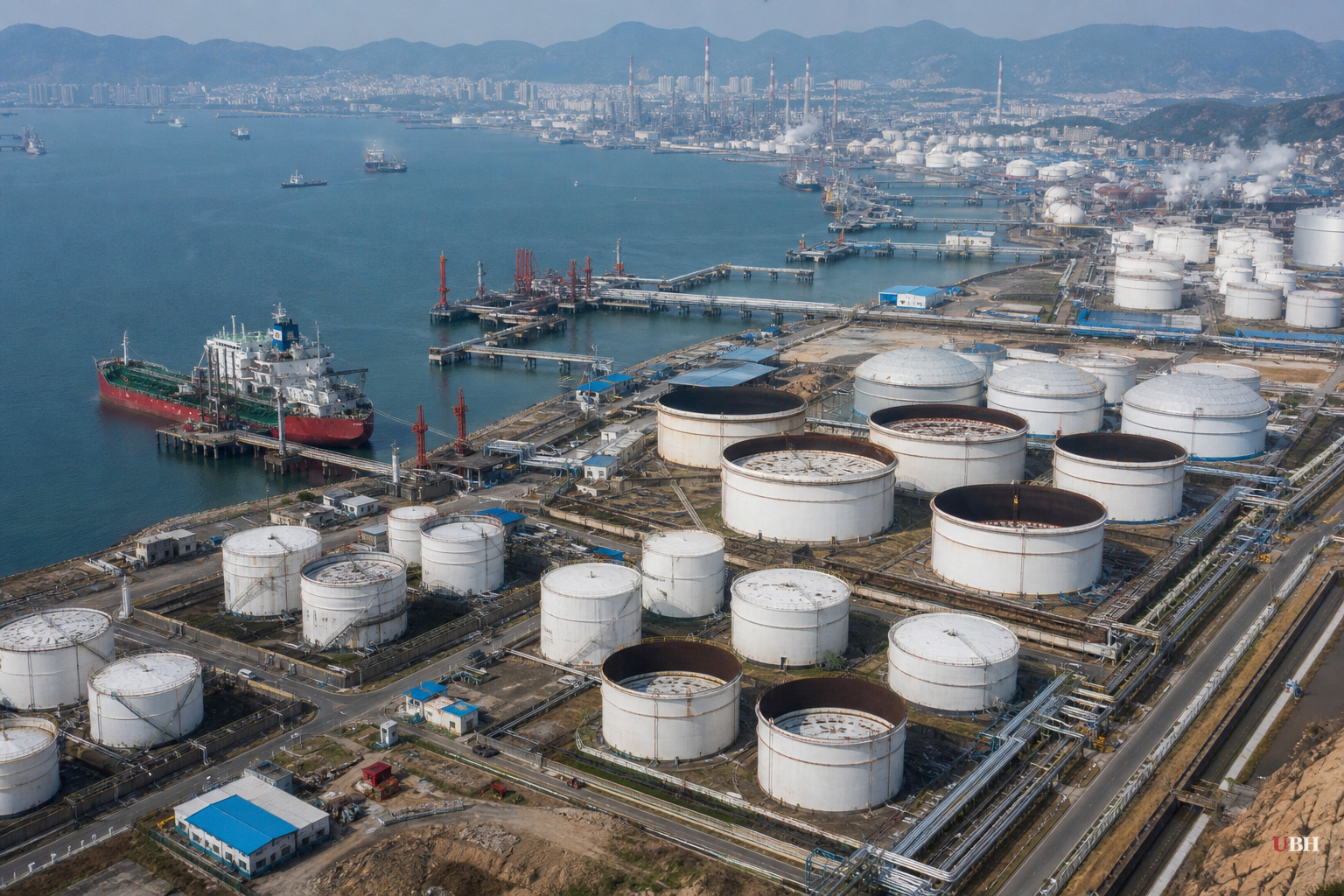
China's crude oil stockpiling strategy is entering a new phase. Since Chinese customs data showed crude imports jumping 22% from June to July, hitting an average of 8.45 million barrels per day, the country's so-called teapot refiners are now positioned to buy more Iranian oil starting this month.
Shandong province, home to most of China's independent refiners, saw its onshore crude inventories fall to their lowest level in eight months, an estimated 360 million barrels at the end of July, according to Energy Aspects data cited by Bloomberg and reported by ZeroHedge. The July drawdown alone, about 35 million barrels, was the single biggest monthly decline Energy Aspects has recorded since it started tracking the data in 2016.
That drawdown happened for a reason. For most of a six-month conflict in the Middle East, China's teapot refiners pulled from stockpiles instead of buying on the open market, according to ZeroHedge. Beijing had built up more than 1.3 billion barrels across commercial and strategic reserves, giving refiners room to sit out price spikes tied to the conflict. That reserve cushion let China effectively act as a shock absorber for global oil prices while sanctioned Iranian barrels backed up near the Strait of Hormuz.
Now the math is flipping. With Shandong stocks drawn down and refining margins recovering from spring weakness, according to industry coverage from commodity-board news service CMB, independent refiners have both the incentive and the storage room to buy again. CMB reports roughly 30 million barrels of Iranian crude currently floating in Asian waters, offered at a discount to Brent and to Russian ESPO crude, sitting there as a ready supply pool for buyers willing to take sanctioned oil.
The discount is narrowing, not disappearing
Iranian Light crude for September delivery is currently offered at about $4 a barrel below ICE Brent, according to CMB, down from a roughly $5 discount earlier this year. Sanctions haven't closed the Iranian oil trade, they've just set the price. Iran keeps selling. China keeps buying. The discount is the toll charged for doing business under U.S. sanctions, and right now that toll is getting cheaper for Iran, not more expensive.
ESPO cargoes from Russia, also under Western sanctions, are trading between parity and a slight discount to Brent, per CMB's reporting. Two sanctioned suppliers, two discounted grades, one buyer with the market power to set the terms. That buyer is China, and specifically the independent Shandong refiners who don't answer to Beijing's state oil giants or worry much about U.S. Treasury enforcement actions.
No new sanctions enforcement announced
None of the three sources here report any new U.S. Treasury designation, seizure, or enforcement action tied to this specific wave of purchases. This is a market response to inventory levels and margins, not a sanctions breach that's been charged or penalized by name. The trade itself has operated for years through Chinese teapot refiners and a network of intermediaries, and Washington's sanctions regime has produced discounts and workarounds rather than a shutoff.
Critics of U.S. Iran sanctions policy have long argued that measures aimed at cutting off Tehran's oil revenue mostly just tax the transaction rather than stop it, since China's independent refiners have little exposure to the U.S. financial system and can absorb the discount. Defenders of the sanctions regime counter that the discount itself represents real economic pressure on Iran, forcing Tehran to sell at $4-5 below market rate it would otherwise get from unconstrained buyers. Both points are consistent with what CMB and ZeroHedge report on pricing. Neither source claims the sanctions have failed to reduce Iranian government oil revenue, and neither claims they've eliminated Iran's ability to sell.
Market reaction has been muted so far
Early trading reaction tracked by Hyperdash News showed WTI crude up a marginal 0.02% and Brent down 0.01%, suggesting traders aren't yet pricing this as a major supply-side shift. That's consistent with ZeroHedge's own framing: China still holds enough reserve cushion nationwide that a return to heavier Iranian buying won't immediately tighten global supply, even if it reshapes differentials between sanctioned and unsanctioned grades.
The open question is how far Shandong refiners push their runs once September Iranian cargoes start clearing. Energy Aspects and Bloomberg's tracking of Shandong stockpiles will be the number to watch next. Another sharp draw would confirm refiners are still burning through reserves rather than restocking, while a rebound in inventories would show the pivot to Iranian buying is actually replacing, not just supplementing, what teapots pull from storage.
Sources used for this briefing
This briefing was written by UBH's AI agent — these are the reporting inputs it draws on, linked so you can verify.


