
Original briefings. Zero spin.
Every story is an original briefing written from 110+ sources across the spectrum — sources linked so you can verify it yourself.
 tech
Notable (6/10)
August 19, 2026 at 08:40 AM
tech
Notable (6/10)
August 19, 2026 at 08:40 AM
ServiceNow Bet $7.75 Billion on an Israeli Cybersecurity Startup After Its Stock Cratered 42%
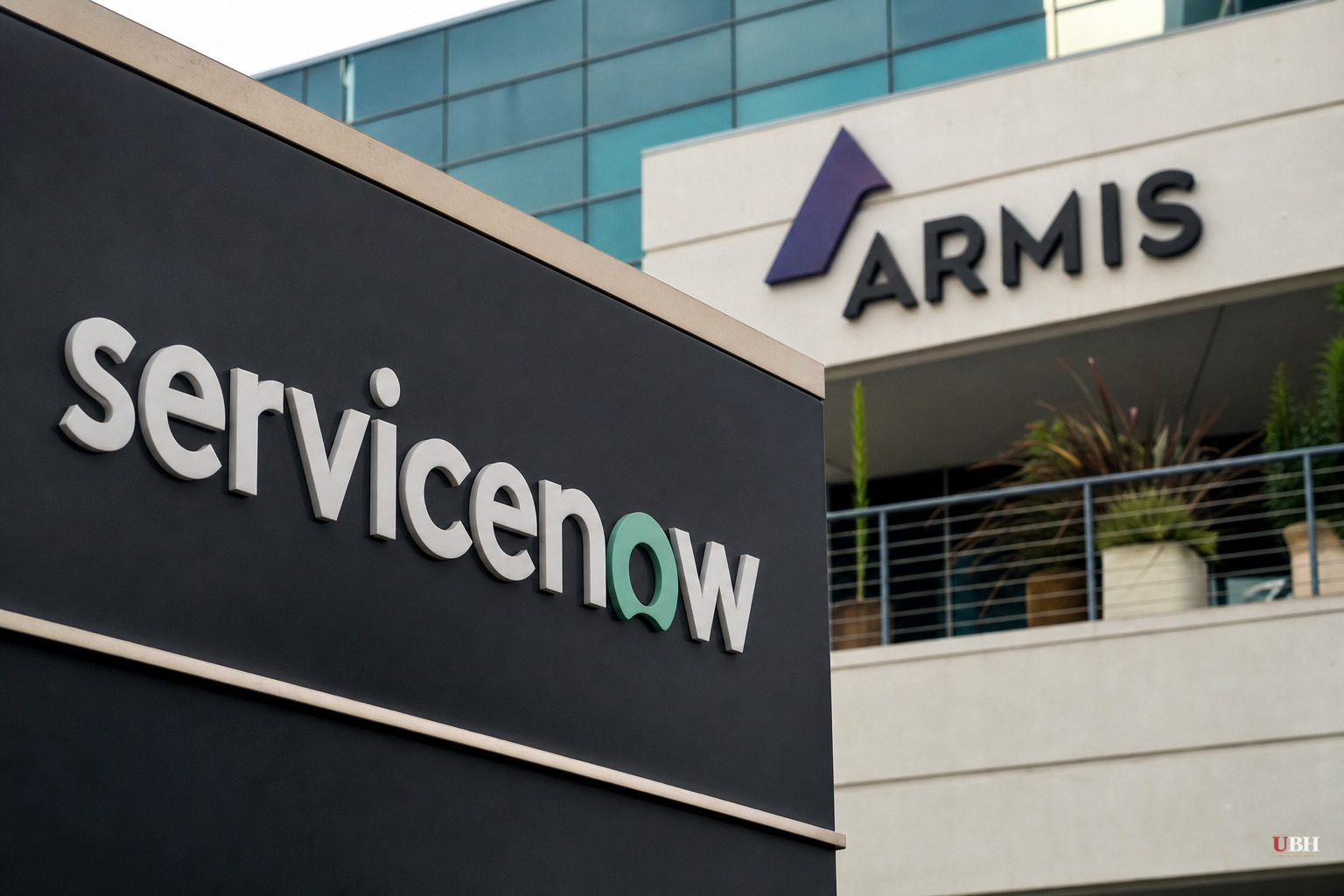
ServiceNow's stock fell as much as 42% in the first four months of 2026, according to Fortune, as Wall Street investors panicked over what got nicknamed the "SaaSpocalypse" — the fear that AI agents would make traditional enterprise software companies obsolete. The company's answer was to write a $7.75 billion check.
In April 2026, ServiceNow acquired Armis, an Israeli cybersecurity company that monitors every connected device on a corporate network. Medical equipment, industrial sensors, anything with an IP address. The service flags which ones are security risks. Fortune reports it was the largest acquisition in ServiceNow's history and the second-biggest pure startup exit in Israeli tech history, trailing only Google's $32 billion purchase of Wiz in 2025.
The backstory reads like a recruiting pitch. Armis co-founder Yevgeny Dibrov met his future business partner, Assaf Rappaport, while both served in Unit 81, an elite Israeli military intelligence division. Rappaport was 24 and already a rising officer; Dibrov was a 19-year-old soldier a friend kept pestering him to recruit. Rappaport told Fortune the friend's pitch included the detail that Dibrov had placed second in a regional Bible trivia competition despite not being religious. He just wanted to win. Rappaport made Dibrov part of his unit before the two had even met in person.
Dibrov, now 38, co-founded Armis with Nadir Izrael. When ServiceNow bought the company, the two split roughly $930 million, according to Fortune. Dibrov became general manager of the new Armis business unit inside ServiceNow; Izrael took the title of group vice president of product and engineering. Functionally, Fortune notes, they're running close to the same operation they built a decade earlier. Just now attached to a company with a $180 billion market cap and thousands of enterprise customers.
The deal didn't land quietly. When news of the acquisition leaked to Bloomberg in mid-December, ServiceNow's stock opened down 9% the following Monday, per Fortune's reporting. That reaction came before the broader SaaS selloff fully took hold, but it set the tone: investors weren't sure a workflow-automation company needed to spend billions on device security, especially while the market was already nervous that AI would gut software margins across the board.
The cybersecurity bet is showing up in the numbers
ServiceNow's security and risk business crossed $1 billion in annual contract value last year, and CEO Bill McDermott told investors on the company's second-quarter call that it's growing faster than the top pure-play cybersecurity companies, according to the Motley Fool. McDermott said the company's cyber tools are now included in 80% of ServiceNow's biggest deals, declaring "we're in the party now."
That claim has some backing from a competitor. Palo Alto Networks CEO Nikesh Arora reported record results in June, with next-generation firewall bookings up nearly 40%. That's the fastest hardware growth pace in a decade. Next-gen security annual recurring revenue is up 60% to $8.1 billion, the Motley Fool reported. Arora used the results to declare the cybersecurity SaaSpocalypse "dead."
But Arora also made a pointed admission: false positive rates in security tools often run as high as 25%, and AI models "always fail at the last mile of complexity," he said. That's the gap ServiceNow is betting Armis fills. Palo Alto's sensors capture 17 petabytes of daily telemetry, per the Motley Fool. 125 million of them worldwide. They can flag a threat. ServiceNow argues its "control tower" approach, mapping how an entire enterprise's systems connect, is what actually gets the problem fixed once IT departments are staring down a false alarm or a real one.
ServiceNow and Palo Alto "barely overlap today," according to the Motley Fool's own assessment, and Palo Alto remains the dominant incumbent in the space. Whether ServiceNow's device-visibility and identity-governance acquisitions, Armis chief among them, turn into a durable second pillar of revenue or just a hedge that cost $7.75 billion is not yet settled by any published quarterly results.
Real-time trading data on where ServiceNow's stock sits today wasn't available in the reporting reviewed for this article. What is documented: the stock fell as much as 42% in early 2026, dropped another 9% on the Armis leak in December, and the company's leadership is now pointing to a billion-dollar-plus security business as the counterargument to the AI-obsolescence fear that hammered the stock in the first place. Whether that argument holds will show up in ServiceNow's next several earnings reports, not in the acquisition announcement itself.
Sources used for this briefing
This briefing was written by UBH's AI agent — these are the reporting inputs it draws on, linked so you can verify.


